

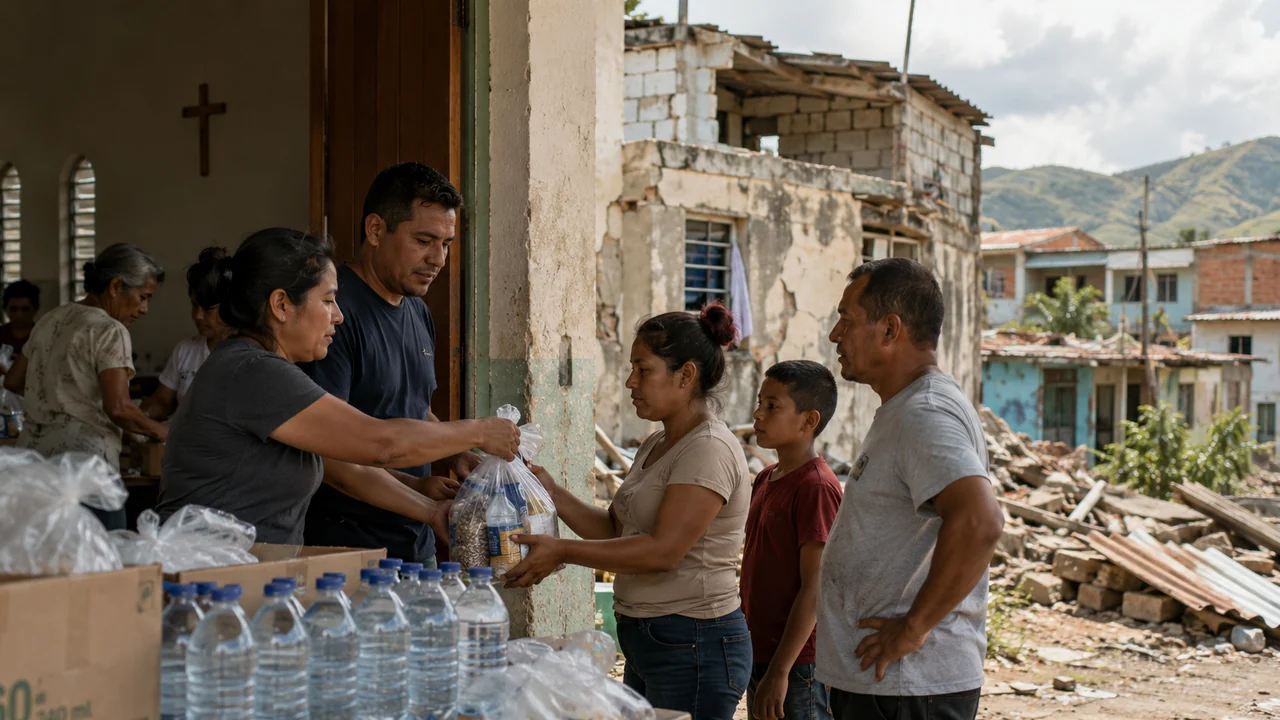
Venezuela is still living with the effects of the June 24 earthquakes. Thousands of people were killed or injured, many families lost their homes, health facilities were damaged, and recovery will take years. The first rescue emergency has passed, but grief, injury, displacement, interrupted services, lost livelihoods, and trauma remain. The earthquakes have struck a country already marked by political conflict, economic hardship, migration, weakened public services, and deep public distrust.
Delcy Rodríguez is serving as acting president after Nicolás Maduro was captured by United States forces in January 2026, while the legality and consequences of that intervention remain disputed. The first cycle of direct talks between representatives of the government and a sector of the opposition concluded on August 12 with a signed agreement covering judicial reform, efforts to recover Venezuelan gold held in London for earthquake recovery, and continuing work on humanitarian and institutional questions. Important political and electoral issues remain unresolved, and implementation of the agreement is still ahead.
Families, neighbours, health workers, humanitarian organisations, churches, and volunteers continue to care for people in need. Pray for comfort and rebuilding, restraint of injustice, wisdom and integrity among those who exercise authority, faithful churches, repentance and saving faith, and hope that does not depend on politics or the economy.
Prayer Burden at a Glance
Pray for people grieving, injured, traumatised, or displaced after the earthquakes; for safe housing, clean water, medical care, restored schools and hospitals, livelihoods, and secure communities; and for wisdom, honesty, resources, and perseverance in rebuilding. Pray for a government that serves justly; for honest implementation of the August agreement and peaceful further negotiations; for mercy and due process for prisoners; for migrants and returnees rebuilding their lives; for peaceful relations with Guyana; and for churches that resist political manipulation, serve neighbours honestly, preach Christ clearly, and make disciples.
Last verified: 13 August 2026
Why Venezuela Needs Prayer Now
Venezuela needs prayer amid earthquake recovery, household hardship, migration, disputed political authority, unresolved detention cases, and the need for churches to serve faithfully without placing Christian hope in political change.
The earthquakes of June 24 brought sudden death, injury, homelessness, damaged health facilities, and long-term reconstruction needs. By late July, official and international reporting described thousands of deaths, more than sixteen thousand injuries, large-scale housing loss, and tens of thousands of people living in temporary camps. The immediate rescue phase has passed, but rebuilding homes, services, and communities will remain a major national task.
The scale of physical damage is also severe. The World Bank estimated direct physical damage at about $19.6 billion. PAHO reported damage to 38 health facilities and a shift toward restoring essential health services, rehabilitation, disease prevention, and longer-term recovery. By July 24, the United Nations reported that more than 117,000 affected people had received humanitarian assistance.
Earthquake recovery is happening while many Venezuelans are already facing serious economic and social strain. Many households face difficulty meeting ordinary needs, while years of migration have separated families and reshaped communities. Some Venezuelans are returning, but return does not remove the need for housing, work, education, health care, protection, and patient reintegration.
Political authority remains contested. Delcy Rodríguez is serving as acting president after Nicolás Maduro was captured by United States forces in January 2026. The legality of the intervention and the constitutional consequences remain disputed. The first direct negotiation cycle between the Rodríguez government and representatives of the 2015 opposition legislature concluded on August 12 with a signed agreement. The parties agreed on a renewed process for the full Supreme Court bench, joint efforts concerning Venezuelan gold held at the Bank of England for earthquake recovery, and continuing work through humanitarian and institutional tables. These are concrete developments, but they should not be confused with a completed democratic settlement. Electoral arrangements, wider political participation, institutional implementation, and other questions remain unresolved.
Prisoner releases and the 2026 amnesty have brought real relief to some families. At the same time, independent documentation continues to record hundreds of political prisoners and many thousands of people living under restrictive legal measures. Exact totals change as cases are reviewed, people are released, and legal conditions are altered.
Venezuela therefore needs prayer for people grieving and rebuilding, families struggling to meet basic needs, migrants and returnees, just government, prisoners and their families, peaceful political change, and relations with neighbouring Guyana. Churches must not become another political faction. Their calling is to worship God, preach Christ, make disciples, love their neighbours, care for people in need, resist manipulation, and point people to the hope found in Jesus Christ, which no government can provide.
Country Snapshot
A brief orientation to Venezuela’s location, present political setting, Christian context, and main prayer burdens.
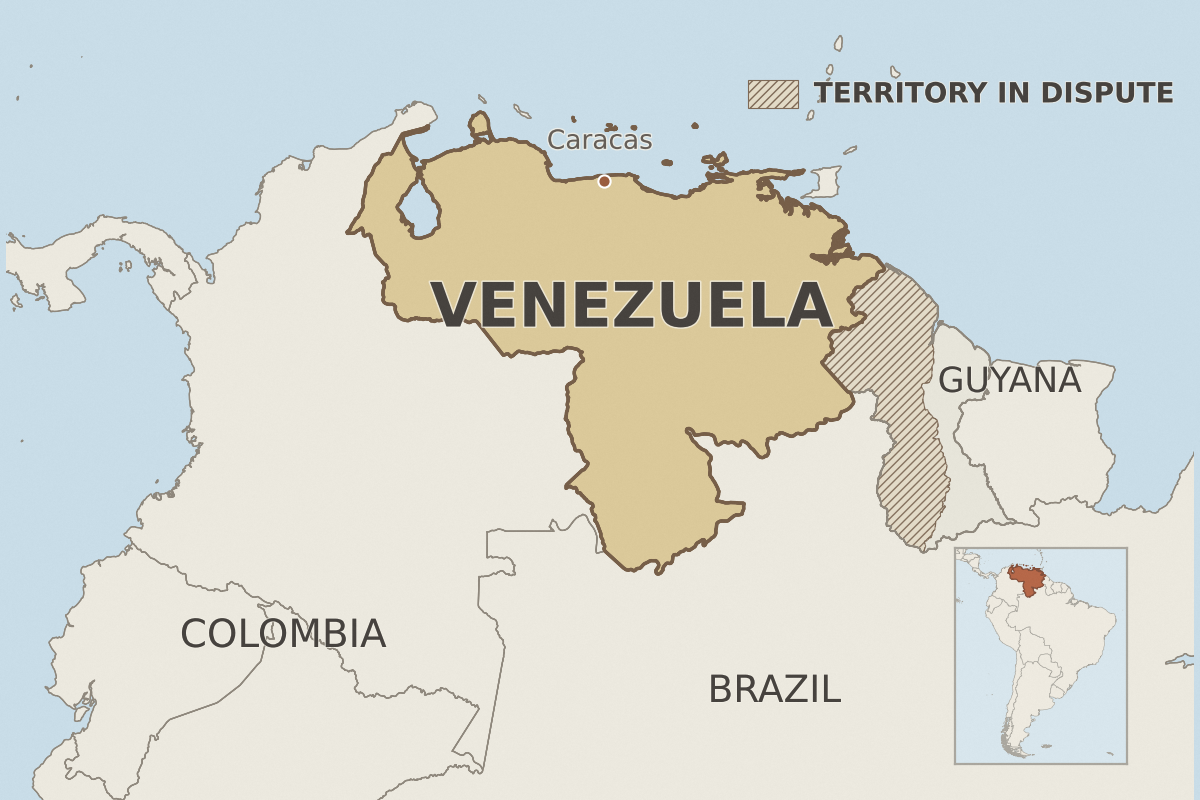
Venezuela lies on the northern coast of South America, facing the Caribbean Sea and sharing land borders with Colombia, Brazil, and Guyana. Its geography matters for migration, trade, humanitarian movement, and the continuing territorial dispute with Guyana over the Essequibo region.
Christian identity is widespread in Venezuela, but a Christian label, family tradition, baptism, church membership, or institutional affiliation does not prove regeneration or saving faith. The deepest spiritual need is not simply for religion to remain visible, but for sinners to repent, trust in Jesus Christ, hear Scripture faithfully taught, and grow as disciples.
Severe persecution is not the ordinary experience of every church or believer in Venezuela. Many congregations worship publicly and serve their communities. Yet political conflict can create pressure on pastors, churches, and Christian organisations, especially when public criticism, relief work, or perceived political alignment places them under suspicion. Pray for courage without recklessness, charity without compromise, and allegiance to Christ above every political camp.
Spiritual and Practical Challenges Affecting Christians and Churches
Churches are serving people through grief, disrupted services, economic hardship, migration, disputed political authority, and long-term earthquake recovery while also needing to remain faithful in preaching, discipleship, mercy, and Christian integrity.
Grief, trauma, and long rebuilding
The earthquakes killed thousands of people and left many more injured, displaced, or grieving. Churches are ministering among people who may be mourning relatives, living away from home, facing disability, or trying to rebuild ordinary life. Pastoral care will need to continue long after emergency attention fades.
Health care, essential services, and vulnerable people
Damaged health facilities, disrupted services, unsafe housing, and the needs of children, older people, people with disabilities, and poor households leave many people needing practical care. Churches need wisdom to serve well while recognising when medical care, child protection, or other specialist help is needed.
Household hardship, migration, and return
Years of economic strain and migration have separated families and weakened many households. Some Venezuelans are returning, while millions remain abroad. Churches need patience to serve people who are rebuilding lives, seeking work, reuniting families, or carrying grief and uncertainty across borders.
Political change, justice, and Christian integrity
The August agreement and the negotiations that follow it deserve earnest prayer, but Christians should not confuse political change with spiritual renewal or the coming of God’s kingdom. Churches need courage to condemn wrongdoing without hatred, pray for rulers without excusing injustice, listen to victims without exploiting their pain, refuse revenge, and keep their allegiance to Christ above party, leader, or foreign power.
Relief work, discipleship, and perseverance
Relief work gives churches real opportunities to care for people in need, but money, supplies, and decisions about who receives assistance must be handled honestly and fairly. Practical service should not displace worship, Scripture, evangelism, discipleship, prayer, or pastoral care. Congregations need faithful teaching from all of Scripture as they care for suffering people, call sinners to repentance and faith, encourage forgiveness and service, and strengthen believers to endure.
Christian Life and Witness in Venezuela
Faithful Christian life in Venezuela includes worship, Scripture, discipleship, mercy, faithfulness in family life, patient pastoral care, and allegiance to Christ during earthquake recovery, political conflict, and economic strain.
For many believers, faithfulness is expressed through ordinary acts: gathering for worship, praying with families, teaching children Scripture, helping neighbours, visiting the sick, supporting people who have lost homes, and refusing to let political division determine whom they will love or serve.
After the earthquakes, Christian organisations and local congregations reported practical relief work. Church and parish facilities were used as shelters; Cáritas reported food, water, medicines, hygiene supplies, and family assistance; Adventist teams reported health care, relief distribution, volunteer service, and pastoral support; and The Salvation Army reported practical, emotional, and spiritual care. These forms of care are good and worthy of thanks, while humanitarian service or a Christian institutional label does not by itself establish doctrinal faithfulness or prove that the people involved have been born again.
The church’s deepest calling remains unchanged: to proclaim salvation by grace through faith in Jesus Christ, teach Scripture faithfully, call sinners to repentance and faith, make disciples, care for the suffering, and help believers persevere in holiness and love. People affected by disaster may need long-term pastoral care for grief, fear, family strain, disability, displacement, and loss of livelihood.
Political change also tests Christian witness. Believers may rightly desire justice, fair institutions, peaceful elections, and the restraint of abuse, but no party, leader, opposition movement, or foreign power should become the church’s hope. Political reform matters, but it cannot reconcile sinners to God or give new spiritual life. Salvation is God’s gift of grace through faith in Jesus Christ.
Pray for pastors to preach the whole counsel of God, congregations to serve without favouritism, Christian families to persevere in worship and discipleship, and believers to speak truth without hatred. Ask God to use faithful preaching, Christian fellowship, acts of mercy, and lives of daily obedience to Christ to bring many Venezuelans to repentance and saving faith.
Recent Developments
The disputed 2024 election, Nicolás Maduro’s capture and Delcy Rodríguez’s acting presidency, prisoner releases, the Essequibo dispute, earthquake recovery, the August 12 agreement, and further negotiations all give Christians specific reasons to pray for Venezuela now.
-
July 2024 and after
Disputed election and repression
Authorities declared Nicolás Maduro the winner of the July 2024 presidential election, while the opposition and outside observers disputed the result. The aftermath included protests, arrests, restrictions on expression, and deeper political distrust.
Prayer significance: Pray for truth, justice, protection from political violence, due process, and leaders who serve the public rather than use institutions for personal or partisan power.
-
January 2026
Maduro captured and Delcy Rodríguez begins serving as acting president
United States forces captured Nicolás Maduro in January 2026. Delcy Rodríguez began serving as acting president, while the legality of the intervention and the constitutional consequences remain disputed. International institutions have continued to coordinate with the Rodríguez administration because it is exercising governing authority, even though the legal and political disputes surrounding the transition remain unresolved.
Prayer significance: Pray for restraint, constitutional wisdom, national peace, protection from revenge, and a political future in which authority is exercised justly and truthfully.
-
2026
Amnesty and political-prisoner releases
The 2026 amnesty and subsequent releases have brought relief to many detainees and families. Independent monitoring nevertheless continues to document hundreds of political prisoners and many thousands of people under restrictive legal measures. The totals change as cases are reviewed, people are released, and release conditions change.
Prayer significance: Give thanks for every genuine release and pray for due process, freedom from mistreatment, full restoration where restrictions are unjust, and healing for former detainees and their families.
-
May 2026 onward
Essequibo dispute remains unresolved
Venezuela continues to emphasize the 1966 Geneva Agreement and a negotiated settlement concerning Essequibo, while Guyana relies on the 1899 arbitral award and the continuing proceedings before the International Court of Justice. Venezuela’s acting government has maintained its claim while also speaking publicly about peaceful dialogue.
Prayer significance: Pray that both countries would reject threats and violence, deal truthfully with legal and historical disagreements, and pursue a peaceful settlement.
-
June 24-July 2026
Earthquake emergency moves into long-term recovery
By July 25, Venezuelan authorities reported 5,546 deaths, 16,740 injuries, 17,907 people who had lost permanent housing, and more than 23,000 people living in temporary camps. PAHO reported damage to 38 health facilities and a transition toward restoring essential health services. By July 24, the United Nations said more than 117,000 affected people had received humanitarian assistance, while the World Bank estimated direct physical damage at about $19.6 billion.
Prayer significance: Pray for grieving families, injured people, safe housing, functioning hospitals and schools, honest reconstruction, restored livelihoods, and patient long-term care for traumatised communities.
-
August 6-12, 2026
First direct negotiation cycle ends with a signed agreement
Representatives of the Rodríguez government and a sector of the opposition completed their first cycle of direct meetings on August 12. Jorge Rodríguez and Dinorah Figuera signed a joint document that provides for a renewed process covering the full Supreme Court bench, joint efforts to recover Venezuelan gold held at the Bank of England for earthquake recovery, transparency and audit measures connected with those resources, and continued work through two negotiating groups focused on earthquake response and democratic institutions. The parties are expected to meet again in mid-September. Important electoral and political questions remain unsettled. The practical effect of the agreement will depend on whether its commitments are actually carried out.
Prayer significance: Give thanks for any part of the agreement that genuinely advances justice or earthquake relief. Pray for honest implementation, judicial integrity, transparent use of resources, protection of rights, responsible participation by a wider range of political representatives, peaceful further negotiations, and freedom from manipulation or broken commitments.
How to Pray
Pray for comfort and rebuilding, justice and mercy, faithful churches, peaceful relationships, repentance and saving faith, and enduring hope in Christ.
-
Pray for people grieving, injured, or traumatised after the earthquakes. Ask God to comfort bereaved families, strengthen people living with injury or disability, protect children and vulnerable adults, and provide patient pastoral and psychological care.
-
Pray for safe and honest rebuilding. Ask for secure housing, clean water, functioning hospitals and schools, restored roads and services, renewed livelihoods, and wise use of reconstruction funds without corruption or favouritism.
-
Pray that vulnerable people would not be overlooked. Remember people in temporary shelter, poor households, older people, people with disabilities, children, and communities whose needs may receive less attention as the emergency fades from public view.
-
Pray for government that serves justly. Ask God to restrain corruption, cruelty, political hatred, manipulation, and misuse of power. Pray for leaders and public servants to act truthfully, protect human dignity, and pursue the common good.
-
Pray for honest implementation and further political negotiations. Ask that commitments concerning the Supreme Court process and earthquake-recovery resources would be carried out truthfully and transparently. Pray for judicial integrity, protection of rights, peaceful resolution of remaining disputes, wider political participation, and leaders who seek justice rather than revenge, manipulation, or personal advantage.
-
Pray for prisoners, former detainees, and their families. Give thanks for genuine releases and ask for fair hearings, freedom from mistreatment, an end to unjust detention, removal of unjust restrictions, and healing for people carrying fear, trauma, or family separation.
-
Pray for households, migrants, returnees, and displaced families. Ask God to provide work, housing, health care, education, family reunion, safe travel, and practical support for people rebuilding their lives in Venezuela or after returning from abroad.
-
Pray for churches, pastors, and Christian workers. Ask for faithful preaching, wise pastoral care, honest relief work, courage under political pressure, generosity without favouritism, and freedom from manipulation by any political camp.
-
Pray for repentance, saving faith, and discipleship. Ask the Holy Spirit to bring many Venezuelans to repentance and trust in Jesus Christ, and to strengthen believers in Scripture, prayer, worship, holiness, family discipleship, fellowship, and obedience.
-
Pray for peace with Guyana. Ask both countries to reject threats and violence, speak truthfully about their claims, and pursue lawful and peaceful ways of addressing the Essequibo dispute.
-
Pray for endurance and hope in Christ. Ask God to keep believers from despair, fear, and idolatrous trust in political outcomes. Teach the church to pray, “Your kingdom come,” and to remember that final justice and restoration do not depend on any earthly government.
Give Thanks
Give thanks for real mercies without pretending that Venezuela’s suffering, political conflict, or spiritual need has been resolved.
-
Give thanks for rescuers, health workers, and humanitarian personnel. Praise God for people who searched for survivors, treated the injured, delivered supplies, restored services, and continue serving communities during the long recovery.
-
Give thanks for practical assistance reaching affected families. Food, water, medicines, shelter support, health services, hygiene supplies, and other forms of assistance have helped many people endure the aftermath of the earthquakes.
-
Give thanks for local congregations and Christian organisations showing mercy. Thank God for acts of care, hospitality, health support, relief distribution, and pastoral attention that genuinely serve people in need. At the same time, remember that a Christian institutional label or humanitarian service does not by itself prove doctrinal faithfulness or saving faith.
-
Give thanks for genuine prisoner releases. Praise God for families reunited and people released from detention, and pray that mercy would be followed by justice, due process, healing, and the removal of unjust restrictions.
-
Give thanks for family, neighbour, and cross-border care. Many people continue to support relatives, neighbours, migrants, returnees, and displaced families through practical help, remittances, hospitality, and care for one another.
-
Give thanks for specific commitments in the August 12 agreement. The agreement includes commitments concerning the judiciary and earthquake-recovery resources. Thank God for any genuine progress toward justice, accountability, and peaceful cooperation, and pray that the commitments are carried out faithfully rather than remaining only on paper.
-
Give thanks for believers who continue to worship, preach, teach, serve, and care. Praise God for Christians who keep worshipping, preaching, teaching, serving, and caring for others, and ask Him to make their witness clear, humble, courageous, and centred on Christ.
Last Verified / Update Note
This note shows when the guide was reviewed, the main areas that were checked, and developments that may change the situation and affect what Christians need to pray about.
Review Status
Reviewed for current prayer use
This update reviewed Venezuela’s recovery after the June 24 earthquakes, including casualty, displacement, shelter, health-system, humanitarian-assistance, and reconstruction information. It also reviewed migration and return movements; Nicolás Maduro’s January capture and Delcy Rodríguez’s acting presidency; political detention, the 2026 amnesty, and subsequent releases; the August negotiations and August 12 agreement; Christian humanitarian service and church life; political pressures affecting churches; and the continuing Essequibo dispute.
Pray for people who are grieving, injured, traumatised, or displaced; safe housing and essential services; restored livelihoods; honest rebuilding; government that serves the people justly; peaceful and truthful political reform; prisoners and former detainees; migrants and returnees; struggling households; peaceful relations with Guyana; churches that resist political manipulation and remain faithful to Scripture; and the salvation and discipleship of Venezuelans.
Earthquake casualty, displacement, housing, health-service, and reconstruction figures may continue to change. Claims about rebuilding should be compared with homes completed, services restored, livelihoods recovered, and assistance actually reaching affected communities. The first direct negotiation cycle concluded on August 12 with a signed agreement; the next important question is how those commitments are carried out. Developments to watch include the renewed Supreme Court selection process; transparency and legal developments concerning any recovery or use of Venezuelan gold held in London; the earthquake-recovery and democratic-institutions negotiating groups; further electoral and institutional negotiations; wider opposition participation; and the next expected plenary round around mid-September. Political-prisoner totals and legal restrictions also change as cases are reviewed and people are released. Migration and return patterns, humanitarian funding, the position of the acting administration, and developments concerning Essequibo may also change what Christians need to pray about.
This guide uses a mixture of Venezuelan government statements, Venezuelan independent and civil-society sources, regional reporting, international institutions, humanitarian agencies, church organisations, and reputable outside reporting. Government sources are used to establish official positions and announced actions, not as independent proof that every claim or commitment has been fulfilled. Political and legal claims are distinguished from confirmed events and outside assessments. Disaster and prisoner figures are tied to reporting dates because they change. Church relief figures describe what the organisations themselves report about their work. Information on the August political negotiations is current through 13 August 2026: the first direct cycle ended on August 12 with a signed agreement, while implementation, further electoral and institutional negotiations, wider participation, and later outcomes remain unsettled.
Help keep this guide accurate and current
If you noticed a possible correction, broken link, or significant country update, please contact the Nations Prayer Directory so we can review it carefully.
Key Sources Consulted
Sources that informed this Venezuela prayer guide include Venezuelan official statements, humanitarian and recovery reporting, political and civil-society reporting, migration data, church relief reporting, and the international legal record concerning Essequibo.
Venezuelan official positions and public action
- Venezuela Ministry of Foreign Affairs / Presidential Press – earthquake recovery and reconstruction. Used for the acting government’s description of the reconstruction programme and its coordination with the United Nations.
- Venezuela Ministry of Foreign Affairs – blocked resources and earthquake reconstruction. Used for the acting government’s stated objective of seeking release of Venezuelan resources held abroad for earthquake reconstruction.
- Venezuela Ministry of Foreign Affairs – official Essequibo position. Used for Venezuela’s reliance on the 1966 Geneva Agreement and its stated preference for negotiated settlement.
- Últimas Noticias – publication of the 2026 Amnesty Law. Used for reporting on publication of the 2026 Amnesty Law and the government’s account of the measure.
Earthquake, humanitarian recovery, and reconstruction
- Pan American Health Organization / World Health Organization – Venezuela earthquake health response. Used for health-facility damage, early recovery, restoration of essential services, rehabilitation, and public-health needs.
- United Nations in Venezuela – one-month earthquake humanitarian response. Used for the number of people reported to have received humanitarian assistance and for continuing needs identified in coordination with Venezuelan authorities.
- World Bank Group – rapid estimate of earthquake damage. Used for the early estimate of direct physical damage.
- EFE – July 25 official earthquake tally. Used for the dated death, injury, housing-loss, and temporary-camp figures carried in Recent Developments.
Political transition, negotiations, prisoners, and civil liberties
- EL PAÍS América – August 12 government-opposition agreement. Used for the completion of the first direct negotiation cycle, the signed agreement, Supreme Court renewal provisions, joint effort concerning Venezuelan gold held in London, transparency mechanisms, follow-up working tables, expected mid-September resumption, and participation limits.
- Associated Press – political transition and acting presidency. Used for independent reporting on Delcy Rodríguez’s governing role and the disputed legal and political transition.
- El Pitazo – Venezuelan independent reporting on the current dialogue. Used for Venezuelan reporting on political negotiations and disagreement around the process.
- Foro Penal – repression and political-prisoner figures. Used for July political-prisoner figures, restrictive legal measures, and prisoner releases.
- Freedom House – Freedom in the World 2026: Venezuela. Used for civil-liberties, political-participation, due-process, media, and religious-freedom background.
Migration and return
- International Organization for Migration – Venezuela Crisis Response Plan 2026. Used for return movements, reintegration needs, and continuing humanitarian and protection concerns.
- UNHCR – Venezuela Situation. Used for the scale of Venezuelan displacement and continuing regional protection needs.
- UNHCR – research on Venezuelans considering return. Used for return intentions and the importance of voluntary, safe, and dignified return.
Christian life and humanitarian service
- Cáritas de Venezuela – earthquake response bulletin. Used for Cáritas’s own reporting on food, water, medicines, hygiene assistance, family support, and volunteer mobilisation.
- Seventh-day Adventist reporting – earthquake relief across Venezuela. Used for the Adventist organisation’s own reporting on volunteer service, health care, relief distribution, and pastoral support.
- The Salvation Army – Venezuela earthquake response. Used for The Salvation Army’s own reporting on practical, emotional, and spiritual support.
Territorial dispute
- International Court of Justice – Arbitral Award of 3 October 1899 (Guyana v. Venezuela). Used for the judicial framework and continuing proceedings concerning the Guyana-Venezuela territorial dispute.
Source Context
These notes explain how to read fast-changing figures, official claims, political reporting, migration evidence, reports from church organisations, and contested territorial information in this guide.
Source Context
- Fast-changing figures: Earthquake deaths, injuries, displacement, shelter use, reconstruction progress, and political-prisoner totals are dated rather than presented as permanent numbers. Figures from different reporting dates are kept separate because they describe different points in a changing situation.
- Earthquake estimates: The World Bank’s $19.6 billion figure is an early estimate of direct physical damage. It should not be read as a final reconstruction bill or proof of how much rebuilding has been completed.
- Government information: Venezuelan government sources are important for understanding official policy, reconstruction plans, the acting government’s position, the amnesty, and Venezuela’s position on Essequibo. They show what authorities say, announce, or claim, but do not independently verify that every announced action or outcome has occurred.
- Political negotiations: The first direct negotiation cycle concluded on August 12 with a signed agreement. As of 13 August 2026, no directly accessible Venezuelan government page publishing the full final communiqué was available, so the detailed terms here rely primarily on current reporting from Caracas about the document that the two delegation leaders signed and read publicly. Venezuelan official sources separately confirm that recovery of the country’s gold held in London for earthquake reconstruction was already a stated government objective. The agreement should be read as a concrete political development, not as proof that judicial renewal, electoral reform, democratic transition, or recovery of the gold has already been completed.
- Political prisoners: Different organisations may use different definitions, verification methods, and reporting dates. Foro Penal published political-prisoner figures on July 17, but releases and case changes continue, so no single total should be treated as permanent.
- Political transition: Venezuelan official sources describe Delcy Rodríguez as acting president, and she is exercising governing authority. Outside reporting has documented unresolved constitutional and procedural questions about the basis and duration of that role. Describing Delcy Rodríguez as acting president reflects the authority she presently exercises; it does not mean that the constitutional and procedural disputes surrounding the transition are settled.
- Essequibo: Venezuela’s official position and the International Court of Justice process are not interchangeable. Venezuela relies on the Geneva Agreement and calls for a negotiated settlement, while Guyana relies on the 1899 award and the ICJ proceedings continue.
- Migration and return: Evidence of increased return movements does not mean Venezuela’s long migration crisis has ended. Millions of Venezuelans remain abroad, while some people are returning and facing substantial reintegration needs.
- Church sources: Cáritas, Adventist, and Salvation Army sources describe their own ministries and relief activity. They do not establish the spiritual condition of individuals or amount to blanket theological endorsement of the institutions involved.
A Closing Prayer for Venezuela
A prayer bringing Venezuela’s present needs before the Lord.


