


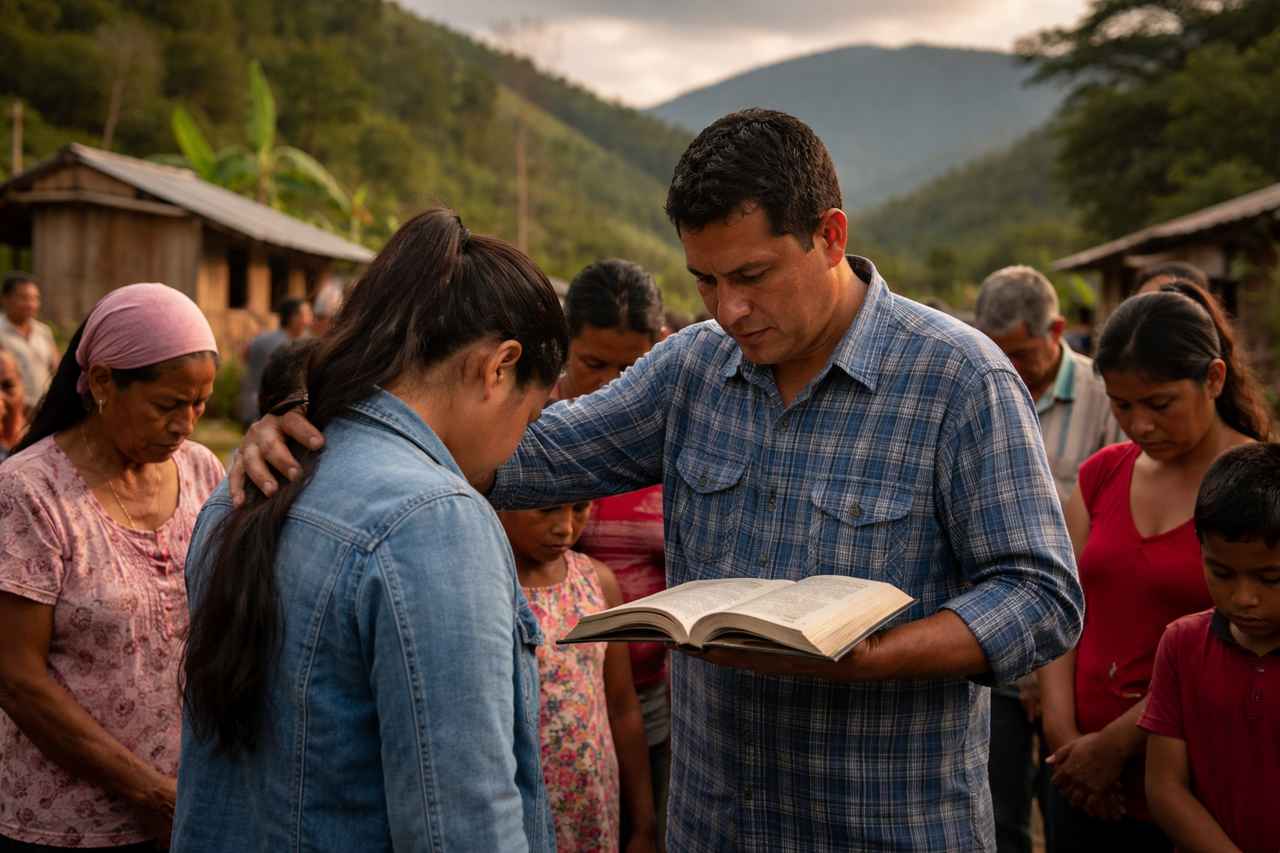
Christianity has long shaped public and family life in Colombia, but many communities still live with armed violence, displacement, criminal control, recruitment of children, and fear. Pastors and churches can face particular danger when they protect vulnerable people, resist criminal influence, or help families rebuild lives damaged by violence.
A Christian label is not the same as saving faith in Jesus Christ. Yet throughout Colombia, believers continue to worship, preach the gospel, disciple Christians, care for suffering neighbors, and serve communities scarred by violence and distrust.
On August 10, 2026, a devastating earthquake struck western Colombia, bringing a new and immediate burden. Families are grieving, thousands have been injured, communities have been damaged, and survivors face a long process of recovery and rebuilding.
Three days earlier, Colombia had completed a presidential transition. The new administration has signalled a significantly different approach to armed groups and national security. Christians therefore have many reasons to pray: for people suffering after the earthquake, for communities living under armed pressure, for children at risk, for faithful churches, and for leaders entrusted with governing a divided and still violent country.
Prayer Burden at a Glance
Pray for families suffering after the August earthquake, communities living under armed pressure, children vulnerable to recruitment and exploitation, Christians serving at personal cost, and Colombia’s new government as it changes the country’s approach to armed groups. Ask God for comfort, protection, justice, restraint, faithful church witness, and peace that does not sacrifice truth or human dignity.
Last verified: August 18, 2026
Why Colombia Needs Prayer Now
Colombia is carrying both a sudden earthquake emergency and deeper wounds from armed violence, displacement, criminal control, and long-running insecurity.
The August 10 earthquake brought widespread grief and disruption to western Colombia. Families have lost loved ones, thousands have been injured, homes and public facilities have been damaged, and communities are moving from rescue efforts into recovery, care for survivors, and long-term rebuilding.
But the earthquake has fallen on a country already carrying deep wounds. Armed groups and criminal networks continue to compete for territory and influence in parts of Colombia. Communities may face displacement, killings, threats, recruitment of children, restrictions on movement, interrupted schooling, and pressure to cooperate with those who control local areas.
These realities often reach directly into church life. Pastors may counsel traumatized families, help young people resist recruitment, assist displaced households, comfort those who mourn, or speak against violence and criminal control. In some places, this kind of ministry can make Christian leaders targets themselves.
Colombia’s political situation has also changed. The 2026 election season is over, and Abelardo de la Espriella took office as president on August 7. His administration has signalled a harder security approach toward illegal armed groups than the broad negotiation strategy associated with the previous government.
This change gives Christians fresh reasons to pray for those in authority. Negotiations do not automatically produce justice, and military pressure cannot by itself heal communities shaped by decades of violence. Colombia needs leaders who govern lawfully and wisely, security forces that protect civilians, accountability for wrongdoing, and communities where people can live without coercion or fear.
Country Snapshot
A brief orientation to Colombia’s location, government, population, religious setting, and current Christian ministry context.
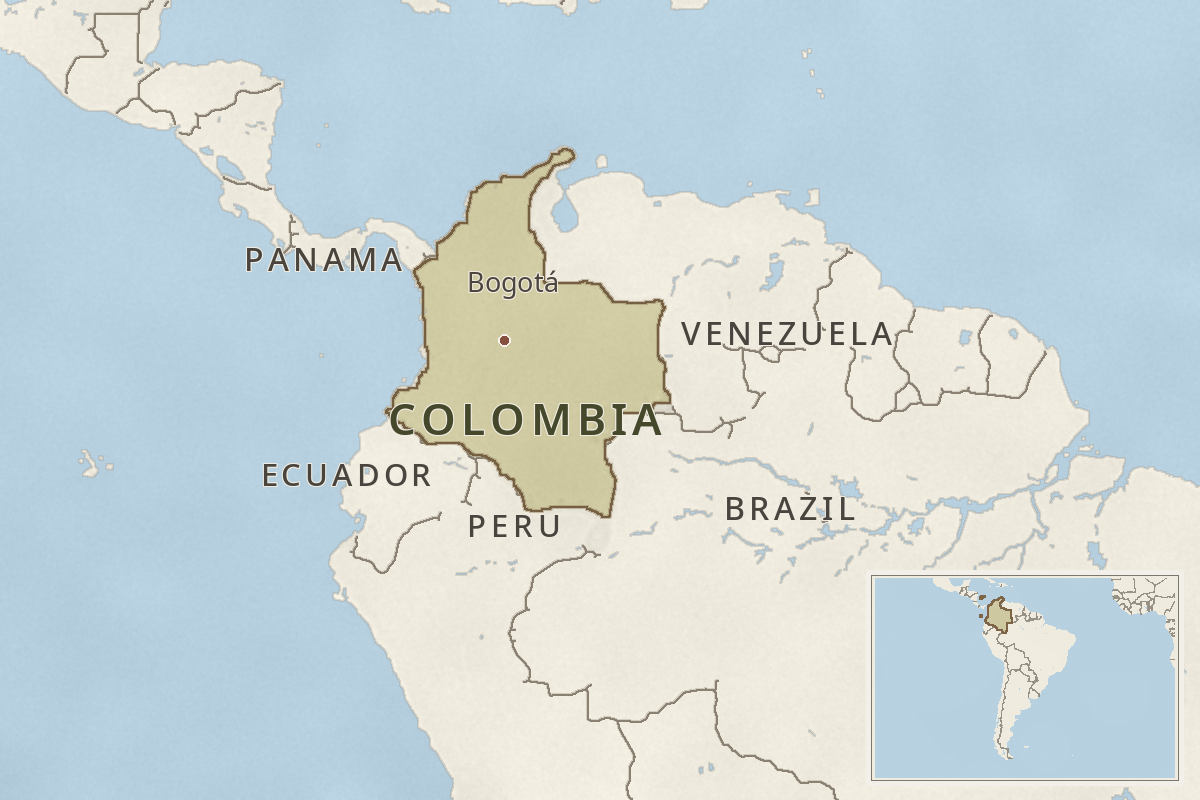
Colombia is a presidential republic in northwestern South America with a population of more than 52 million. Christianity remains the country’s majority religious identity, although Christian life differs greatly between relatively secure urban areas and communities affected by armed conflict, criminal power, displacement, or social pressure.
President: Abelardo de la Espriella, sworn in on August 7, 2026.
Colombia’s spiritual condition cannot be understood simply by counting how many people identify as Christian. The country needs faithful preaching of Jesus Christ, genuine repentance and faith, mature discipleship, courageous Christian witness, protection for vulnerable believers, mercy toward suffering communities, and churches that pursue peace without abandoning truth or justice.
Spiritual and Practical Challenges Affecting Christians and Churches
Christian ministry in Colombia can be shaped by armed and criminal control, displacement, child recruitment, trauma, and pressure on some believers from Indigenous backgrounds.
Ministry under armed and criminal control
In places where armed groups or criminal networks exercise influence, ordinary Christian ministry can bring churches into conflict with powerful interests. Helping a young person escape recruitment, protecting vulnerable families, assisting displaced people, or speaking against criminal practices may bring threats, extortion, intimidation, or violence.
The human cost of prolonged conflict
Territorial fighting and illegal economies affect far more than those carrying weapons. Families may be forced from their homes, children may lose access to school, farmers may be unable to work safely, and whole communities may find themselves caught between competing armed actors. Churches serve among people carrying fear, grief, instability, and repeated displacement.
Children facing recruitment and exploitation
The recruitment and use of children by armed groups remains an especially serious burden. Behind the statistics are young people whose childhood, education, family relationships, and future can be damaged by coercion and violence. Parents, teachers, churches, and community leaders need wisdom and courage to protect them.
Pressure on some Indigenous-background believers
In certain communities, following Christ may be understood as rejecting inherited religious expectations or communal traditions. Some Indigenous-background Christians may therefore experience exclusion, complaints, threats, or other pressure. This is not the experience of every Indigenous Christian, but where it occurs it can be deeply painful and isolating.
Christian Life and Witness in Colombia
Many congregations worship and serve openly, while churches in conflict-affected areas may carry heavy pastoral, humanitarian, and security burdens.
Christian life in Colombia is not defined only by persecution or violence. Many congregations worship openly, teach Scripture, share the gospel, disciple believers, serve their neighborhoods, and take part freely in public life.
Yet legal freedom does not mean that every church ministers under equally safe conditions. In conflict-affected areas, believers may have to think carefully about where they travel, whom they help, how openly they challenge criminal influence, and how they protect vulnerable members of their congregations.
Pastors may carry responsibilities far beyond preaching. A church leader might spend one day teaching Scripture and another helping a displaced family, counseling parents who fear their child may be recruited, comforting someone whose relative has been killed, or assisting neighbors after a natural disaster. Such ministry can bring exhaustion and trauma as well as danger.
The August earthquake creates another setting in which churches can show practical Christian love: receiving displaced families, comforting those who mourn, helping communities organize assistance, caring for children, and serving suffering neighbors.
Churches also need grace to resist being captured by political loyalties. Christians can be tempted to place too much hope in one leader, party, peace strategy, or security policy. Faithful witness calls them instead to speak truth, defend vulnerable people, reject corruption and vengeance, show mercy, pursue justice, and remember that their deepest hope rests in Jesus Christ.
Recent Developments
The August earthquake and presidential transition have changed Colombia’s immediate prayer context, while longstanding armed violence and fragmented peace efforts remain unresolved.
-
August 10, 2026
A major earthquake struck western Colombia
The magnitude 7.4 earthquake caused widespread destruction and a major humanitarian emergency. As of August 18, Colombia’s Institute of Legal Medicine reported at least 304 deaths, while authorities were reporting 4,147 injuries and 194 people missing. The figures remain provisional as identification, search, reporting, and damage assessments continue.
Prayer significance: Pray for grieving families, injured people, those awaiting news of missing relatives, responders, and communities facing a long recovery and rebuilding process.
-
August 8, 2026
Armed violence continued immediately after the presidential transition
A car bomb exploded at a toll plaza on the Pan-American Highway in southwestern Colombia, injuring two security guards. The Colombian army attributed the attack to FARC dissident factions. That attribution remains an official claim rather than an independently established conclusion.
Prayer significance: Pray for civilian protection, restraint of armed groups, wise security decisions, and communities living with persistent fear and violence.
-
August 7, 2026
Colombia completed its presidential transition
Abelardo de la Espriella was sworn in as president, succeeding Gustavo Petro and bringing Colombia’s 2026 election season to a close.
Prayer significance: Pray for the president and all who exercise public authority to govern lawfully, justly, humbly, and with special care for civilians.
-
August 7 onward
The government’s approach to armed groups began changing
The new administration has publicly rejected the previous government’s broad negotiation-centred strategy and emphasized stronger security action. This marks a significant policy change, although the exact status of individual dialogue processes inherited from the previous government is not yet fully settled.
Prayer significance: Pray that crimes are confronted justly, civilians are protected, armed actors are restrained, and genuine opportunities for peace are recognized without ignoring truth or accountability.
-
Before the August transition
Colombia’s peace efforts were already fragmented
The previous government continued some dialogue processes while others were weakening or being reconsidered. Colombia therefore entered the new administration with several armed actors, uneven negotiations, serious local insecurity, and unresolved questions about how lasting peace can be achieved.
Prayer significance: Pray for justice, protection for civilians, accountability for armed actors, repentance from violence, and communities where people can live without fear.
How to Pray
Pray for mercy after the earthquake, protection amid violence, faithful churches, vulnerable children, wise government, and lasting peace in Colombia.
-
Pray for families suffering after the August earthquake. Ask the Lord to comfort those who mourn, sustain the injured, strengthen families awaiting news of missing relatives, provide shelter and practical assistance, and uphold communities facing years of rebuilding.
-
Pray for those serving earthquake survivors. Remember rescue workers, medical teams, local authorities, volunteers, and humanitarian workers. Ask God to give them stamina, wisdom, compassion, honest coordination, and the resources needed to serve people well.
-
Pray for pastors and churches serving under armed or criminal pressure. Ask God for courage without recklessness, wisdom without compromise, faithful preaching, strong discipleship, and protection as Christians care for vulnerable neighbors.
-
Pray for children and young people vulnerable to recruitment. Ask the Lord to guard them from coercion and exploitation, strengthen parents and caregivers, preserve access to education, and raise up trustworthy adults and churches willing to stand with them.
-
Pray for displaced and conflict-affected communities. Ask God to provide safe places to live, food, schooling, livelihoods, pastoral care, emotional healing, and opportunities to rebuild stable community life.
-
Pray for President Abelardo de la Espriella and all who exercise public authority. Ask God to restrain pride, corruption, vengeance, cruelty, and lawlessness, and to grant wisdom, justice, humility, respect for human dignity, and special care for civilians.
-
Pray for wisdom as Colombia changes its approach to armed groups. Ask that crimes would be confronted justly, civilians protected, armed actors restrained, genuine opportunities for peace recognized, and leaders kept from either reckless violence or agreements that ignore truth and accountability.
-
Pray for Christians who face pressure because they follow Christ. Remember especially vulnerable Indigenous-background believers. Ask the Lord to preserve them in faith, give them gracious courage, and help surrounding churches support them with biblical wisdom and practical love.
-
Pray for churches amid political division. Ask that believers would neither idolize political leaders nor withdraw from public suffering. Pray that they would speak truth, practise mercy, defend vulnerable people, reject hatred, and point others to the hope found in Jesus Christ.
-
Pray for lasting peace. Ask God to frustrate those who profit from bloodshed, trafficking, exploitation, and fear; bring wrongdoers to repentance and justice; heal wounded communities; and make churches places where reconciliation is joined to truth, forgiveness, holiness, and hope.
Give Thanks
Colombia’s suffering is serious, but there are still clear mercies for which Christians can thank God.
-
Give thanks for those helping earthquake survivors. Thank God for rescuers, health workers, volunteers, neighbors, humanitarian organizations, and others giving practical help to people in distress.
-
Give thanks for Christian congregations that continue to worship and serve. In communities affected by fear and instability, ordinary faithfulness in preaching, prayer, discipleship, hospitality, and care for neighbors is precious.
-
Give thanks for Christians who protect vulnerable people. Thank God for pastors, parents, teachers, church workers, and community leaders who help children, displaced families, grieving households, and people trying to escape violence or criminal influence.
-
Give thanks for people who continue working for peace and justice. Colombia’s conflicts remain unresolved, but many people have not stopped caring for victims, resisting violence, seeking accountability, and working for safer communities.
-
Give thanks that Christian hope does not depend on political power. Governments change, national policies change, and circumstances can change suddenly. Jesus Christ remains Lord, and his people can continue worshipping, serving, speaking truth, and loving their neighbors through political change, disaster, conflict, and rebuilding.
Last Verified / Update Note
This note helps readers understand when the guide was reviewed and which developments may affect how they use it for prayer.
Review Status
Reviewed for current prayer use
This guide was reviewed through August 18 after the August 10 earthquake and the August 7 presidential transition. The review rechecked the latest available earthquake death, injury, and missing-person figures, Colombia’s current president, the government’s changing approach to armed groups, continuing conflict and displacement in places such as Catatumbo, child recruitment, Christian vulnerability, and church calls for peace and reconciliation.
Major needs include families grieving and rebuilding after the earthquake; displaced and conflict-affected communities; children vulnerable to recruitment; pastors and believers serving where armed or criminal groups exercise pressure; vulnerable Indigenous-background Christians; and wisdom, justice, restraint, and civilian protection as the new government changes Colombia’s security approach.
Earthquake death, injury, missing-person, and reconstruction figures remain provisional and may continue to change as Colombian institutions reconcile reports and identification records. Colombia’s post-transition approach to armed groups is also developing, including the practical fate of dialogue mechanisms inherited from the previous government. Renewed conflict, displacement, child recruitment, attacks affecting churches or community leaders, and significant changes in religious-freedom conditions could also alter how readers should pray.
This guide draws on Colombian official institutions, national reporting, humanitarian and human-rights organizations, church sources, Christian religious-freedom research, and reputable international reporting. Because disaster and security conditions can change quickly, figures and claims are presented with dates and appropriate qualifications.
Help keep this guide accurate and current
If you noticed a possible correction, broken link, or significant country update, please contact the Nations Prayer Directory so we can review it carefully.
Key Sources Consulted
These sources include Colombian official institutions, humanitarian and human-rights organizations, church and religious-freedom research, national reporting, regional institutions, and reputable international reporting. Together, they informed the guide’s country context, recent developments, and prayer concerns.
Country background, elections, and leadership
- Consejo Nacional Electoral. Resolution declaring the election of Colombia’s President and Vice-President for 2026–2030. Confirms the official result of Colombia’s 2026 presidential election.
- Organization of American States. Statement on Colombia’s 2026 elections. Provides regional electoral-observation context for Colombia’s 2026 elections.
- Associated Press. August 7, 2026 presidential inauguration report. Confirms Abelardo de la Espriella’s August 7 inauguration and reports the security-policy shift announced at the start of his administration.
- World Bank. Colombia country data. Provides current population data for Colombia.
Earthquake and recovery
- Associated Press. August 10 earthquake report. Reports the magnitude 7.4 earthquake, its impact in western Colombia, and the initial emergency response.
- Cadena SER / agency reporting. August 18 earthquake update citing Colombia’s Institute of Legal Medicine and UNGRD. Reports the August 18 official balance cited in this guide: at least 304 deaths, 4,147 injuries, and 194 people missing.
- Associated Press. Earthquake rescue and humanitarian response reporting. Provides reporting on rescue efforts, humanitarian needs, and the transition toward recovery.
Armed conflict, displacement, and children
- Human Rights Watch. World Report 2026: Colombia. Provides context on conflict-related abuses, displacement, and the expansion of armed groups.
- Defensoría del Pueblo. Catatumbo humanitarian-crisis reporting. Provides a Colombian public-institution perspective on territorial control, displacement, recruitment, violence, and civilian suffering in Catatumbo.
- Norwegian Refugee Council. “Catatumbo, Colombia: 100,000 displaced after a year of brutal conflict.” Documents continuing displacement and insecurity in Catatumbo.
- UNICEF. “Child recruitment and use by armed groups in Colombia quadruples over five years.” Documents the scale and growth of child recruitment and use by armed groups.
Peace and security transition
- Presidency of Colombia. May 8 announcement on EGC / Clan del Golfo temporary location zones. Records the outgoing government’s official position and the state of the EGC / Clan del Golfo dialogue before the presidential transition.
- Presidency of Colombia. August 5 revocation of eight FARC-dissident dialogue representatives. Records the August 5 withdrawal of eight FARC-dissident dialogue representatives, showing that parts of the previous peace process were already weakening before the change of government.
- El Espectador / Colombia+20. June 25 EGC dialogue update. Provides Colombian national reporting on efforts to preserve the EGC dialogue through the government transition and on the postponement of a temporary location zone.
- Associated Press. August 7 transition and security-policy report. Reports the new administration’s rejection of the previous broad negotiation-centred strategy.
- Associated Press. August 8 car-bomb report. Reports the August 8 car-bomb attack and the Colombian army’s attribution of responsibility.
Christian life and church perspective
- Open Doors. Colombia country profile, World Watch List 2026. Provides specialist reporting on risks faced by pastors and Christians in areas where ministry challenges gangs, cartels, and criminal control.
- Open Doors. World Watch List documentation. Explains the World Watch List methodology used to interpret the Colombia profile and ranking.
- Vatican News. Colombian bishops’ appeal for peace and reconciliation. Provides a current Colombian Catholic church perspective on peace, reconciliation, and public life.
Source Context
How to read the sources behind this guide in a setting shaped by a fast-changing disaster, political transition, armed conflict, and varied Christian experience.
Source Context
- Earthquake figures. Death, injury, and missing-person totals remain volatile as Colombian institutions identify victims and reconcile reports from affected areas. As of August 18, the latest available balance reports at least 304 deaths, 4,147 injuries, and 194 people missing. Contemporary reports do not all carry the same fatality total, so these figures are date-stamped and should not be treated as final.
- Disaster-source access. The August 18 figures come from reputable reporting that attributes the death toll to Colombia’s Institute of Legal Medicine and says UNGRD confirmed the broader figures. At the time this guide was verified, a single official public page carrying all three figures together was not available.
- Presidential transition. The election result and completed change of president are settled current facts. The CNE formally declared the 2026–2030 election, and Abelardo de la Espriella was inaugurated on August 7.
- Peace and security policy. The new administration has clearly rejected the previous government’s broad negotiation-centred policy. Public reporting does not describe the status of every dialogue process inherited from the Petro administration in the same way. The overall policy shift is therefore clearer than the precise legal status of each individual process.
- Conflict and displacement figures. Catatumbo figures come from different reporting periods and categories, including displacement, confinement, and broader victim registrations. They should not be added together as if they measured the same population. The continuing humanitarian crisis itself is well documented.
- Christian-pressure reporting. Open Doors provides specialist Christian religious-freedom and persecution research. Its World Watch List ranking highlights serious risks in particular Colombian settings; it does not mean that Christians throughout the whole country experience the same level or type of pressure.
- Church perspective. Statements from Colombia’s Catholic bishops provide an important pastoral Christian voice on peace, reconciliation, and civic life, but they do not represent every Colombian church or Protestant denomination.
A Closing Prayer for Colombia
A prayer gathering Colombia’s present burdens before the Lord with hope in Jesus Christ.


