


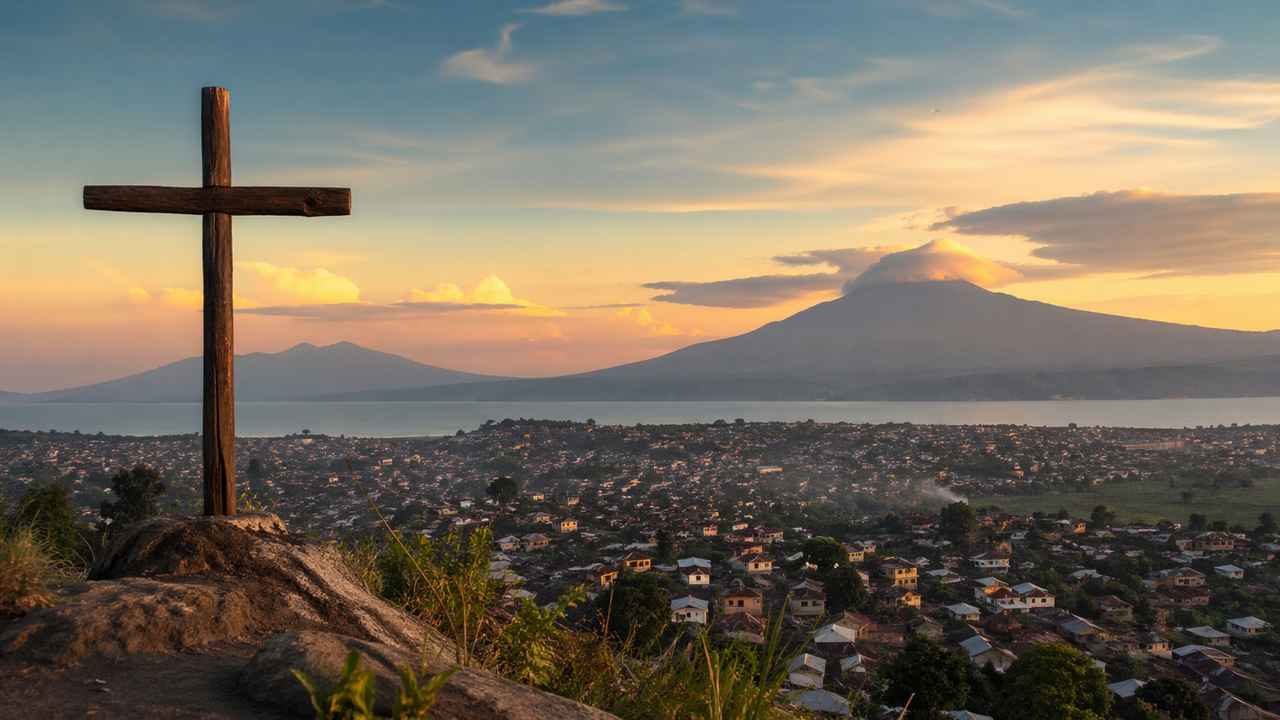
The Democratic Republic of the Congo has one of Africa’s largest populations identifying as Christian, yet many eastern communities are living with war, displacement, and renewed fear. Millions of people, including many believers, are trying to worship, raise families, grieve losses, endure violence, and serve their neighbors while conflict keeps bringing fresh sorrow. Christians should pray for them with compassion, asking God for truth, mercy, protection, endurance, justice, and peace.
Prayer Burden at a Glance
Pray for believers, churches, health workers, and vulnerable communities in the Democratic Republic of the Congo, especially in the conflict-affected east and northeast, where armed violence, displacement, anti-Christian attacks, and a rapidly expanding Ebola outbreak are deepening fear and suffering. As of August 17, government data reported 4,945 confirmed Ebola cases and 2,325 deaths, making this the deadliest Ebola outbreak recorded in the country; six provinces had been affected, with Ituri still the main centre of transmission. Pray for the Lord to protect the vulnerable, strengthen His people, sustain those giving care, restrain evil, and grant mercy and just and lasting peace.
Last verified: August 17, 2026
Why Democratic Republic of the Congo Needs Prayer Now
Eastern Congo remains caught in conflict, displacement, anti-Christian violence, and fear as the Ebola outbreak spreads, giving Christians clear reasons to pray with urgency, compassion, and care.
The Democratic Republic of the Congo needs prayer now because eastern Congo remains caught in a brutal mix of war, displacement, armed violence, and renewed public-health fear. In North Kivu, South Kivu, and Ituri, families have been uprooted, livelihoods shattered, children are living with repeated insecurity, and entire communities remain under threat of further violence. UNHCR’s Democratic Republic of the Congo country page describes the country as facing a severe humanitarian crisis and reports 6.9 million internally displaced people, more than 5 million of them in those three provinces.
Christians should also pray because the suffering is especially severe in places where believers are trying to worship, preach, mourn, and care for one another. Some of the same eastern provinces facing the country’s heaviest conflict and displacement also include communities repeatedly attacked by the Allied Democratic Forces, a violent armed group that has targeted predominantly Christian areas and houses of worship. The U.S. Commission on International Religious Freedom’s March 2026 factsheet describes the group as an acute threat to religious freedom in parts of eastern Congo.
The public-health burden has become still more serious since the guide’s August 14 review. By August 17, government data reported 4,945 confirmed cases and 2,325 deaths. That death toll surpassed the 2,299 deaths recorded in the Democratic Republic of the Congo’s 2018–2020 Ebola outbreak, making the current outbreak the deadliest recorded in the country. Associated Press reporting on August 17 also said 101 new cases and 33 deaths had been reported in the previous 24 hours. Six provinces had been affected, with Ituri still the main centre of transmission. The World Health Organization describes an outbreak response complicated by humanitarian strain, insecurity, high population movement, difficult surveillance and contact tracing, and the need for sustained community engagement. Ebola is only one part of the country’s suffering, but its worsening scale gives Christians another clear reason to pray for the sick, for bereaved families, for health workers working under exhausting conditions, and for communities already suffering from conflict and displacement.
Country Snapshot
A brief orientation to the country’s setting, leadership, church context, and the eastern conditions behind its main prayer needs.
The Democratic Republic of the Congo is one of Africa’s largest countries, stretching across Central Africa and bordering nine neighboring states. That wider setting helps explain why conflict, displacement, diplomacy, and disease in eastern Congo can have consequences beyond a single province.
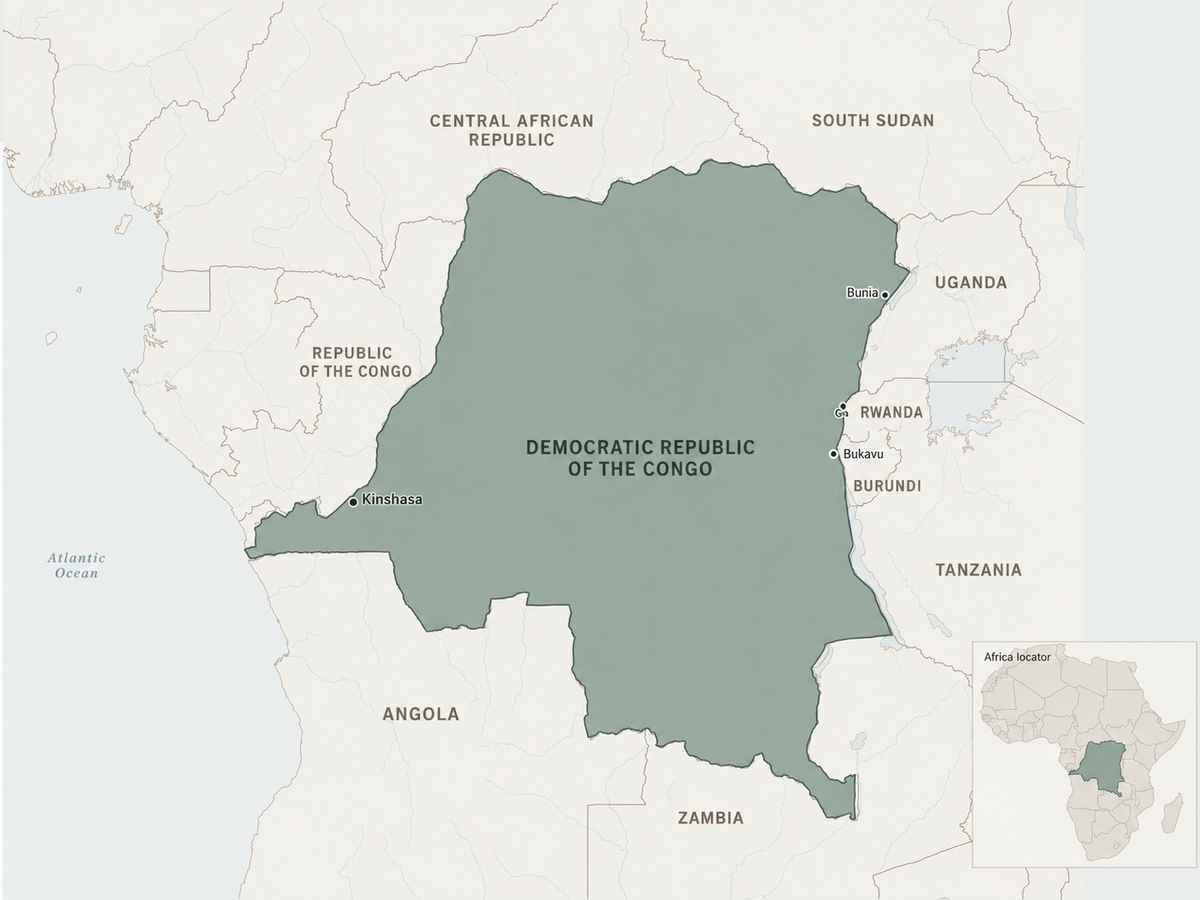
The country’s broad Christian presence coexists with sharp regional differences in security, displacement, and suffering. The church is public and deeply rooted across much of the Democratic Republic of the Congo, yet some of its gravest current needs are concentrated in the eastern provinces, where conflict, anti-Christian violence, displacement, and disease are affecting communities at the same time. Christians should therefore pray for the whole country without losing sight of the regions where suffering is now especially severe.
Spiritual and Practical Challenges Affecting Christians and Churches
In the eastern provinces especially, churches face violent insecurity, anti-Christian attacks, displacement, grief, and the demands of serving communities living with repeated violence and fear.
Violent insecurity in the east
In parts of North Kivu, South Kivu, and Ituri, churches serve bereaved families, frightened children, displaced households, exhausted pastors, and communities that do not know when the next attack may come. Where insecurity keeps returning, church life becomes harder in practical ways: people travel less freely, church gatherings become harder to plan and less safe, and pastors and congregations face greater demands as they care for displaced families and grieving communities.
Allied Democratic Forces violence
The Allied Democratic Forces have directly attacked Christian communities in eastern Congo. USCIRF’s March 2026 DRC factsheet says the group has repeatedly attacked predominantly Christian villages, prayer meetings, houses of worship, pastors, and congregants. Alongside the wider conflict, these communities face violence that directly strikes worship, church gatherings, and public Christian life.
Displacement, grief, and exhaustion
Churches in conflict-affected areas are often expected to do many things at once: care for the displaced, comfort the bereaved, preach hope, resist despair, assist the poor, and keep worship alive even while their own members are under strain. Pastors and congregations continue serving publicly even while caring for displaced and grieving people and coping with losses of their own.
National strain and public mistrust
Churches also serve communities affected by weakened institutions, repeated insecurity, and public distrust. In that setting, they must care for people in practical need and speak clearly about Christ. These conditions vary across the country, but they affect how churches preach, disciple, serve, and endure.
Christian Life and Witness in Democratic Republic of the Congo
Christian life in the Democratic Republic of the Congo is public and deeply rooted across much of the country, yet in the east ordinary faithfulness can become costly and exhausting.
Christian identity is public and widespread across much of the Democratic Republic of the Congo, but the experience of Christians and churches varies greatly from place to place. Churches are widespread, Christian language is familiar, and public religious life remains prominent. That public presence gives many communities access to churches, worship, and Christian teaching, though public Christian identity should not be confused with personal faith in Christ.
For many Christians in North Kivu and Ituri, ordinary faithfulness means gathering, grieving, and serving in conditions marked by displacement, bereavement, interrupted travel, and fear of further attack. Believers still sing, pray, and hear God’s Word, but they often do so while grieving recent losses and fearing further attack. Continuing to gather for worship can itself require courage and perseverance.
Christians continue to bury the dead, comfort the grieving, shelter the vulnerable, and speak of Christ. Their continued service shows that violence and grief have not silenced Christian worship, mercy, and witness in these communities.
Recent Developments
The eastern conflict, anti-Christian violence, uncertain diplomacy, worsening Ebola outbreak, and national political strain all affect how Christians should pray for the Democratic Republic of the Congo now.
-
January–February 2025
M23 gains sharply worsened the humanitarian situation
Human Rights Watch’s World Report 2026 entry on the Democratic Republic of Congo says the March 23 Movement captured Goma on January 27, 2025 and Bukavu on February 16, 2025, sharply worsening the humanitarian crisis and civilian vulnerability in the east.
Prayer significance: Pray for the protection of civilians, the restraint of armed groups, and peace in the eastern provinces that is just, honest, and lasting.
-
February 2026
A deadly attack struck a Christian village in North Kivu
USCIRF’s March 2026 DRC factsheet says around 70 civilians were executed in a Christian village in North Kivu in February 2026, underlining the continuing threat posed by the Allied Democratic Forces to religious communities in the east.
Prayer significance: Pray for grieving families, endangered congregations, and churches trying to gather faithfully under repeated threat.
-
April 18, 2026
The Doha diplomatic track recorded limited progress
The Qatar Ministry of Foreign Affairs joint statement recorded progress on humanitarian access, civilian protection, ceasefire monitoring, and prisoner release. Because implementation remains uncertain, Christians should continue praying that agreements lead to real civilian protection, humanitarian access, and restraint by armed groups.
Prayer significance: Thank God for every real opening toward protection and restraint, while continuing to pray because the process remains uncertain.
-
May–August 17, 2026
Ebola became the deadliest outbreak recorded in the country as transmission continued across six provinces
The Bundibugyo Ebola outbreak continued to expand after its official declaration in May. WHO reported that by July 15 cases had been confirmed across five provinces. On August 13, Associated Press reporting, citing Africa CDC and Congolese health officials, reported an Ebola death in previously unaffected Bas-Uele after the infected man travelled there from Haut-Uele, making Bas-Uele the sixth affected province. By August 17, Associated Press reporting citing government data released overnight put the outbreak at 4,945 confirmed cases and 2,325 deaths. The death toll had therefore surpassed the 2,299 deaths recorded in the country’s 2018–2020 outbreak. The response is being complicated by health-worker payment disputes and strikes, insecurity, misinformation, poor transport and communications infrastructure, extensive population movement, and surveillance that is struggling to keep pace with transmission.
Prayer significance: Pray for the sick and bereaved, for protection and provision for frontline health workers, for cases to be identified early, for exposed people to be followed carefully, for truthful communication to overcome dangerous rumours, and for health teams to reach communities affected by insecurity and weak infrastructure.
-
June 2026
Constitutional controversy and unrest grew in Kinshasa
Associated Press reporting says a new bill seen by opposition leaders as opening the way toward a third presidential term sparked strong criticism and unrest in Kinshasa. This gives Christians another reason to pray for rulers, justice, restraint, and public trust.
Prayer significance: Pray for wisdom, restraint, justice, and truthful leadership in national public life.
How to Pray
Pray for protection, endurance, mercy, truthful leadership, and faithful Christian witness in the Democratic Republic of the Congo.
-
Pray for the Lord to protect civilians in North Kivu, South Kivu, and Ituri. Ask Him to restrain evil, preserve the vulnerable, and grant peace that protects civilians, upholds justice, and lasts beyond a temporary pause in the provinces most scarred by conflict and displacement.
-
Pray for believers, churches, pastors, and congregations living under threat from the Allied Democratic Forces. Ask God to protect those who gather for worship, comfort the bereaved, and keep His people steadfast in Christ where fear has become part of daily life.
-
Pray for displaced families, widows, children, and grieving communities. Ask the Lord to provide daily bread, shelter, comfort, and loving care from local churches and believers for those whose homes, routines, and livelihoods have been shattered.
-
Pray for doctors, nurses, surveillance teams, community health workers, aid workers, and families responding to the country’s rapidly worsening Ebola outbreak. Ask God to protect those providing care and to provide dependable staffing, pay, supplies, and access. Pray that health teams will identify infections early, follow exposed people carefully, overcome misinformation and distrust through truthful communication, and reach communities cut off by insecurity, displacement, poor roads, or weak communications.
-
Pray for those in authority in the Democratic Republic of the Congo and for all involved in peace efforts. Ask God to give leaders, mediators, and public institutions truthfulness, justice, restraint, and genuine concern for the vulnerable rather than self-interest or concern for public appearances.
-
Pray that the church in Congo would endure without becoming hardened by violence or fear, and that believers would continue serving others and speaking openly of Christ. Ask the Lord to guard Christians from despair, hatred, and revenge and help them hold fast to Christ with repentance, brotherly love, and hope in Him.
Give Thanks
Give thanks for the Lord’s mercy, the endurance of His people, and every real opening for protection and restraint.
-
Give thanks that churches remain present and that believers continue to gather, serve others, and speak of Christ even under the weight of violence and instability.
-
Give thanks for the endurance of believers, pastors, and congregations. Their continued gathering, service, and care for others are real mercies for which Christians can thank God.
-
Give thanks for every real opening toward humanitarian access, medical care, civilian protection, and de-escalation. Even limited openings can protect people and reduce suffering, so Christians can thank God for them while continuing to pray for fuller protection and peace.
Last Verified / Update Note
This note helps readers understand when the guide was reviewed and which developments may change how Christians pray for the Democratic Republic of the Congo.
Review Status
Reviewed for current prayer use
The August 17 review rechecked the rapidly changing Ebola outbreak and the parts of this guide that depend on current outbreak conditions. The guide’s August 15 review findings on conflict, displacement, Christian communities, peace efforts, and national public life remain unchanged.
The main prayer concerns remain eastern conflict and civilian vulnerability, mass displacement, violence against predominantly Christian communities, uncertain peace efforts, and a rapidly worsening Ebola outbreak. By August 17, government data reported 4,945 confirmed Ebola cases and 2,325 deaths, making this the deadliest Ebola outbreak recorded in the country. Six provinces had been affected, while health-worker payment disputes and strikes, insecurity, misinformation, population movement, and poor transport and communications infrastructure continued to make it harder for health teams to identify cases, follow exposed people, and reach affected communities.
Watch for changes in the eastern conflict and peace process, further Allied Democratic Forces attacks, and major changes in the Ebola outbreak—including spread into additional provinces or across borders, sustained improvement or further worsening in transmission, health-worker availability, community cooperation, and the ability of response teams to identify and reach affected people.
This guide draws on humanitarian, religious-freedom, human-rights, official peace-process, Congolese government, and reputable reporting sources. Some conflict claims remain contested, especially where governments, armed actors, and outside monitors describe events differently, so where accounts differ, this guide does not present disputed claims as settled fact.
The Ebola outbreak is changing quickly. For the outbreak and response framework, this guide draws on WHO; Congolese official and local sources provide national and field-level context; August 13 reporting documents the spread to a sixth province; and August 17 Associated Press reporting citing government data provides the latest case and death totals used here and the comparison with the country’s 2018–2020 outbreak. Case totals, deaths, and affected areas may change after August 17, 2026.
Help keep this guide accurate and current
If you noticed a possible correction, broken link, or significant country update, please contact the Nations Prayer Directory so we can review it carefully.
Key Sources Consulted
Sources that informed this Democratic Republic of the Congo prayer guide, including humanitarian, religious-freedom, conflict, peace-process, public-health, official Congolese government, and public-life reporting.
Humanitarian, conflict, and public-health sources
- UNHCR. “Democratic Republic of the Congo.” Provides current displacement and humanitarian context, including the June 2026 displaced-person estimate.
- Human Rights Watch. “World Report 2026: Democratic Republic of Congo.” Provides background on M23 territorial gains, civilian-protection failures, and the broader conflict setting in the east.
- World Health Organization. “Ebola outbreak — DRC 2026.” Provides the continuing outbreak framework, Bundibugyo-virus context, humanitarian and insecurity constraints, surveillance and contact-tracing response, community engagement, and cross-border preparedness.
- Associated Press. “Congo’s fastest-growing Ebola outbreak reaches a sixth province.” August 13, 2026. Provides the Bas-Uele expansion, the latest dated government figures, Ituri’s continuing concentration of cases, and current response constraints, with reporting directly citing Africa CDC and INRB officials.
- Associated Press. “Congo’s fast-moving Ebola outbreak becomes the country’s worst with over 2,300 dead.” August 17, 2026. Provides the August 17 government totals of 4,945 confirmed cases and 2,325 deaths, the comparison with the 2018–2020 DRC outbreak, the latest 24-hour increase, and the continuing concentration of transmission in Ituri.
- Présidence de la République Démocratique du Congo. “Le Chef de l’État a réuni la Task force de riposte contre Ebola.” July 14, 2026. Provides direct Congolese government context on the national response, official recognition that the epidemic was extending into previously unaffected provinces, and strengthened field coordination.
- Radio Okapi. “L’intense mobilité et le déni de la population accélèrent la propagation d’Ebola dans le Haut-Uele.” July 14, 2026. Provides Congolese and local context on population mobility, community denial, and resistance to public-health measures in an affected province.
Religious-freedom and church-context sources
- U.S. Commission on International Religious Freedom. “Factsheet: Nonstate Violators of Religious Freedom in the Democratic Republic of the Congo (DRC).” Documents the Allied Democratic Forces threat to religious communities, attacks on predominantly Christian areas, and the February 2026 killings in North Kivu.
Peace-process, official government, and public-life sources
- Qatar Ministry of Foreign Affairs. “Joint Statement on Progress Between the Representatives of Government of the Democratic Republic of Congo and of the Alliance Fleuve Congo/March 23 Movement (AFC/M23).” Records the April 18, 2026 diplomatic track, including humanitarian access, civilian protection, ceasefire monitoring, and prisoner-release language.
- Associated Press. “Congo and Rwanda agree on steps to de-escalate tensions in eastern Congo.” Provides reporting on contested M23, Rwanda, and FDLR issues, including Rwanda’s security rationale and Congo’s commitment to intensify efforts against the FDLR.
- Associated Press. “Congo opposition condemns new bill seen as opening the way for a third term for President Tshisekedi.” Reports on June 2026 national political strain and unrest in Kinshasa.
- Présidence de la République Démocratique du Congo. Provides official information from the Congolese presidency and government.
- Ministère des Affaires Étrangères, Coopération Internationale, Francophonie et Diaspora Congolaise. Provides official information on Congolese diplomacy and foreign affairs.
Source Context
A short note on how to understand the sources, disputed claims, and changing figures used in this guide.
Source Context
- Conflict attribution. Accounts involving M23, Rwanda, and the FDLR sometimes differ because governments, armed actors, and outside monitors do not describe every aspect of the conflict in the same way. For that reason, disputed claims are not presented here as settled fact.
- Humanitarian and public-health figures. Displacement figures and Ebola case and death totals can change quickly. The Ebola figures and geographic spread described here reflect information available through August 17, 2026, and may change as the outbreak develops.
- Ebola source mix. WHO provides the broader outbreak and response framework. Associated Press reporting citing Africa CDC, INRB, and Congolese authorities provides the August 13 Bas-Uele expansion, while August 17 Associated Press reporting citing government data provides the latest case and death totals used here and the comparison with the country’s 2018–2020 outbreak. Congolese official and local sources add national-response and community-level context. Together, these sources distinguish fast-changing case and death figures from the longer-term conditions that make the outbreak response difficult.
- Official government sources. Congolese government sites provide official information on the presidency, diplomacy, and public-health response. They do not, by themselves, resolve disputed questions about responsibility in the conflict, so this guide handles those issues through clearly named humanitarian, rights, peace-process, official, and reputable reporting sources rather than presenting contested claims as settled fact.
A Closing Prayer for Democratic Republic of the Congo
A concise prayer bringing the Democratic Republic of the Congo’s needs before the Lord.


