


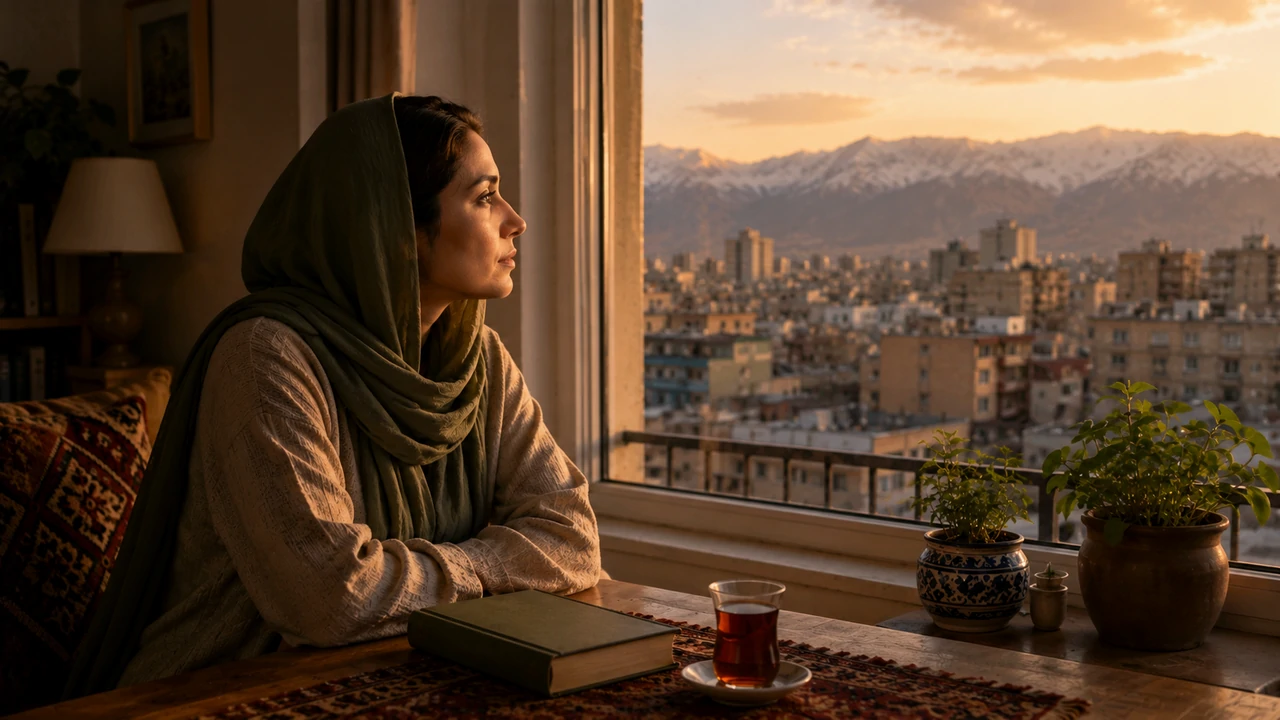
Christians in Iran do not all face the same dangers. Converts from Islam, Persian-speaking evangelical believers, house churches, prisoners, and their families face the greatest risk. Historic Armenian and Assyrian communities have a measure of legal recognition, but their freedom remains restricted and can still be seriously disrupted.
These difficulties have intensified as Iran has faced war, deadly domestic repression, civilian suffering, severe economic hardship, restricted communication, and continuing tension around the Strait of Hormuz. Pray that believers will remain faithful to Christ, that suffering people will receive protection and justice, that rulers will be restrained from further harm, and that more Iranians will hear the gospel and trust in Christ.
Prayer Burden at a Glance
Pray for converts, house churches, Christian prisoners and their families, historic churches, and ministries serving Persian-speaking believers to remain faithful amid surveillance, imprisonment, family opposition, and restrictions. Pray for truth and justice after deadly repression, protection and provision for civilians affected by war and economic hardship, safer passage through the Strait of Hormuz while negotiations remain unsettled, restraint among political and military leaders, protection around nuclear facilities, and more Iranians to hear the gospel and trust in Christ.
Last verified: August 18, 2026
Why Iran Needs Prayer Now
Christians face serious legal and social restrictions while war, repression, economic hardship, and disrupted communication increase danger for believers and civilians.
Iran needs prayer because following Christ can carry serious personal, legal, and social cost. Converts from Islam remain especially vulnerable. Christians connected with house churches may face surveillance, arrest, interrogation, imprisonment, or pressure to identify other believers. Prisoners and their families can endure long periods of uncertainty, restricted contact, financial strain, and difficulty obtaining adequate medical or legal support.
These difficulties have intensified as Iran has also faced deadly unrest, severe repression, war, civilian casualties, displacement, damaged infrastructure, economic hardship, and prolonged disruption to communication. Such conditions affect the whole population, but they can place additional strain on Christians whose peaceful religious activity is already treated with suspicion.
Iran’s regional importance also matters for prayer. The negotiating period established in June reached its August 17 endpoint without a broader U.S.–Iran agreement. Iran then reported progress with Oman on a proposed transit route through the Strait of Hormuz, but major diplomatic and maritime questions remained unresolved. Christians should therefore pray for protection of life, honesty and wisdom in negotiations, restraint in the use of force, safer passage for seafarers, justice without vengeance, and a lasting peace that reduces the danger of renewed violence.
Prayer for Iran should also remember ordinary life. Millions of people are raising families, working, grieving, searching for hope, caring for neighbours, and living through decisions they do not control. Prayer should remain compassionate, specific, and centered on the conviction that Christ is able to preserve His Church and bring sinners to Himself even in fearful and unsettled times.
Country Snapshot
A brief orientation to Iran’s region, population, government, religious setting, and the different conditions facing Christian communities.
Iran is one of the largest and most influential countries in the Middle East. Its position on the Persian Gulf and Strait of Hormuz gives its political and military decisions consequences for neighbouring countries, international shipping, and regional security.
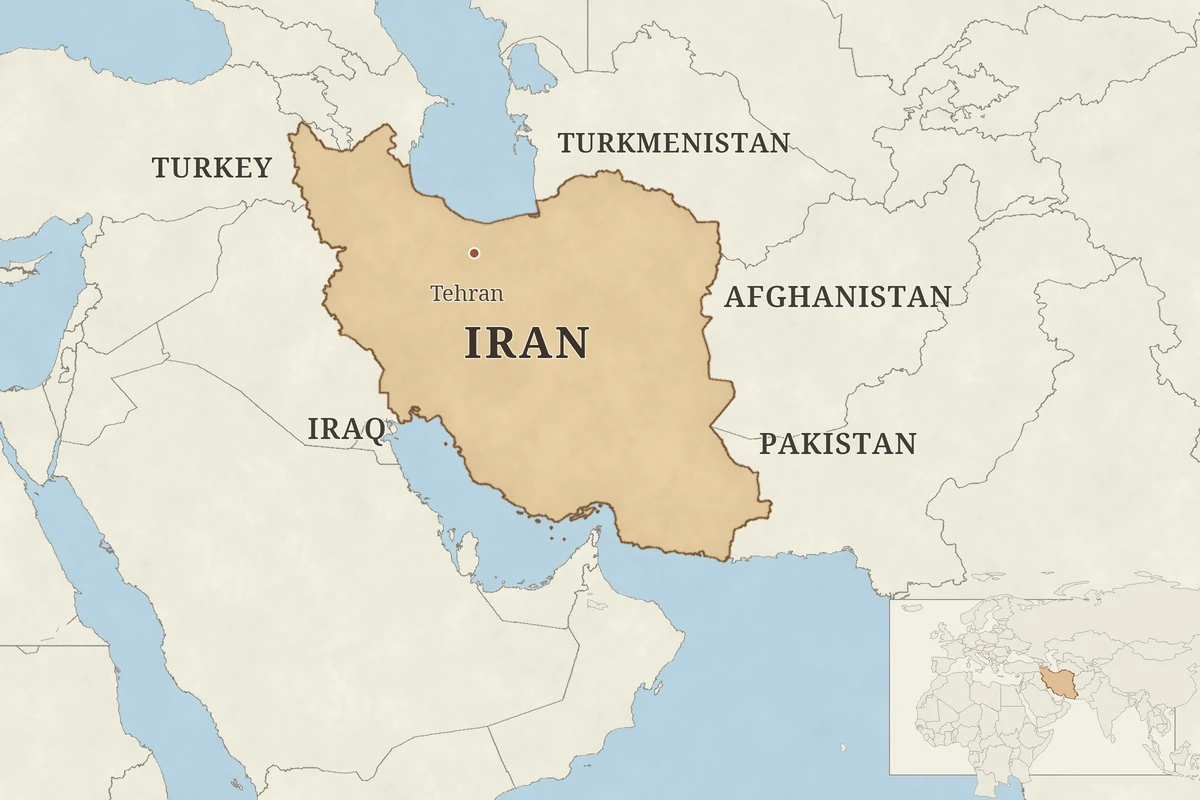
The religious and political system gives Shi’a Islam a privileged public role. Historic Armenian and Assyrian Christians have limited recognition, but this does not provide broad freedom for Christian conversion, Persian-language evangelism, independent house-church life, or open public witness.
That distinction matters for prayer. A convert meeting secretly in a home, a Christian prisoner, and a member of a recognised Armenian congregation may all need prayer, but they do not live under precisely the same conditions.
Spiritual and Practical Challenges Affecting Christians and Churches
Converts, house churches, prisoners, vulnerable families, historic churches, and Persian-language ministries face different forms of surveillance, legal restriction, family opposition, imprisonment, and limits on worship and witness.
Converts and house churches
Converts from Islam and Christians connected with house churches or informal fellowships face the greatest risk of surveillance, arrest, interrogation, and prosecution. Worship, Bible study, baptism, communion, Christian teaching, and gathering in homes can attract surveillance or be treated as evidence of prohibited activity or a national-security offence. Believers therefore need wisdom about where to meet, whom to trust, how to communicate, and how to help new Christians grow without unnecessarily exposing them to danger.
Arrests, prosecution, and security accusations
Believers can face arrest, prosecution, imprisonment, travel restrictions, large bail demands, and pressure during interrogation. Iranian authorities and state-aligned media have sometimes described evangelical Christians, converts, Christian broadcasters, or other religious actors in national-security terms. Security accusations are not the same as proven criminal conduct. Christian-rights monitors have documented cases in which peaceful activities such as prayer, Bible distribution, house-church attendance, baptism, or Christian teaching formed part of the case against believers. In wartime, this security framing can increase the danger for believers whose peaceful religious activity is already viewed with suspicion.
Prisoners and vulnerable families
Imprisonment reaches far beyond the person detained. Families may carry legal costs, lost income, fear, interrupted communication, and uncertainty about a loved one’s health or treatment. Christian prisoners need strength in body and soul, while their families need practical provision, trustworthy information, wise legal help, Christian fellowship, and grace to endure without despair or bitterness.
Historic churches and Christian property
Historic Armenian and Assyrian churches live under a different pattern of restriction. They may worship within recognised congregations, but legal recognition does not amount to unrestricted freedom in Persian-language ministry, evangelism, property use, or public witness. The confiscation of the St Peter’s Evangelical Church compound in Tehran, the eviction of residents, and disruption to worship showed that recognised Christian communities can also face serious interference.
Communication and Persian-language ministry
Internet restrictions and surveillance concerns complicate communication for churches, families, prisoners’ relatives, and ministries. They can make it harder to provide pastoral care, discipleship, Christian teaching, and reliable information. Persian-language broadcasters, translators, teachers, and online ministries therefore need particular wisdom to serve faithfully without carelessly exposing vulnerable believers.
Christian Life and Witness in Iran
For many Iranian Christians, following Christ means ordinary acts of obedience carried out carefully through worship, trusted relationships, discipleship, family faithfulness, and patient witness.
For many Iranian Christians, following Christ means ordinary acts of obedience carried out carefully. Believers must decide whom they can trust, where they can meet, how openly they can speak about Christ, and how to continue fellowship when communication is restricted or watched.
Courage does not require believers to ignore real danger. Faithful Christians need wisdom to take genuine risks for Christ without treating unnecessary danger as a mark of spirituality. Pastors and disciplers likewise need patience to help new Christians become rooted in Scripture, prayer, worship, holiness, and the fellowship of the Church.
Family relationships can be especially difficult for converts. Following Christ may bring misunderstanding, anger, rejection, or economic hardship from relatives. Believers need grace to remain truthful without becoming harsh, courageous without becoming combative, and loving without compromising their obedience to Christ.
Christian prisoners face a still more concentrated form of isolation. When believers are separated from normal worship, fellowship, family, or Christian teaching, the Church should pray not merely for release but for perseverance. Ask God to keep them from despair, resentment, fear, and spiritual exhaustion.
Historic churches need the same deeper prayer. Buildings, legal recognition, and inherited Christian identity are not enough by themselves. Pray for pastors to teach Scripture faithfully, for people to hear the gospel clearly, repent of sin, and trust in Christ, for believers to grow in faith, and for churches to bear wise and loving witness within the limits placed upon them.
Even under unusual restrictions, Iranian Christians still carry ordinary responsibilities in family life, work, worship, forgiveness, service, and obedience. Remembering this keeps prayer from reducing them to statistics or symbols of persecution.
Recent Developments
Deadly domestic repression, war and displacement, nuclear-safety danger, restrictions on communication and Christian activity, severe economic hardship, and unsettled negotiations over the Strait of Hormuz all affect how Christians should pray for Iran.
-
January 2026
Deadly unrest and severe repression
Large protests and unrest were followed by a severe crackdown. Iranian authorities later published a death toll of 3,117. International human-rights organisations alleged widespread unlawful killings by security forces and disputed important parts of the authorities’ account of responsibility. Responsibility for particular deaths remains disputed, but the scale of death and suffering is clear.
Prayer significance: Pray for grieving families, truthful investigation, justice for wrongdoing, protection from false accusation, due process for detainees, restraint among security forces, and freedom from another cycle of vengeance and bloodshed.
-
February–April 2026
War brought civilian suffering and nuclear-safety danger
The conflict killed and injured civilians, damaged homes and infrastructure, disrupted essential services, and displaced large numbers of people. Dated United Nations assessments during the conflict documented thousands of civilian deaths and injuries and widespread damage.
Fighting also reached the vicinity of nuclear facilities. Projectiles struck or landed at or near the Bushehr nuclear power plant during several incidents. Iran’s nuclear regulator told the IAEA that these incidents had not caused an off-site radiological release. Even so, the fighting showed how dangerous military action near nuclear infrastructure can become.
Prayer significance: Pray for wounded and displaced civilians, restoration of essential services, protection of nuclear facilities and surrounding communities, and restraint from actions that could turn military escalation into a wider civilian catastrophe.
-
May–July 2026
Internet access began to return, while repression and restrictions on Christians continued
After 88 days in which people across Iran were largely cut off from the global internet, access began to return. Restrictions and surveillance concerns remained.
During the same period, serious Christian concerns continued. St Peter’s Evangelical Church compound was confiscated, residents were evicted, and worship was disrupted. Reports also continued to describe imprisonment, harsh sentences, pressure on converts, and suspicion toward Persian-language Christian media.
Prayer significance: Pray for safer communication, faithful Christian ministry, protection for prisoners, restoration of Christian fellowship where it has been disrupted, and justice for churches and families affected by state action.
-
July 2026
IMF forecasts pointed to severe economic hardship
The International Monetary Fund’s July outlook projected a 5.4 percent contraction in Iran’s economy during 2026 and consumer-price inflation of 68.9 percent. These are projections rather than final annual outcomes, but they indicate severe strain on households. For ordinary people, economic distress is felt through food, rent, medicine, employment, savings, transport, and the daily responsibility of caring for a family.
Prayer significance: Pray for households struggling to meet basic needs, for honest economic stewardship, for employers and workers, and for Christians to share generously with people facing hardship.
-
August 17–18, 2026
Negotiating period ended without a broader agreement as Iran reported progress with Oman on a Hormuz transit route
The negotiating period established by the June U.S.–Iran memorandum reached August 17 without a broader agreement between the two countries. Important disagreements remained unresolved.
Later on August 17, Iran said it and Oman had reached an understanding on the map of a proposed transit route through the Strait of Hormuz and were working to finalize details for a joint statement. This marked a limited step forward in the talks, but it did not by itself establish a broader settlement, confirm that normal navigation had resumed, or settle whether the proposed arrangement would be accepted by the United States.
Prayer significance: Pray for the protection of seafarers and coastal communities, honesty and wisdom in negotiations, restraint among political and military leaders, and agreements that genuinely make navigation safer and reduce the danger of renewed conflict.
How to Pray
Pray for faithful Christians, suffering families, justice after repression, protection in war, wise leadership, safer navigation, and more Iranians to repent and trust in Christ.
-
Pray for converts to remain steadfast in Christ. Ask the Father to give believers from Muslim backgrounds courage, holiness, wisdom, and deep assurance of His care when they face rejection, surveillance, legal danger, or pressure to deny Christ.
-
Pray for house churches, pastors, and disciplers. Ask God to protect believers who gather for Scripture, worship, prayer, baptism, communion, and fellowship. Pray for wisdom that is neither ruled by fear nor careless about danger.
-
Pray for Christian prisoners and their families. Ask for protection from abuse, proper medical care, truthful legal proceedings, practical provision for families, spiritual endurance, and release where God is pleased to grant it.
-
Pray for historic Armenian and Assyrian churches and for St Peter’s congregation. Ask God to preserve faithful worship, provide for displaced residents, strengthen pastors and congregations, and grant justice where property or worship rights have been taken away.
-
Pray for Persian-language Christian ministry. Ask for wisdom and protection for broadcasters, translators, teachers, online ministries, and those providing pastoral care. Pray that sound Christian teaching would reach people without vulnerable believers being carelessly exposed.
-
Pray for truth and justice after the January violence. Ask God to expose wrongdoing, restrain abuse, protect people from false accusation, give due process to detainees, comfort the bereaved, and prevent grief and anger from becoming another cycle of violence.
-
Pray for civilians carrying the burdens of war and economic hardship. Ask for care for the wounded, shelter for displaced families, restored services, affordable necessities, meaningful work, and generous communities able to help those in need.
-
Pray for the Strait of Hormuz, shipping crews, people living around the Strait and wider Gulf, and those seeking a diplomatic settlement. Ask God to protect seafarers and coastal communities, give wisdom and integrity to negotiators, restrain threats and renewed military escalation, and cause any agreement reached to make navigation safer and contribute to a lasting peace.
-
Pray for rulers, judges, security officials, and military decision-makers. Ask God to restrain cruelty, falsehood, pride, vengeance, and reckless escalation. Pray especially for wise decisions that protect civilians and keep nuclear facilities and surrounding communities from attack, accident, or miscalculation.
-
Pray that more Iranians hear the gospel and trust in Christ. Ask God to bring sinners to repentance and faith in Jesus Christ, strengthen churches in truth and holiness, preserve believers through suffering, and teach His people to pray with hope, “Your kingdom come,” as they await the day when Christ will make all things new.
Give Thanks
Give thanks for believers whom God continues to preserve, for Christian fellowship and ministry that continue under restriction, and for mercies that protect people from still greater suffering.
-
Give thanks for the perseverance of Iranian Christians. Believers continue to worship, pray, learn Scripture, serve their families, encourage one another, and confess Christ despite fear and restrictions. Their endurance is evidence of God’s preserving grace.
-
Give thanks that believers continue to seek fellowship, Scripture, and prayer. Historic congregations remain, house churches still seek fellowship, and Persian-speaking believers continue to receive Christian teaching and encouragement through trusted relationships and ministry carried out with care.
-
Give thanks that abuses and suffering are being documented. Churches, Christian-rights organisations, humanitarian bodies, and other observers continue to record imprisonment, confiscated church property, civilian suffering, and other abuses that might otherwise pass unseen.
-
Give thanks whenever violence is restrained and people are spared. Every prevented attack, preserved life, reunited family, restored line of communication, or negotiation that reduces immediate danger is reason to thank God while continuing to pray for a deeper and more durable peace.
Last Verified / Update Note
This note helps readers understand when the guide was reviewed, what was checked, and which developments may affect future prayer use.
Review Status
Reviewed for current prayer use
This update rechecked the August 17 end of the U.S.–Iran negotiating period, Iran’s announcement that it and Oman had reached an understanding on the map of a proposed Strait of Hormuz transit route, and the related diplomatic, maritime, and prayer wording in this guide.
The guide’s other major concerns—including pressure on Christians, domestic repression, civilian suffering, economic hardship, internet access, Christian property and ministry concerns, political and security leadership, and nuclear safety—remain based on the completed August review.
Pray especially for converts from Islam, house churches, Christian prisoners and their families, historic Armenian and Assyrian churches, St Peter’s congregation and displaced residents, Persian-language Christian ministries, civilians affected by war and displacement, families facing severe economic hardship, people seeking truth and justice after the January violence, seafarers and communities affected by the Strait of Hormuz crisis, and leaders making military, security, judicial, diplomatic, and nuclear-safety decisions.
Watch for whether Iran and Oman finalize and put a new Strait navigation arrangement into practice; whether passage becomes safer and more regular; how the United States responds; whether broader U.S.–Iran negotiations resume; and whether military or maritime tensions rise again.
Other continuing concerns include developments affecting St Peter’s congregation and property, new arrests or restrictions involving Christians, changes in internet access, senior security leadership, and any newly reported nuclear-safety incidents.
Iran’s political, military, diplomatic, and maritime situation is changing quickly, so recent developments are dated rather than presented as permanent conditions.
The August 17 transit-route understanding is presented as an Iranian Foreign Ministry announcement. Oman had separately said on August 8 that navigation talks were making positive progress, but this review did not establish a later Omani statement confirming that the anticipated final joint statement had been issued. The guide therefore does not present the proposed arrangement as completed or the Strait as fully reopened.
Iranian, Omani, U.S., and outside reporting are used for different purposes and are distinguished accordingly. Official sources establish what governments say; they are not treated as independent proof of disputed claims.
Help keep this guide accurate and current
If you noticed a possible correction, broken link, or significant country update, please contact the Nations Prayer Directory so we can review it carefully.
Key Sources Consulted
Sources that materially informed this Iran prayer guide, including Iranian and regional perspectives, current reporting, humanitarian and economic evidence, Christian-rights reporting, and nuclear-safety information.
Iranian, regional, leadership, and Strait of Hormuz sources
- Islamic Republic News Agency (IRNA). “Araghchi: Iran provides necessary facilities for safe passage of non-hostile ships in Strait of Hormuz.” Used for Iran’s stated position that it seeks to provide safe passage for vessels it regards as non-hostile while connecting its maritime restrictions to the wider conflict and security situation.
- Foreign Ministry of the Sultanate of Oman. “Oman and the Islamic Republic of Iran issue a joint statement.” June 23, 2026. Used for the two governments’ stated commitment to safe passage, continued negotiations over future navigation arrangements, maritime safety, and maintaining the Strait as a secure and open waterway.
- Foreign Ministry of the Sultanate of Oman. “Oman condemns repeated attacks on vessels in Strait of Hormuz.” August 8, 2026. Used for Oman’s statement that attacks on vessels threatened maritime and regional security and that negotiations over navigation arrangements were progressing in a positive and constructive atmosphere.
- The White House. “President Trump on Fox & Friends: America’s Unrelenting Strength Keeps Maximum Pressure on Iran.” July 28, 2026. Used as a direct source for the U.S. administration’s stated position concerning its blockade, its claimed role in the Strait, and its continuing pressure on Iran. It represents the U.S. government’s position rather than independent verification of disputed claims.
- Associated Press. “The 60-day deadline for an Iran peace deal is expiring. Here’s where things stand.” August 17, 2026. Used for the August 17 end of the negotiating period without a comprehensive settlement, continuing disagreements between Iran and the United States, the absence of a settled Strait arrangement, and the continuing reduction in shipping traffic.
- Associated Press. “Trump threatens Oman as it works with Iran on a Strait of Hormuz deal, and other Middle East news.” August 17, 2026. Used for Iran’s announcement that an understanding had been reached on the map of a proposed transit route, the continuing work toward a joint statement, the current U.S. response, and the unsettled status of the wider negotiations.
- Associated Press. “Mojtaba Khamenei, a son of Iran’s late supreme leader, is chosen to replace his father.” March 8, 2026. Used for the leadership succession reflected in the Country Snapshot.
Population, economy, and humanitarian conditions
- World Bank. “Iran, Islamic Rep.” Used for the guide’s 2024 population figure.
- International Monetary Fund. “Islamic Republic of Iran.” Used for the July 2026 economic projections cited in the guide. These figures are forecasts rather than completed annual outcomes.
- United Nations Office for the Coordination of Humanitarian Affairs. “Islamic Republic of Iran: Humanitarian Update No. 02 — As of 3 April 2026.” Used for dated reporting on civilian deaths and injuries, damaged homes and infrastructure, disruption of essential services, and other humanitarian effects of the conflict.
- UNHCR. “Up to 3.2 million Iranians temporarily displaced in Iran as conflict intensifies.” March 12, 2026. Used for the preliminary estimate of large-scale temporary internal displacement during the early conflict period.
Protests, repression, and internet restrictions
- Amnesty International. “Iran: Authorities unleash heavily militarized clampdown to hide protest massacres.” Used for independent human-rights reporting concerning the January crackdown, deaths, mass arrests, and restrictions on information.
- Amnesty International. “Iran: Mass arbitrary arrests and political executions mark intensifying repression.” May 28, 2026. Used for reporting on wartime repression, the prolonged internet shutdown, the beginning of restoration, and continuing restrictions and surveillance concerns.
Christians, churches, and religious freedom
- Middle East Concern, Article18, Open Doors, and Christian Solidarity Worldwide. “Scapegoating: 2026 Annual Report on Rights Violations Against Christians in Iran.” Used for documented patterns affecting converts, house churches, prisoners, Bible distribution, sentencing, and the use of national-security language against evangelical Christians.
- Article18. “UN rapporteurs condemn confiscation of Tehran church, eviction of residents.” July 15, 2026. Used for the confiscation of St Peter’s Evangelical Church compound, the eviction of residents, and concerns expressed by United Nations special rapporteurs.
- Article18. “Christian TV stations included on Ministry of Intelligence list of ‘hostile’ entities.” July 15, 2026. Used for reported restrictions affecting Persian-language Christian broadcasters. The authorities’ characterisation is treated as their position rather than as proof that peaceful Christian ministry constitutes hostile activity.
Nuclear-safety reporting
- IAEA-hosted International Nuclear and Radiological Event Scale event-reporting system. Used for April 2026 reports submitted by Iran’s Nuclear Regulatory Authority concerning incidents at or near the Bushehr Nuclear Power Plant. The guide attributes the reported radiological findings to Iran’s regulator rather than presenting them as independent IAEA findings.
Source Context
How to read the sources behind this guide in a fast-changing conflict, religious-freedom, humanitarian, economic, maritime, and nuclear-safety setting.
Source Context
- Fast-changing diplomacy and navigation. The negotiating period established in June reached August 17 without a comprehensive U.S.–Iran settlement. Iran then announced that it and Oman had reached an understanding on the map of a proposed transit route and were working toward a joint statement. Because implementation and wider acceptance remained unsettled when this guide was reviewed on August 18, the guide does not describe the proposed arrangement as completed or normal navigation as restored.
- Iranian official perspective. Iranian officials describe their approach to the Strait as connected to national security, sovereignty, the wider war, and the U.S. blockade. Iranian official and state-reported sources are included so that Tehran’s position is represented directly where possible. They explain Iran’s stated position but do not independently prove disputed military, legal, or maritime claims.
- Omani regional perspective. Oman is one of the two coastal states of the Strait and has been directly involved in the navigation talks. Its Foreign Ministry has emphasized safe passage, international law, freedom of navigation, regional stability, and continued negotiation. Oman said on August 8 that the talks were progressing constructively. This review did not establish a later Omani public statement confirming that the anticipated final joint statement had been issued.
- United States position and outside reporting. Official U.S. material is used for Washington’s stated position concerning the blockade and the Strait. Current Associated Press reporting is used to distinguish those positions from the status of negotiations and from Iran’s August 17 announcement. As of this review, the guide does not state that the United States had accepted the proposed Iran–Oman arrangement.
- Protest deaths and responsibility. Iranian authorities reported 3,117 deaths during the January unrest. Human-rights organisations have disputed important parts of the official account and alleged extensive unlawful killings by security forces. Because information was severely restricted during the crackdown, this guide does not present one party’s account of every death as fully settled.
- Humanitarian figures. Casualty, displacement, and damage figures come from dated United Nations humanitarian assessments. They establish the scale of suffering during the conflict but should not be read as August 2026 cumulative totals.
- Internet access. Global internet access began to return in late May after a prolonged shutdown, but reporting at that time described continuing filtering, surveillance concerns, and uncertainty about sustained unrestricted access. The guide therefore does not describe Iran’s internet as fully restored or unrestricted.
- Christian-life reporting. Public information about converts, house churches, prisoners, and Persian-speaking Christian ministry can be difficult to verify independently inside Iran. Specialist Christian-rights organisations are used for documented cases and patterns, while Iranian official accusations are separately attributed where relevant. Individual reported cases should not be assumed to describe every Christian’s experience.
- Historic and convert communities. Armenian and Assyrian churches have a measure of legal recognition, but their circumstances differ substantially from those of converts from Islam and Persian-speaking house churches. The guide preserves this distinction rather than applying one description of persecution to every person who identifies as Christian.
- Economic figures. International Monetary Fund figures for 2026 are forecasts and may change as conflict, sanctions, oil exports, shipping conditions, and other economic factors change.
- Nuclear-safety reporting. The IAEA-hosted event pages used here contain information submitted by Iran’s Nuclear Regulatory Authority. They are valuable official nuclear-safety reports, but the attribution matters. The guide therefore says that Iran’s regulator reported no off-site release in the cited incidents rather than saying that every detail was independently verified by the IAEA.
A Closing Prayer for Iran
A concise prayer gathering Iran’s present burden before the Lord.


