


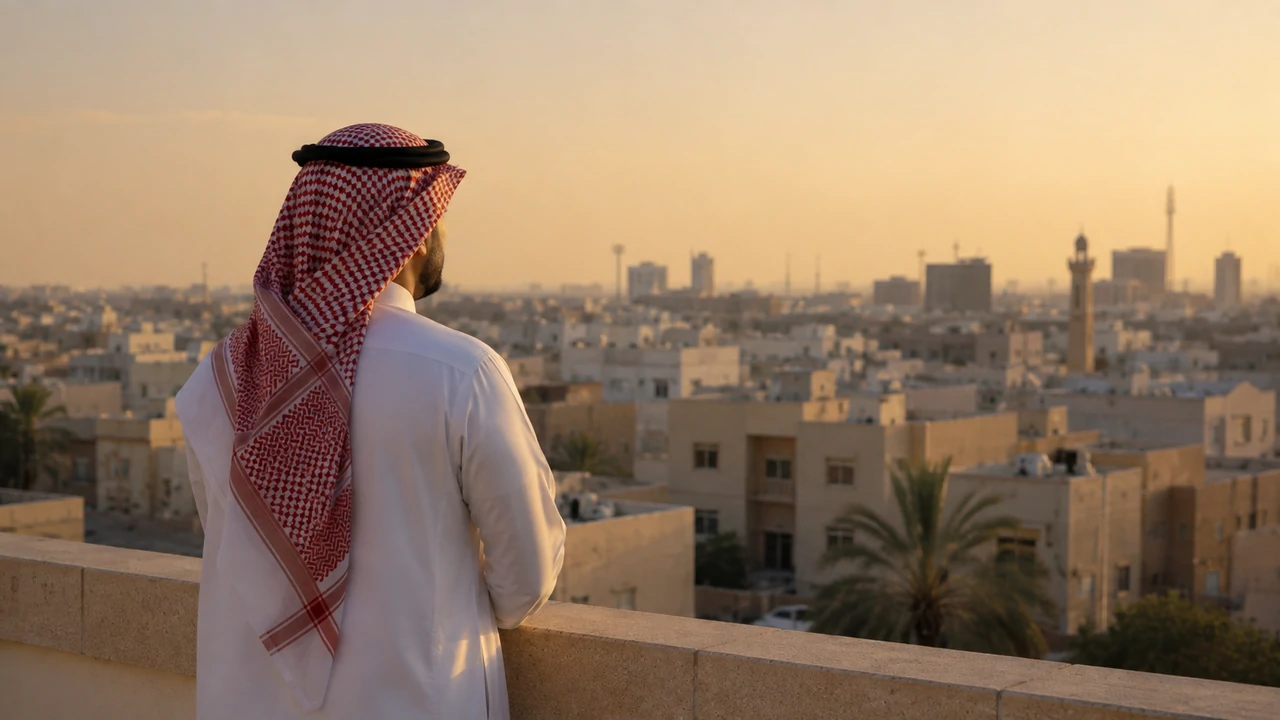
Saudi Arabia has religious influence far beyond its borders, especially across the Muslim world and the wider Middle East. Its religious identity shapes public life, education, law, family expectations, and the freedom available to people of other faiths. Saudi Arabia is also undergoing rapid social and economic change, yet public non-Muslim worship and non-Muslim houses of worship remain prohibited. Pray for Saudi men and women to know Christ, hidden believers to remain faithful, migrant churches to grow in truth and love, vulnerable workers to receive justice, rulers to govern wisely, and leaders across the region to act with restraint and pursue peace.
Prayer Burden at a Glance
Pray for Saudi people to hear the gospel and trust in Christ, for hidden believers to receive sound teaching and safe fellowship, and for migrant churches to care faithfully for workers from many nations. Pray also for fair wages and protection for vulnerable workers, greater freedom of conscience, wise national leadership, peaceful regional relations, and nuclear development to remain peaceful, transparent, and carefully safeguarded.
Last verified: August 15, 2026
Why Saudi Arabia Needs Prayer Now
Saudi Arabia combines far-reaching religious influence, rapid national change, severe limits on Christian public life, a large migrant population, and direct involvement in a regional conflict.
Saudi Arabia’s national and religious identities are closely connected. The Basic Law of Governance declares Islam to be the state religion and identifies the Qur’an and Sunnah as the country’s constitutional foundation. Saudi Arabia’s official submissions to the United Nations also state that Saudi citizens are regarded as Muslims within the country’s legal and demographic framework.
This does not mean that every Saudi person holds the same private convictions. It does show how closely citizenship, public identity, and Islam are joined within the state.
Saudi authorities say that non-Muslim residents may practise their religion privately, subject to restrictions concerning public order, morals, health, and the rights of others. Independent assessments describe a much narrower reality. The United States Commission on International Religious Freedom reported in May 2026 that public practice of religions other than Islam remained prohibited and that non-Muslim houses of worship were not allowed.
Taken together, these sources indicate that some expatriate Christians may worship privately, but public church life, openly advertised Christian services, and public sharing of the Christian faith are not legally permitted.
Saudi citizens who trust in Christ may face rejection or hostility within their families and communities. Open Doors reports that many converts keep their faith secret because discovery may bring rejection, hostility, or government attention. Reliable public information about the number and circumstances of Saudi Christians remains limited because speaking openly can place them in danger. Their isolation is therefore an important prayer concern even though precise figures cannot responsibly be given.
Most Christians living in Saudi Arabia are migrant workers. Their presence creates opportunities for fellowship among believers from many countries, while the injustices faced by foreign workers also affect many Christian communities. Saudi Arabia has introduced labour reforms and has continued working with the International Labour Organization on recruitment, worker protection, social security, labour governance, workplace safety, and access to justice. Independent assessments nevertheless continue to report wage theft, dangerous working conditions, employer control, and abuses that may amount to forced labour.
The regional war is also affecting Saudi Arabia itself. The International Monetary Fund reported in June 2026 that conflict in the Middle East had disrupted oil exports, non-oil activity, trade, and economic confidence. Late-July attacks and military responses then drew Saudi Arabia more directly into the regional conflict.
These realities call Christians to pray without fear or political partisanship: for justice and protection, for leaders to act wisely and with restraint, for greater freedom of conscience, and for Saudi people to hear and believe the gospel.
Country Snapshot
A brief orientation to Saudi Arabia’s government, population, religious setting, and Christian presence.
Saudi Arabia occupies most of the Arabian Peninsula and administers Mecca and Medina. This gives the kingdom religious influence far beyond its borders and makes the country’s public teaching, institutions, and example important across the Muslim world.
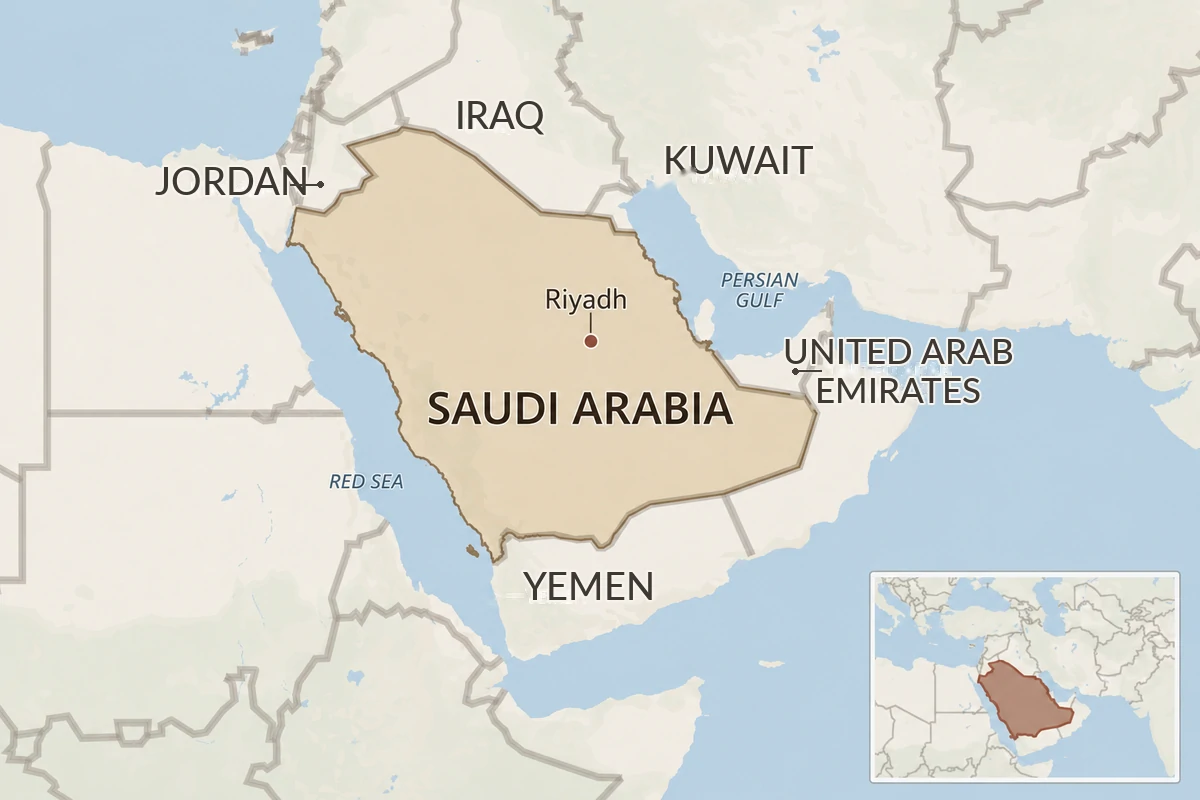
The General Authority for Statistics gives an official 2024 population estimate of 35,300,280. This is the most recent official population figure; it is not a 2026 census count. Non-Saudis form a large share of the population, so the experience of migrant workers is important to understanding both Saudi society and many of its Christian communities.
Most Christians in Saudi Arabia are foreign workers. Public estimates vary and should not be treated as precise census figures. Public church buildings are prohibited, and Saudi converts commonly practise their faith discreetly.
Spiritual and Practical Challenges Affecting Christians and Churches
Christian life is shaped by restrictions on public worship, secrecy for Saudi believers, unequal conditions among migrant Christians, worker exploitation, and the gap between social reform and freedom of conscience.
Public church life is not permitted
Saudi Arabia does not permit legally recognised public church buildings. Although some expatriate Christians may gather discreetly, public services, visible Christian institutions, open evangelism, and the public practice of non-Muslim religions remain restricted. These limits make it harder to identify trustworthy congregations, baptise and disciple believers, train leaders, teach children, care for vulnerable members, practise church discipline, and provide consistent pastoral care.
Saudi believers may need to keep their faith secret
For some Saudi families, becoming a Christian may be seen not only as a religious change but also as a rejection of family honour, inherited identity, and the person’s expected place within the family or community. Some believers may be unable to tell parents, spouses, children, or close friends. Living in secrecy can bring loneliness and fear, and it can make consistent Christian teaching, fellowship, and pastoral care difficult to obtain.
Migrant churches face both opportunity and vulnerability
Christians from many nations live and work in Saudi Arabia. Private fellowship can become a place of prayer, Scripture, hospitality, and practical care. Yet congregations may also be divided by language, nationality, class, denomination, or employment status. Churches need leaders who teach sound doctrine, resist ethnic pride, protect vulnerable members, and make room for believers who are easily overlooked.
Migrant workers continue to face serious injustice
Saudi Arabia and the International Labour Organization have continued working together to strengthen labour governance and worker protection. These efforts are worth recognising, but they should not be treated as proof that abuse has ended. Human-rights reporting continues to describe wage theft, dangerous work, employer control, inadequate remedies, and conditions that may amount to forced labour.
Social reform has not yet brought freedom of conscience
Vision 2030 has brought visible economic, cultural, institutional, and social change. Economic modernisation and cultural opening are not the same as religious freedom. Greater openness in tourism, entertainment, and business has not removed restrictions on belief, worship, conversion, and public Christian witness.
Christian Life and Witness in Saudi Arabia
Christian life is mostly hidden from public view and often depends on trusted relationships, discreet fellowship, careful witness, and patient care across differences of language, nationality, class, and employment status.
Much of Christian life in Saudi Arabia takes place in homes, trusted friendships, private digital conversations, and discreet expatriate networks.
Migrant believers may find themselves worshipping with Christians whose language, culture, and church background differ greatly from their own. This can create misunderstanding, but it can also display the unity of Christ’s church. Mature believers have opportunities to teach Scripture, encourage younger Christians, share meals, support workers in distress, and care for people who are far from their families.
Such fellowship requires patience and wisdom. Better-paid expatriates may have more freedom and security than domestic workers or labourers. A healthy Christian community will notice these inequalities and refuse to organise its life only around those with the easiest schedules, safest homes, or highest social standing.
Christian witness must also be carried out carefully. Open proselytism is prohibited, and careless actions can place both the person speaking and other believers in danger. Faithful witness may therefore be expressed through honest work, patient friendship, hospitality, mercy, truthful speech, and a readiness to explain the hope of the gospel when an appropriate opportunity arises.
Digital media may help an isolated person encounter Scripture or Christian teaching. It can also expose believers to shallow doctrine, unsafe contacts, surveillance, or manipulation. Pray for discernment and for isolated seekers and believers to find trustworthy Christians and mature, accountable fellowship without unnecessary risk.
The aim is not simply that isolated individuals privately call themselves Christians. Pray for believers to understand the full teaching of Scripture, become part of trustworthy fellowship, grow through God’s Word, prayer, baptism, and the Lord’s Supper, and serve Christ faithfully over many years.
Recent Developments
Religious-freedom restrictions, labour reform, civil nuclear cooperation, and direct involvement in regional conflict all shape how Christians can pray for Saudi Arabia now.
-
May 2026
Severe religious restrictions remained in place
On May 13, 2026, the United States Commission on International Religious Freedom reported that Saudi Arabia continued to impose severe limits on freedom of religion or belief through laws and policies rooted in a state-authorised interpretation of Sunni Islam. The report acknowledged that some restrictions had gradually eased, while concluding that Christians, Shi’a Muslims, and religious dissenters remained seriously affected.
Prayer significance: Pray for Saudi people to seek truth without coercion, for hidden believers to be protected, and for meaningful freedom of conscience and worship.
-
June 2026
Labour cooperation continued
Saudi Arabia and the International Labour Organization reaffirmed the third phase of their cooperation programme. Their work included labour-market governance, institutional capacity, forced-labour analysis, skills development, workplace safety, and stronger protection for workers.
Prayer significance: Give thanks for reform efforts, and pray that domestic workers and other vulnerable migrants will experience safer conditions, fair wages, honest recruitment, and effective protection in practice.
-
July 22, 2026
A civil nuclear agreement was signed
The United States and Saudi Arabia signed a peaceful nuclear-cooperation agreement and an accompanying bilateral safeguards agreement. Both governments described the agreement as supporting peaceful energy development, nuclear safety, security, and non-proliferation. Important questions about future enrichment arrangements, congressional review, and the full safeguards framework remain unresolved.
Prayer significance: Pray for peaceful use, strong safeguards, transparent oversight, careful inspection, protection from accidents, and restraint from proliferation.
-
July 27–28, 2026
Regional conflict drew Saudi Arabia into direct military action
Saudi authorities reported intercepting drones aimed at oil facilities in the Eastern Region and Riyadh and attributed the attempted attacks to Iran-backed armed groups operating from Iraqi territory. The following day, U.S. Central Command said American and Saudi aircraft had struck logistics and weapons sites used by Iran-aligned militias in eastern Iraq. Associated Press reported that the Saudi Defense Ministry acknowledged the operation while saying that Saudi Arabia did not seek escalation.
Important parts of the episode remain disputed. Iraqi authorities said they had not authorised the strikes, militia representatives denied responsibility for the earlier drone attacks, and Iraqi sources condemned the airstrikes as a violation of sovereignty.
Prayer significance: Pray for protection of civilians, accurate information, restraint from retaliation, respect for national sovereignty, and sustained diplomacy to prevent a wider war.
-
July 20–August 14, 2026
Houthi threats, attacks on Saudi-linked shipping, and disputed claims involving Saudi energy sites
In July, Houthi forces said they would target Saudi-linked shipping and described the campaign as a maritime blockade. Saudi officials rejected that description and said protective measures had been put in place for commercial vessels passing through Bab al-Mandab. On July 23, Saudi Arabia’s Transport General Authority confirmed that the Saudi-company-owned ENCELIA was targeted in the Red Sea, causing a fire at the bow while all crew members remained safe. On July 24, the authority confirmed that the Saudi vessel NCC MASA was also targeted, sustaining minor hull damage before continuing its voyage.
Claims about attacks on Saudi oil facilities were not all confirmed by Saudi authorities. On August 9, the Saudi Energy Ministry said a fire at the Aramco refinery in Jazan had been extinguished without casualties but did not identify its cause; the Houthis separately claimed a drone attack. On August 13, the Houthis claimed another drone attack on the Jazan refinery, and on August 14 they claimed an attack on Aramco facilities in Najran. As of August 15, Saudi authorities had not publicly confirmed those later claims, which therefore remained claims rather than confirmed strikes.
Prayer significance: Pray for the protection of civilians, ship crews, migrant workers, and essential infrastructure; for clear and truthful public information; and for Saudi, Yemeni, and regional leaders to exercise restraint, protect Red Sea navigation, and prevent attacks and retaliation from widening the war.
How to Pray
Pray for Saudi people to trust in Christ, believers to remain faithful, workers to be treated justly, leaders to govern wisely, freedom of conscience, and peace.
-
Pray for Saudi people to know Christ. Ask the Holy Spirit to convict Saudi men and women of sin, bring the truth of Scripture before them, and enable them to understand the gospel, repent, and trust in Jesus Christ alone for salvation.
-
Pray for hidden believers. Ask God to protect Saudi Christians whose faith is unknown to their families or communities. Pray that He will give them courage, wisdom, patience, and strength to obey Christ when faithfulness carries a serious cost.
-
Pray for trustworthy fellowship and discipleship. Pray that isolated believers will find mature Christians, faithful biblical teaching, secure fellowship, and wise pastoral care. Ask God to guard them from false doctrine, manipulation, unsafe contacts, and discouragement.
-
Pray for migrant churches. Pray for expatriate Christians to gather faithfully, teach Scripture clearly, care for one another, and overcome divisions of nationality, language, class, and denomination. Ask God to make these fellowships places where domestic workers, labourers, and other vulnerable believers are welcomed rather than overlooked.
-
Pray for faithful Christian witness. Ask God to make believers known for integrity, humility, compassion, honest work, and hope in Christ. Pray that He will give them wise opportunities to explain the gospel clearly and lovingly without placing others in needless danger.
-
Pray for justice for migrant workers. Pray for honest recruitment, clearly documented contracts, wages paid on time, safe workplaces, fair treatment of domestic workers, and effective legal help when employers violate the law. Ask God to expose exploitation and move employers, officials, courts, recruitment agencies, and international partners to defend the dignity of workers.
-
Pray for Saudi leaders. Pray for King Salman, Crown Prince and Prime Minister Mohammed bin Salman, government ministers, judges, religious authorities, employers, and local officials. Ask God to give them wisdom, humility, justice, restraint, and concern for every person under their authority.
-
Pray for genuine freedom of conscience. Pray that national reforms will extend beyond economic and social change to greater freedom of conscience. Ask God to bring greater freedom for Christians to worship, gather, disciple believers, and live without fear.
-
Pray for regional peace. Pray that attacks, retaliation, pride, fear, and miscalculation will be restrained. Ask God to protect civilians and migrant communities, preserve essential infrastructure, and guide regional leaders toward honest diplomacy and peace.
-
Pray that nuclear development remains peaceful and carefully safeguarded. Ask God for transparency, strong inspections, integrity among officials, protection from accidents, and restraint from proliferation or a regional arms race.
-
Pray in the hope of God’s kingdom. Pray that Saudi people will be brought to faith in Christ, that He will gather and preserve His people, and that believers will live faithfully in holiness, courage, and hope until He appears.
Give Thanks
Give thanks for Saudi people brought to faith in Christ, faithful Christian fellowship, acts of justice and mercy, reforms that protect workers, and restraint that preserves life.
-
Give thanks for every Saudi person whom God has brought to repentance and faith in Christ. Much of this work may remain hidden from public view, but no believer is hidden from the Lord.
-
Give thanks for migrant Christians who continue to pray, worship, serve, and encourage one another. Their fellowship can provide prayer, friendship, biblical encouragement, and practical care for people living far from home.
-
Give thanks for discreet fellowships where believers from different nations can hear Scripture and care for one another. Pray that these communities will remain faithful, wise, and attentive to vulnerable workers.
-
Give thanks for labour reforms and international cooperation aimed at stronger worker protection. Give thanks for every measure that advances fair recruitment, safer workplaces, social security, honest payment, and access to justice.
-
Give thanks for people who act with fairness, mercy, and courage. Thank God for employers, officials, family members, neighbours, and Christian friends who protect the vulnerable and choose what is right.
-
Give thanks whenever violence is restrained, civilian lives are protected, and leaders step back from escalation.
-
Give thanks that Christ is building His church. His saving work is not limited by public visibility, legal recognition, or human power.
Last Verified / Update Note
Verified on August 15, 2026, with particular attention to developments that may change quickly and affect prayer for Saudi Arabia.
Review Status
Current as of August 15, 2026
This review covered Saudi Arabia’s current leadership, constitutional and religious framework, freedom of religion, Christian life, migrant-worker conditions, national reform programme, regional security, and civil nuclear cooperation. Regional-security information is current through August 14, 2026, and includes confirmed attacks on Saudi-linked commercial vessels, threats to Red Sea navigation, a refinery fire in Jazan whose cause Saudi authorities did not identify, and later Houthi attack claims that Saudi authorities had not publicly confirmed.
The principal burdens are the salvation and discipleship of Saudi people, protection and fellowship for hidden believers, faithful migrant churches, justice for vulnerable workers, wise and just government, genuine freedom of conscience, peaceful regional relations, and nuclear development that remains peaceful, transparent, and carefully safeguarded.
The regional conflict remains fast-moving. Watch for any Saudi confirmation or denial of the August 13 Jazan and August 14 Najran claims; further attacks on Saudi territory, energy facilities, or commercial shipping; additional Saudi military action outside the kingdom; and changes affecting civilian safety, migrant communities, or Red Sea navigation. Congressional consideration of the U.S.–Saudi nuclear agreement, future nuclear safeguards, and the practical effect of labour reforms also remain important developments to watch.
Saudi official sources establish the government’s own position and directly confirm some incidents, but they do not by themselves settle disputed responsibility. Houthi statements are treated as claims unless independently confirmed. When Saudi authorities confirm an incident but not its cause, a separate Houthi claim of responsibility remains unconfirmed. Reporting about Saudi citizen Christians remains limited because public identification may endanger believers.
Help keep this guide accurate and current
If you notice a possible correction, broken link, or significant country update, please contact the Nations Prayer Directory so we can review it carefully.
Key Sources Consulted
The main sources behind this Saudi Arabia prayer guide include Saudi official materials, international institutions, Christian ministry reporting, human-rights assessments, and current regional reporting.
Saudi official and national sources
- Saudi Ministry of Foreign Affairs. “Saudi Leadership.” Provides the current leadership roles of King Salman and Crown Prince and Prime Minister Mohammed bin Salman.
- Saudi National Platform. “Government Work Mechanism.” Explains Saudi Arabia’s monarchical system and the constitutional framework established by the Basic Law.
- General Authority for Statistics. Provides the official 2024 population estimate cited in this guide.
- Saudi Vision 2030. “2025 Annual Report.” Provides the Saudi government’s account of national economic, institutional, and social reform.
- Saudi Press Agency. “Joint Forces Command: We Will Protect Our Commercial Vessels in Bab Al-Mandab Strait.” Records the coalition’s July 20 position on Houthi blockade claims and measures to protect commercial vessels passing through Bab al-Mandab.
- Saudi Press Agency / Transport General Authority. “All Crew Members Aboard the Vessel ENCELIA Are Safe.” Confirms that the Saudi-company-owned ENCELIA was targeted in the Red Sea on July 23, causing a fire at the bow while all crew members remained safe.
- Saudi Press Agency / Transport General Authority. “Saudi Vessel NCC MASA Sustains Minor Hull Damage After Red Sea Attack.” Confirms that NCC MASA was targeted in the Red Sea on July 24, sustained minor hull damage, and continued its voyage after the safety of the vessel and crew had been confirmed.
- Saudi Press Agency. “Drone interceptions on July 27, 2026.” Reports the Saudi Ministry of Defense’s account of attempted attacks on oil facilities.
- Saudi Press Agency. “Peaceful nuclear-cooperation agreement.” Provides Saudi Arabia’s official description of the nuclear-cooperation agreement with the United States.
- Saudi Arabia’s United Nations treaty-body submission. States the Saudi government’s position regarding private worship by non-Muslim residents.
International and institutional sources
- United States Commission on International Religious Freedom. “State Restrictions on Religious Freedom in Saudi Arabia.” Provides a May 2026 independent institutional assessment of religious-freedom restrictions in Saudi Arabia.
- International Labour Organization. “Saudi Arabia and ILO discuss ongoing cooperation aimed at advancing labour.” Describes current Saudi–ILO cooperation concerning labour governance and worker protection.
- International Monetary Fund. “Saudi Arabia: IMF Staff Completes 2026 Article IV Mission.” Assesses the economic effects of the regional conflict and the continuing importance of national reforms.
- International Atomic Energy Agency. “Saudi Arabia Country Factsheet.” Records Saudi Arabia’s safeguards agreements with the IAEA.
- U.S. Department of Energy. “United States and Saudi Arabia Reach Historic Nuclear Cooperation Agreement.” Provides the U.S. government’s account of the nuclear-cooperation agreement and its congressional-review status.
Christian-life and human-rights sources
- Open Doors. “Saudi Arabia.” Provides Christian ministry reporting concerning converts, migrant Christians, discreet fellowship, and risks surrounding public Christian witness. Because direct public evidence about Saudi citizen Christians is limited, these reports should be read with appropriate caution.
- Human Rights Watch. “World Report 2026: Saudi Arabia.” Documents continuing migrant-worker concerns, including wage theft, unsafe working conditions, and weak remedies.
Current regional-conflict reporting
- Associated Press. “U.S. and Saudi strikes in Iraq.” Reports the U.S. military account, Saudi acknowledgment, militia denials, Iraqi objections, and the wider regional context.
- Iraqi News Agency. “PMF says 20 members killed, 32 wounded in U.S.–Saudi strikes.” Provides Iraqi reporting reflecting the position of the forces that were struck.
- Associated Press. “Iran-backed Houthis clash with Yemeni forces and other Mideast developments.” Reports the August 13 Houthi claim of another drone attack on the Jazan refinery, the absence of immediate Saudi comment, and the earlier Jazan refinery fire reported by the Saudi Energy Ministry.
- Associated Press. “2 UAE tankers attacked while transiting Strait of Hormuz, and other news from the Middle East.” Reports the August 14 Houthi claim of a drone strike on Saudi Aramco facilities in Najran and the absence of immediate comment from Aramco or Saudi Arabia.
Source Context
How to read the sources behind this guide in a setting where religious life is restricted, direct Christian testimony is limited, and regional developments can change quickly.
Source Context
- Official and independent accounts. Saudi official sources describe the kingdom’s laws, statistics, policies, and stated positions. Independent and international sources provide evidence about how those policies are experienced and implemented. Where the accounts differ, readers should consider both the official position and independent reporting rather than treating either perspective as complete on its own.
- Religious-freedom language. Saudi Arabia states that non-Muslim residents may worship privately within limits set by national law. Independent assessments report that public non-Muslim worship and non-Muslim houses of worship remain prohibited. This distinction matters because permission for some private worship does not amount to freedom for public non-Muslim worship or public church life.
- Christian population estimates. Saudi Arabia does not publish a detailed religious census of its expatriate population. Public estimates of the number of Christians vary, so Saudi Arabia’s Christian population is best understood as a substantial migrant presence rather than as a precisely known census total.
- Saudi believers. Direct public information about Saudi citizen Christians is scarce. Christian ministry reports provide some of the available information, but they should be read cautiously because secrecy may protect believers from family, social, or official consequences.
- Migrant-worker conditions. Government and ILO sources describe reforms and cooperation aimed at stronger protection. Human-rights reporting documents continuing abuse and weak implementation. Both realities matter: reforms have been introduced, while serious abuses continue to be reported.
- Regional conflict. Saudi official statements confirm the July attacks on Saudi-linked commercial vessels and measures to protect shipping through Bab al-Mandab. For the August 9 Jazan refinery fire, Saudi authorities confirmed the fire but did not publicly identify a cause; the Houthis separately claimed a drone strike. Houthi claims of another Jazan attack on August 13 and an Aramco attack in Najran on August 14 had not been publicly confirmed by Saudi authorities as of August 15. Those later statements therefore remain claims rather than confirmed attacks.
- Nuclear cooperation. Saudi and U.S. official sources describe the July 2026 agreement as peaceful and supportive of non-proliferation. Questions about enrichment, congressional review, and the full safeguards arrangement remain unsettled and should not be simplified into claims that Saudi Arabia either possesses nuclear weapons or presents an imminent nuclear-war threat.
- Changing information. Conflict, shipping security, nuclear review, and some economic effects may change quickly. The information here is current to August 15, 2026.
A Closing Prayer for Saudi Arabia
A prayer for Saudi people, hidden believers, migrant Christians, vulnerable workers, national leaders, and peace across the region.


