


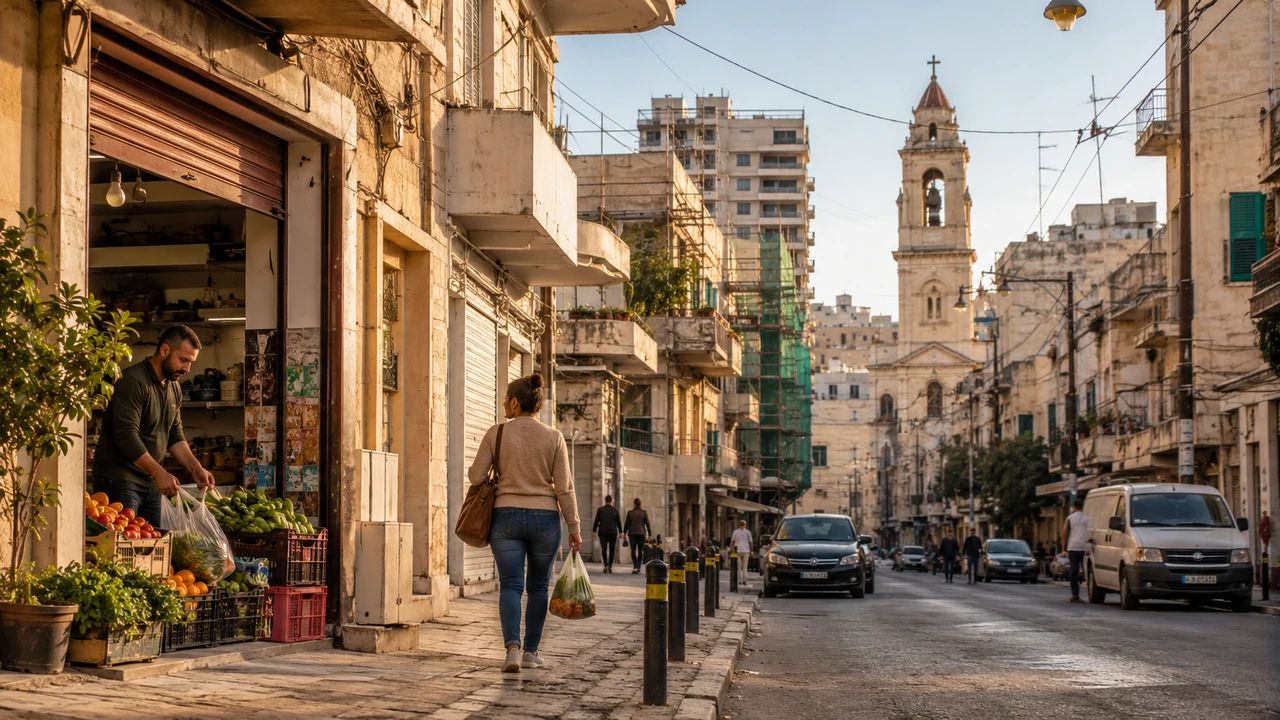
Lebanon is rebuilding after war while renewed violence continues to threaten civilians and the fragile security process in the south. Communities are trying to restore homes, farms, businesses, schools, and ordinary family life even as further strikes have renewed fear about another wider escalation. At the same time, Lebanon faces unresolved disputes over Israeli withdrawal, Hezbollah’s weapons, the authority of the Lebanese state, and the security of communities near the border.
Years of financial crisis have made recovery harder. Families continue to face high living costs, uncertain work, damaged public services, displacement, and difficult decisions about whether to remain in the country or seek a future elsewhere.
Lebanon also has one of the most visible historic Christian communities in the Middle East. Churches, schools, hospitals, charities, congregations, and Christian families remain an important part of public life. But a Christian family background or denominational identity does not by itself mean that a person trusts Christ.
Prayer Burden at a Glance
Pray for Lebanon to move away from recurring violence toward lasting peace, civilian protection, effective public institutions, and honest reconstruction. Ask God to strengthen churches to preach Christ clearly, disciple believers faithfully, pursue holiness, show mercy, and serve courageously. Pray for families carrying economic hardship or displacement, for refugees and migrant workers who are vulnerable to abuse, and for people who identify as Christian through family, culture, or tradition to repent and trust in Jesus Christ.
Last verified: 18 August 2026
Why Lebanon Needs Prayer Now
Lebanon is trying to recover while conflict, economic strain, and disputes over national authority continue, and many people identify as Christian without personally trusting Christ.
In the south, families are living with damaged homes, lost income, disrupted farming, weakened infrastructure, and renewed fear after deadly strikes on 15 August killed civilians, including children. The effects reach well beyond people whose homes were directly hit. Farmers need safe access to their land. Children need stable schools. Businesses need electricity and customers. Churches are caring for grieving and anxious people. Families considering a return home must decide whether conditions are safe enough to begin again.
Lebanon is also trying to strengthen the authority of the state over its territory and national security. Negotiations with Israel have addressed withdrawal from Lebanese territory and arrangements in the south. At the same time, Hezbollah’s weapons remain one of Lebanon’s most divisive political and security issues.
How these disputes are handled matters greatly. Renewed war would endanger civilians and deepen the country’s losses. An internal confrontation over weapons could also bring violence inside Lebanon and put civilians at risk. Pray for solutions that protect Lebanese sovereignty and civilian life without drawing the country into another war.
Lebanon is also rebuilding after years of severe financial crisis. Many people had already lost savings, purchasing power, secure employment, or confidence in public institutions before communities also had to repair damage from the latest fighting.
These political and security struggles can also tempt Christians in specific ways. Fear can make people look first to their religious community, political party, militia, or foreign ally for security. Long-standing Christian identity can become mainly cultural or political rather than a life of repentance, faith, worship, and obedience to Christ.
Lebanon needs political stability, functioning institutions, justice, and peace. Its churches also need pastors and believers who will trust Christ, teach His Word faithfully, care for suffering neighbors, and refuse to let fear or political loyalty govern their Christian witness.
Country Snapshot
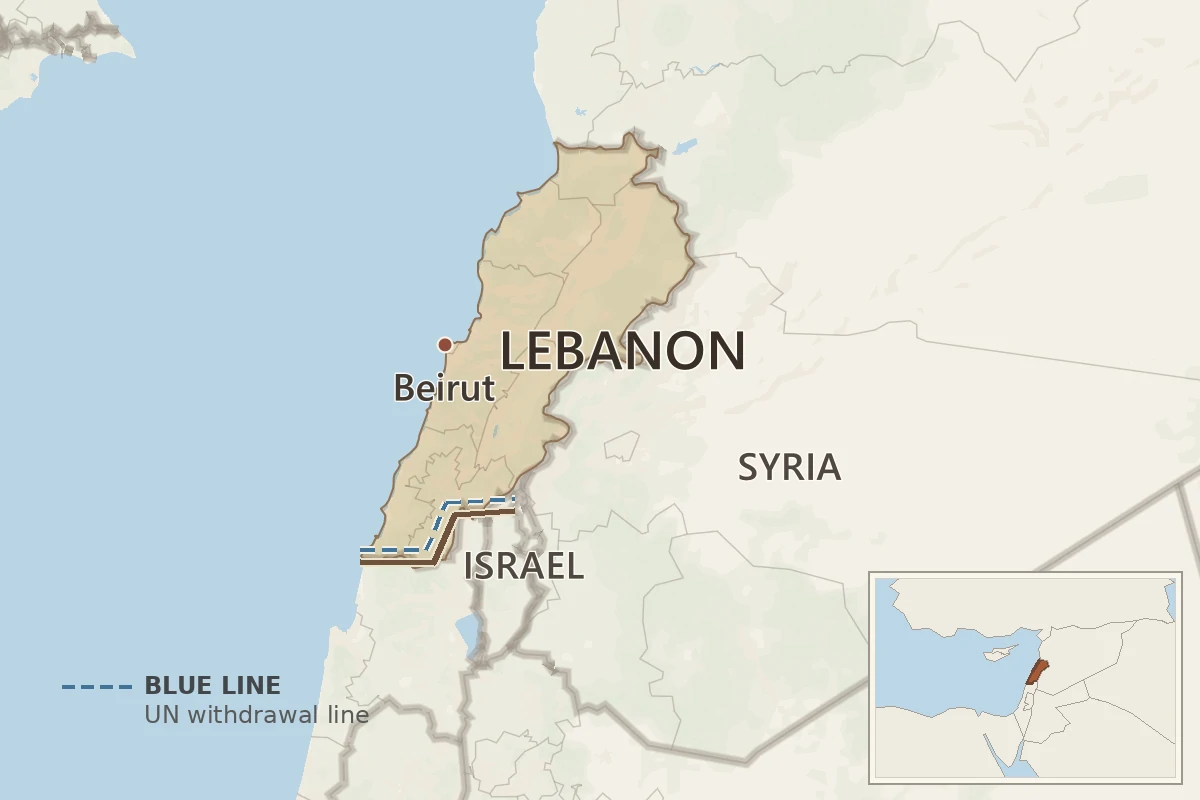
A brief orientation to Lebanon’s location, government, religious setting, and present prayer focus.
Lebanon’s political system allocates major public offices among religious communities. This arrangement reflects the country’s long history of religious diversity, but it can also make political competition closely tied to communal identity.
Christians remain highly visible in public life. Churches worship openly, and Christian institutions continue to serve through education, healthcare, charity, relief, and community life.
In Lebanon, however, identifying as Christian can mean different things. Some people trust Christ and seek to live in obedience to Scripture. Others identify as Christian mainly because of family, culture, baptism, denomination, village, or political community.
For that reason, pray not only for Christian institutions to continue but for people to repent, trust Christ, grow in biblical understanding, and live as His disciples.
Spiritual and Practical Challenges Affecting Christians and Churches
War, financial hardship, emigration, sectarian fear, inherited religious identity, and the needs of vulnerable people all affect how churches worship, disciple believers, serve their neighbors, and care for those who are suffering in Lebanon.
War, insecurity, and pastoral care
Christians in areas affected by fighting have suffered many of the same losses as their neighbors. Some families have been displaced. Some have lost relatives, homes, businesses, farmland, or income. Others remain in communities where damaged buildings and renewed military activity make ordinary life uncertain.
Pastors and churches may be caring at the same time for grieving households, frightened children, elderly people, displaced families, and members wondering whether they can continue living in Lebanon.
Churches need wisdom to speak truthfully about suffering without encouraging revenge. Christians should be able to mourn those who have been killed, condemn injustice, care for victims, and reject hatred without treating whole ethnic or religious populations as though they were responsible for the actions of governments, armies, militias, or political movements.
Economic exhaustion and rebuilding
Lebanon entered the latest period of conflict after years of severe financial crisis. Many households had already lost savings, purchasing power, secure employment, or trust in public institutions.
Now damaged homes, farms, businesses, roads, utilities, schools, healthcare facilities, and other public infrastructure need repair. The work is costly in a country where both government finances and household budgets are already under strain.
Pray for reconstruction money to be used honestly. Ask God to provide work, restore livelihoods and public services, and show particular mercy to families that have little ability to absorb another major loss.
Emigration and the future of younger generations
Many Lebanese, including Christians, have had to decide whether they can build a stable future in the country. Younger adults and skilled professionals may wonder whether they will find safe communities, reliable work, adequate healthcare, and good education for their children.
People who leave should not be judged casually. Many families make these decisions under intense pressure. Yet continued emigration can weaken congregations and communities when young families, teachers, pastors, medical workers, professionals, and future leaders leave.
Pray for wisdom for those deciding whether to stay, return, or move abroad. Ask God to strengthen Lebanese believers wherever they live and to sustain churches that are losing members through migration.
Christian identity and discipleship
Lebanon has a long and important Christian history. Yet being born into a Christian family, receiving baptism, belonging to a denomination, or identifying with a Christian political community does not prove that someone has been born again or is trusting Christ.
Political fear can also cause Christians to think mainly about protecting their community, preserving political representation, or maintaining influence.
Churches therefore need pastors who will call people to repentance and faith, teach Scripture faithfully, confront sin, and help believers understand that Christian strength is not measured mainly by political influence or communal power.
Sectarian fear and relationships between neighbors
Lebanon’s history includes painful periods of conflict between religious and political communities. New violence can revive old suspicions, including among people who have lived beside one another peacefully for years.
Christians should care for members of their own communities without limiting compassion to people who share their religion or politics. Real security concerns should be taken seriously, but they should not become an excuse for rumors, hatred, dehumanization, or collective blame.
Pray for Christians to love their neighbors, protect vulnerable people, speak truthfully, and pursue peace without ignoring real injustice or danger.
Refugees, migrant workers, and vulnerable people
Lebanon is home to several vulnerable groups whose circumstances are different. Syrian refugees, Palestinian refugees, migrant workers, and Lebanese people displaced within the country do not face the same legal, economic, or security conditions.
Some Syrians have chosen to return to Syria through voluntary-return programmes. Others remain in Lebanon because returning is unsafe, uncertain, or impractical for them.
Lebanon faces real social and economic pressure from hosting large numbers of displaced people. At the same time, refugees and migrant workers should not be treated as problems rather than people.
Pray for policies that are both just and humane. Ask God to protect vulnerable people from forced return, exploitation, trafficking, abuse, xenophobia, and political manipulation.
Christian Life and Witness in Lebanon
Christian communities remain publicly visible, but public visibility is not enough: churches need to preach Christ clearly, disciple believers faithfully, show mercy, serve courageously, and speak truth without hatred.
Christian life in Lebanon differs greatly from one community to another.
Maronite, Orthodox, Catholic, Armenian, evangelical, Protestant, and other professing Christian communities worship and serve in different traditions. Their doctrines and practices are not identical, and belonging to one of these communities should not automatically be treated as evidence of saving faith.
Even so, Lebanon’s churches provide real places for worship, pastoral care, teaching, fellowship, mercy, and service.
In parts of southern Lebanon, Christian communities continue ordinary life close to areas damaged by war. Families attend church. Children go to school. People care for farms and businesses. Churches keep gathering while communities deal with damaged buildings, poor services, financial pressure, and insecurity.
Christian witness here is practical: pastors care for frightened or grieving people, parents teach their children to follow Christ rather than hate their neighbors, congregations help displaced families, medical workers care for the wounded, teachers continue serving children, and believers act honestly when hardship makes selfishness tempting.
Christian schools, hospitals, charities, relief ministries, and congregations also have opportunities to serve people outside their own religious communities. This matters especially when conflict encourages people to withdraw into their own sectarian groups.
Converts from Muslim or Druze backgrounds may experience family opposition, broken relationships, social isolation, or difficulty finding safe and trustworthy Christian fellowship. Their experiences vary, but they need prayer for protection, wise pastoral care, courage, sound biblical teaching, and strong Christian community.
Churches also need wisdom when working with Christians from different traditions. Cooperation in practical service can be valuable where truth and conscience permit, but Christian unity should never require churches to treat important doctrine as though it does not matter.
Pray for churches where Scripture is taught clearly, Christ is proclaimed faithfully, sin is taken seriously, suffering people receive care, and believers learn to speak truth without contempt.
Lebanese Christians can also show their neighbors that hope in Christ does not depend on their community’s political strength or physical security.
They can refuse hatred when hatred seems useful. They can care for people outside their own community. They can condemn injustice without dehumanizing others. They can teach their children to follow Christ rather than inherit old hostilities. They can respect lawful government without treating political power as their savior.
And when Lebanon’s political or military future is uncertain, they can remind one another that Jesus Christ remains Lord of His church.
Recent Developments
Recent security, diplomatic, community, and refugee developments directly affect how Christians can pray for Lebanon now.
-
June 2026
A new security framework takes shape
Lebanon and Israel moved into more formal negotiations over security in southern Lebanon. The discussions connected Israeli withdrawal with Lebanese Armed Forces deployment and efforts to remove non-state armed forces from agreed areas. Hezbollah opposed disarmament under the proposed arrangements.
Prayer significance: Pray for arrangements that protect civilians, uphold Lebanon’s sovereignty, address genuine security dangers, and do not lead to renewed war or internal fighting.
-
July 2026
Negotiations turn to implementation
Further talks considered how withdrawal, Lebanese security responsibility, verification, and agreed areas might work in practice. Important disagreements remained.
Prayer significance: Pray for patient and truthful negotiations. Ask God to strengthen Lebanese institutions and prevent disagreements over security from leading to wider violence.
-
July 2026
Southern communities continue life amid damage
Christian and other communities in southern Lebanon continued worship, schooling, farming, business, and family life while living near areas damaged by conflict and facing continued economic hardship and insecurity.
Prayer significance: Pray for churches, families, schools, healthcare workers, farmers, local leaders, and businesses trying to restore ordinary community life.
-
June–July 2026
Voluntary return programmes assist some Syrians
During June and July, support was available for Syrians in Lebanon who freely chose to return permanently to Syria. Other Syrians remained unable or unwilling to return because of safety or other concerns.
Prayer significance: Pray for Syrians making difficult decisions, for safe and voluntary return, for protection from coercion, and for Lebanese communities carrying serious social and economic pressures.
-
5–6 August 2026
Violence disrupts negotiations
New Israeli strikes and other security incidents occurred in southern Lebanon while Lebanese and Israeli representatives were holding talks. The renewed strikes and security incidents showed how quickly violence could disrupt the talks.
Prayer significance: Pray that attacks, reprisals, and military incidents will not repeatedly close opportunities for peace or force civilians to carry the cost of political and military disputes.
-
As of 11 August 2026
Central disagreements remain unresolved
The latest completed round of Lebanon-Israel talks ended without agreement on the main disputes over Israeli withdrawal, security arrangements, Hezbollah’s disarmament, verification, and implementation. Further diplomacy remains possible, but as of 11 August no final outcome or timetable had been agreed.
Prayer significance: Pray for more than an agreement on paper. Ask God for arrangements that protect civilians, respect Lebanon’s sovereignty, restrain violence, strengthen lawful public authority, and reduce the risk of both cross-border fighting and internal conflict.
-
11–12 August 2026
Parliament acts on the death penalty and general amnesty
On 11 August, Lebanon’s parliament voted to abolish the death penalty. On 12 August, lawmakers passed a broad general amnesty measure after years of debate over prison overcrowding, long detention, sentence reductions, and which offences should qualify. Supporters presented the measures as steps toward a fairer justice system, while critics of the amnesty raised concerns about victims’ rights, accountability, unequal benefit, and sectarian political bargaining. As of 13 August, the parliamentary votes had been confirmed, while later promulgation and implementation had not yet been independently confirmed.
Prayer significance: Pray for a justice system that protects victims, treats prisoners and detainees lawfully and humanely, resists sectarian favoritism, corrects genuine injustice, and strengthens public trust rather than deepening division.
-
15 August 2026
Deadly strikes deepen danger to civilians and the fragile security process
Israeli airstrikes in southern Lebanon killed at least 11 people, including children, in Ansar and Deir al-Zahrani. Israel said the strikes followed an attack that seriously wounded three Israeli soldiers and said it was targeting Hezbollah infrastructure and commanders. Lebanese leaders condemned the civilian deaths and warned that the escalation was undermining efforts to stabilise the south and advance negotiations. Hezbollah continued to reject disarmament under the present framework and warned that the attacks would be met with a response.
Prayer significance: Pray for comfort for bereaved families, healing for the injured, protection of civilians, restraint after attacks and reprisals, and negotiations that genuinely reduce the danger of further war.
How to Pray
Pray for protection, peace, just public authority, faithful churches, mercy for vulnerable people, and repentance and faith in Christ.
Pray for civilians to be protected and violence to end. Ask God to restrain attacks, reprisals, raids, and other military action that endangers ordinary people. Remember especially communities in southern Lebanon that have experienced displacement, damage, and repeated insecurity.
Pray for honest and effective public institutions. Ask God to give Lebanon’s government, Armed Forces, courts, security institutions, and public servants wisdom, integrity, competence, courage, and public trust. Pray that national security authority would be used lawfully, and that laws and courts would protect victims, treat detainees fairly, reduce unjust delay, resist sectarian favoritism, and serve the good of the people.
Pray that disputes over weapons and withdrawal do not lead to another war. Ask God to give wisdom as Lebanon deals with Hezbollah’s weapons, Israeli withdrawal, and security in the south. Pray that these disputes will be resolved without renewed cross-border war or internal armed conflict.
Pray for families rebuilding their lives. Remember people repairing homes, returning to damaged villages, restoring farms and businesses, caring for frightened children, or deciding whether it is safe to return. Ask God to provide housing, water, electricity, healthcare, schools, work, and stable community life.
Pray for economic recovery that reaches ordinary families. Ask God to expose corruption, protect reconstruction resources, restore employment, strengthen essential services, and provide for households whose savings and incomes have already been badly weakened.
Pray for faithful churches and pastors. Ask Christ to strengthen pastors, elders, teachers, families, Christian schools, hospitals, charities, congregations, and ministries. Pray for clear gospel preaching, faithful Bible teaching, repentance, holiness, compassion, courage, and perseverance.
Pray for believers facing family or social pressure. Remember converts and others whose profession of faith may bring rejection or isolation. Ask God to provide trustworthy Christian fellowship, wise pastoral care, protection, courage, and assurance in Christ.
Pray against sectarian hatred and political idolatry. Ask God to keep Christians from making political parties, communal power, militias, or foreign alliances their source of security. Pray that believers would speak truth without hatred, seek justice without revenge, and love their neighbors without compromising biblical conviction.
Pray for refugees, migrant workers, and displaced people. Ask God for humane treatment, protection from exploitation, safe and genuinely voluntary return where possible, and practical help for people who cannot safely return home.
Pray for repentance, faith, and lasting hope in Christ. Ask God to bring many people to repentance and faith in Jesus Christ. Pray that people who identify as Christian mainly through family or heritage would come to know and follow Him, and that believers would keep trusting Christ whatever happens politically or militarily in Lebanon.
Give Thanks
Lebanon’s burdens are serious, but there are real mercies for which Christians can thank God.
Give thanks for congregations that continue to gather for worship and prayer in communities affected by conflict and hardship.
Give thanks for pastors, teachers, medical workers, relief workers, volunteers, parents, and other believers who continue serving when uncertainty and financial pressure make that service costly.
Give thanks for Christian schools, hospitals, charities, churches, and ministries that continue providing education, healthcare, relief, counsel, fellowship, and practical help.
Give thanks for Lebanese people who protect neighbors, share resources, reject sectarian hatred, and help displaced or vulnerable families across communal boundaries.
Give thanks when violence decreases, families return home safely, schools or businesses reopen, damaged services are restored, or serious negotiations continue. These are real mercies even while conflict, economic hardship, and major political disputes remain unresolved.
Give thanks for every congregation where Scripture is taught faithfully, Christ is clearly proclaimed, believers are discipled, and suffering people receive compassionate care.
Give thanks that Jesus Christ remains Lord of His church. Pray that He will preserve His people, bring sinners to repentance and faith, comfort grieving families, and strengthen churches to remain faithful.
Last Verified / Update Note
This section shows when the guide was last checked and highlights developments that could significantly change Lebanon’s situation.
Review Status
Updated for current prayer use
This update reviewed the 15 August escalation in southern Lebanon, including reported civilian deaths, the Israeli account of the strikes and the incident that preceded them, Lebanese official reactions, Hezbollah’s response, and the effect of the renewed violence on civilian security and the fragile negotiation process. The previously reviewed conflict, withdrawal, weapons, reconstruction, economic, refugee, church, and justice burdens remain in place unless directly affected by this update.
Pray for civilian protection, comfort for bereaved and injured families, and lasting peace; for attacks and reprisals not to widen into another war; for Lebanon’s government and public institutions to act justly and effectively; for disputes over armed power and Israeli withdrawal to be resolved without further bloodshed; for damaged communities to rebuild; for economic recovery and humane treatment of vulnerable people; and for churches to preach Christ clearly, resist sectarian hatred, disciple believers faithfully, and serve suffering neighbors.
Watch whether the 15 August escalation leads to further attacks or retaliation; whether Lebanon-Israel negotiations resume or materially change; Israeli military activity and withdrawal; Hezbollah’s response to disarmament proposals; Lebanese Armed Forces deployment; ceasefire implementation; displacement and return; reconstruction; the promulgation and implementation of the 11–12 August justice legislation; conditions affecting Syrians considering return; and major changes affecting Lebanon’s political, humanitarian, religious-freedom, or church situation.
Casualty figures from the 15 August strikes are dated to that event and are based on Lebanese health and state reporting carried by reputable independent news organisations. Israel’s account of the military targets and of the incident that preceded the strikes is presented as Israel’s stated position rather than as an independently established finding. Lebanese official reactions and Hezbollah statements are likewise identified as their positions. Other volatile details—including casualties, displacement, military positions, territorial control, negotiations, security deployments, and implementation of newly passed legislation—may change quickly and remain dated or qualified where necessary. The targeted 18 August recheck did not establish later promulgation or full implementation of the 11–12 August justice measures, so the guide retains its existing qualification on those later steps.
Help keep this guide accurate and current
If you notice a possible correction, broken link, or important change in Lebanon, please contact the Nations Prayer Directory so the information can be reviewed.
Key Sources Consulted
Official, United Nations, institutional, local, regional, and independent sources that materially informed this Lebanon prayer guide.
Lebanese official sources
- Presidency of the Lebanese Republic — used for the current presidency and Lebanon’s official positions concerning ceasefire, Israeli withdrawal, Lebanese sovereignty, state authority, and weapons under state control.
- Presidency of the Council of Ministers — used for Prime Minister Nawaf Salam’s current role and government statements that decisions of war and peace belong to the Lebanese state and that armed activity outside state institutions is rejected.
- Lebanese Armed Forces — used for the Army’s stated commitment to extend Lebanese state authority, restrict weapons to state forces, deploy in the south, and prevent Lebanese territory from being used for unauthorized military activity.
- Lebanese Parliament — general amnesty committee record — used for the official legislative history, stated justice and prison concerns, and committee approval that preceded the August parliamentary vote.
- Lebanese Parliament — death-penalty proposal committee record — used for the official legislative history of the proposal to abolish capital punishment before the August plenary vote.
United Nations and institutional sources
- United Nations Interim Force in Lebanon — UNIFIL — used for the Resolution 1701 framework, violations and instability along the Blue Line, humanitarian access, support for Lebanese state authority, and conditions affecting communities in southern Lebanon.
- World Bank — Lebanon — used for the economic crisis, fragile recovery, reconstruction needs, poverty and public-service pressures, and the effect of renewed conflict on economic prospects.
- UNHCR Lebanon — used for Syrian voluntary-return arrangements, the requirement that return be voluntary, protection concerns, and the dated June–July 2026 return programmes.
- Freedom House — Freedom in the World 2026: Lebanon — used for wider civil-liberties and religious-freedom context, including Lebanon’s substantial public freedom of religious practice alongside political, rule-of-law, refugee, and security pressures.
- Open Doors research on Lebanon — used narrowly for background concerning family and social pressure that some Christian converts may face. It is not used to imply nationwide state persecution of Christians.
Local, regional, Israeli official, and independent sources
- L’Orient Today / L’Orient-Le Jour — used as a Lebanese reporting source for the framework agreement, pilot-zone negotiations, implementation disputes, and reported Hezbollah statements.
- Associated Press — used for current conflict developments, the effect of renewed strikes on negotiations, internal divisions over disarmament, and conditions facing Christian communities in southern Lebanon.
- Associated Press — southern Lebanon strikes, 15 August 2026 — used for the reported casualty toll, locations and civilian deaths, Lebanese official reactions, Israel’s stated account of the strikes and preceding incident, Hezbollah’s response, and the effect of the escalation on the truce and negotiations.
- Financial Times — southern Lebanon strikes, 15 August 2026 — used as independent corroboration of the reported death toll and civilian impact and for the effect of the strikes on the fragile security and negotiation process.
- Associated Press — death penalty vote, 11 August 2026 — used for the parliamentary vote to abolish capital punishment, the replacement sentence described in the legislation, the long-standing execution moratorium, and immediate reactions to the vote.
- Associated Press — general amnesty vote, 12 August 2026 — used for the parliamentary passage of the general amnesty measure, its prison and justice rationale, principal exclusions and sentence effects, and the political and sectarian controversy surrounding it.
- Al Jazeera — used as a regional source for Hezbollah leader Naim Qassem’s publicly reported opposition to disarmament under the present framework and insistence on Israeli withdrawal.
- Israeli Ministry of Foreign Affairs / Israel Defense Forces — used only to represent Israel’s official security position, including its stated reasons for military presence or action in southern Lebanon and its insistence on Hezbollah’s disarmament. These sources establish Israel’s position; they are not treated as independent verification of contested claims.
- Le Monde — used as reputable outside reporting for the outcome of the August 4–6 Rome round and the continuing disagreement over withdrawal, disarmament, and verification.
Source Context
How to read the sources behind this guide in a fast-changing and politically contested setting.
Source Context
- Official positions. Lebanese government, Lebanese Army, Israeli government, and Israeli military sources are used principally to establish what those authorities themselves say or require. Their statements are not automatically treated as proof of disputed military events or responsibility.
- Hezbollah’s position. Hezbollah’s views on disarmament and the negotiations are represented through publicly reported speeches in Lebanese and regional reporting. These statements establish the group’s stated position, not the truth of every claim made in those speeches.
- Conflict reporting. Events in southern Lebanon are politically contested and can change rapidly. Exact territorial control, pilot-zone boundaries, troop locations, casualty totals, and responsibility for individual incidents may remain uncertain or disputed. Where such details matter for understanding Lebanon’s situation, Associated Press, Lebanese reporting, UNIFIL, and official sources are considered together rather than relying on a single account.
- 15 August escalation. The reported death toll is dated to 15 August and comes from Lebanon’s Health Ministry and state news agency as reported by Associated Press and independently corroborated by the Financial Times. Israel’s claims about the military targets and the incident that preceded the strikes are presented as Israel’s account, not as independently established facts. Lebanese government reactions and Hezbollah statements are also identified as the positions of those actors rather than treated as neutral verification.
- Syrian returns. UNHCR’s available programme information was dated through 30 July 2026. No later official extension had been confirmed by 11 August, so those June–July arrangements were not confirmed as continuing beyond that date.
- Economic figures. Reconstruction estimates such as the World Bank’s $11 billion figure refer to the period assessed in its 2025 damage-and-needs study. They should not be read as a complete total for damage caused by later 2026 fighting.
- Christian life and religious freedom. Lebanon allows substantial public Christian worship and participation, and current reporting shows churches and Christian communities continuing ordinary life in affected areas. The extent of family or social opposition to converts is difficult to measure nationally, and experiences vary by family and region. Reports of such opposition should therefore not be generalized to all converts or all parts of Lebanon.
- August justice legislation. Parliament voted on 11 August to abolish the death penalty and on 12 August passed a general amnesty measure. Official parliamentary records establish the preceding legislative process, while current reporting establishes the plenary actions. As of 13 August, final presidential promulgation and full implementation had not yet been independently confirmed.
- Source mix. Because Lebanese state institutions, Hezbollah, Israel, and international actors often give sharply different accounts, the sources include Lebanese official and local material, regional reporting, United Nations and humanitarian sources, and reputable international reporting. Where accounts conflict, contested claims are attributed or qualified rather than presented as settled fact.
A Closing Prayer for Lebanon
A concise prayer gathering Lebanon’s present burdens before the Lord.


