

Russia’s full-scale invasion continues to affect daily life across Ukraine. Missile and drone attacks reach cities far from the front as well as communities near active fighting. Homes, hospitals, businesses, energy systems and transport can be damaged with little warning. Families grieve people who have been killed, care for the wounded, live apart because of displacement or military service, and wonder how much longer the war will continue.
Churches are serving people in the middle of this suffering. Pastors bury the dead and counsel grieving families. Chaplains serve soldiers facing fear, injury, guilt and death. Congregations help displaced families, wounded people and communities damaged by attacks. Christians in Russian-occupied Ukrainian territory face additional restrictions and dangers.
Believers also face spiritual temptations created by years of war. Anger can harden into hatred. The desire for justice can become a desire for revenge. National loyalty can begin to govern the conscience more strongly than Scripture. Repeated loss can make prayer difficult and hope seem distant.
Prayer for Ukraine should name aggression and injustice truthfully while remaining governed by Christ. Christians can rightly pray for Russia’s invasion to end, for civilians to be protected, for grave wrongdoing to be judged and for occupied communities to be free. They should also pray for leaders to tell the truth, use authority justly and exercise restraint; for churches to proclaim Christ faithfully; for religious freedom; for mercy toward the suffering; for protection from wider regional and nuclear danger; and for a peace that does not abandon vulnerable people.
Prayer Burden at a Glance
Pray for civilians facing missile, drone and frontline attacks; families who are grieving, displaced or separated; and churches, pastors, chaplains, medical workers, rescuers and volunteers serving damaged communities. Pray for Christians in Russian-occupied Ukrainian territory and for peaceful worshippers throughout Ukraine. Ask God to give wisdom and restraint to Ukrainian, Russian and international leaders, protect neighbouring countries and nuclear facilities from wider disaster, open the way for serious efforts toward a just peace, and help Christians resist hatred and remain faithful to Christ.
Last verified: August 13, 2026
Why Ukraine Needs Prayer Now
Years of invasion, repeated attacks, displacement, bereavement and uncertainty continue to affect families, churches and communities across Ukraine.
The suffering in Ukraine comes from years of repeated violence, not simply from the latest major attack.
Civilian harm increased further in July. Reporting published on August 13 by The Times, citing the United Nations Human Rights Monitoring Mission in Ukraine, said that at least 437 civilians were killed and more than 2,600 injured during July. That was the highest monthly civilian death toll since May 2022 and the worst combined monthly killed-and-injured total since March 2022. The Mission had already recorded 293 civilians killed and 1,990 injured in June, showing that civilian casualties were rising before July’s further increase.
Large attacks continued into August. On August 5, Ukrainian authorities reported 17 people killed and at least 44 injured in Kyiv and its surrounding region. Such attacks add to years of interrupted sleep, damaged homes, disability, bereavement and fear.
Displacement remains another long-term reality. UNHCR estimated that about 3.7 million people were internally displaced and that millions more Ukrainians remained outside the country. Leaving home can begin a struggle that lasts for years. Families live apart. Children change schools and sometimes languages. Older people lose familiar neighbours and churches. People with disabilities may struggle to obtain care. Families thinking about returning may find that homes are damaged, services are weak or their communities remain unsafe.
Ukraine is also trying to repair towns, infrastructure and public services while attacks continue. Homes, electricity networks, heating systems, roads, hospitals and local services all need extensive repair. Large reconstruction budgets will create opportunities for corruption and unfairness as well as recovery. Pray that money intended for rebuilding reaches damaged communities and families who genuinely need help.
Churches live inside all of these realities. Pastors minister to people who are grieving, exhausted, angry or finding it difficult to pray and hope. Some congregations have members scattered across several countries. Some families have loved ones serving in the military. Some Christians live close to the front or under Russian occupation.
They need grace to lament without despair, oppose evil without becoming cruel, seek justice without revenge, and continue trusting Christ when suffering does not end quickly.
Ukraine needs prayer for protection and justice, but also for truthful government, repentance, mercy, faithful preaching, religious freedom, care for displaced and wounded people, serious diplomacy and perseverance in Christ.
Country Snapshot
A brief orientation to Ukraine’s government, humanitarian situation, territorial context and Christian setting.
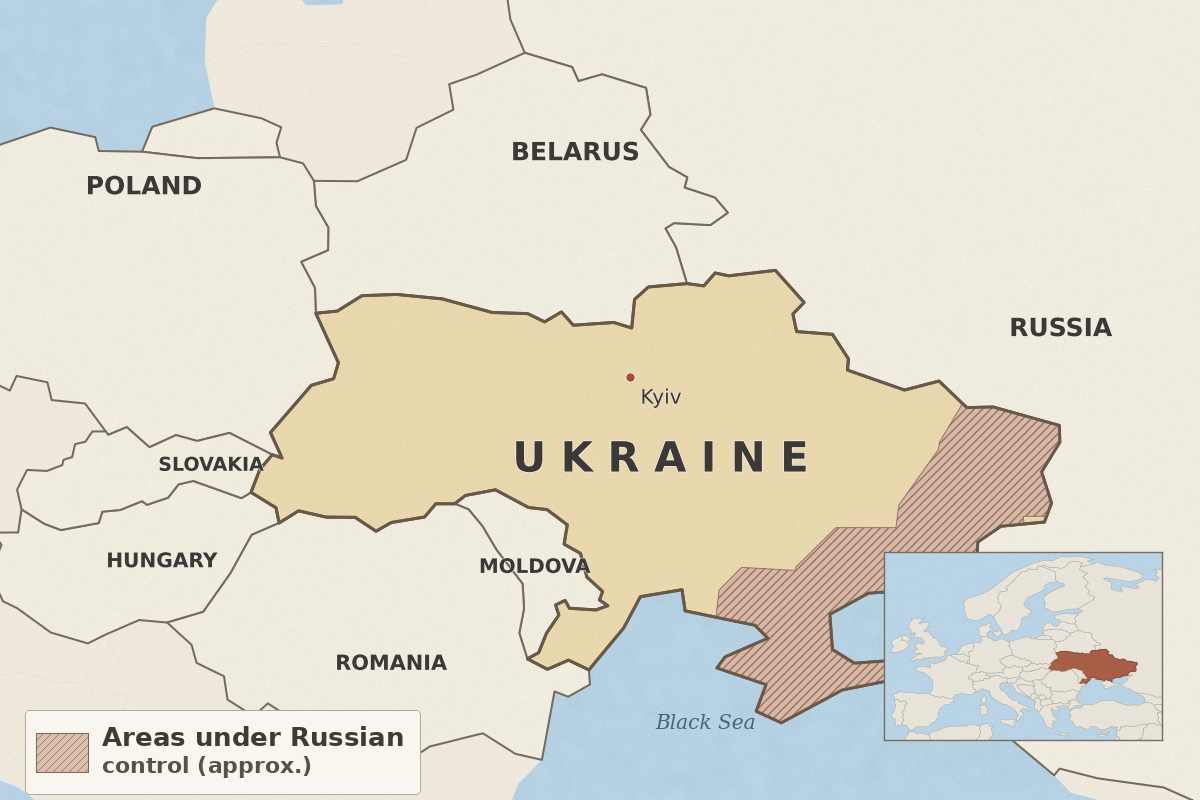
Ukraine’s religious landscape cannot be reduced to one church or tradition. Different Orthodox bodies have distinct institutional histories and relationships. Catholic, Protestant and evangelical congregations also form important parts of the country’s religious life.
These identities need to be described accurately without assuming that denominational affiliation, baptism, religious heritage or church membership proves that a person has been born again or trusts in Christ. Ukrainians, like people everywhere, need to hear the gospel clearly, repent of sin, trust in Jesus Christ and grow in obedience to His Word.
The difference between government-controlled and Russian-occupied territory is also important.
In government-controlled Ukraine, peaceful worship generally remains possible. At the same time, wartime measures against institutions regarded as linked to Russia have raised serious questions about evidence, proportionality and freedom of religion.
Under Russian occupation, United Nations human-rights reporting describes much more coercive conditions. People regarded as disloyal to Russian rule may face pressure involving citizenship, political loyalty, culture and religion, with some religious communities facing particular restrictions.
Spiritual and Practical Challenges Affecting Christians and Churches
War affects Christian life through danger, displacement, occupation, grief, moral strain, questions of religious freedom and conscience, and the continuing need to protect people from wider catastrophe.
Serving communities repeatedly exposed to attack
Churches minister among people who have lived through years of attacks, displacement and bereavement. A congregation may gather for worship on Sunday and spend the following days helping families after a missile strike, visiting wounded people, finding temporary accommodation or preparing funerals.
Communities near the frontline face additional danger from short-range drones, shelling and damaged infrastructure. Older people, people with disabilities and families who cannot evacuate may be especially vulnerable.
Pray for the people whose work protects and preserves life: rescuers, doctors and nurses, firefighters, evacuation teams, local volunteers and those maintaining warning systems, shelters, electricity and other essential services.
Displacement, separation and the long work of rebuilding
Reaching a safer place does not end the effects of war. Refugees and internally displaced people may spend years dealing with uncertain housing, disrupted education, problems finding work, separation from relatives and the loss of familiar churches and communities.
Churches receiving displaced families need patience as well as generosity. Caring for people may involve helping them find employment, settle children into school, replace documents, obtain medical care, cope with grief or begin life in a new community.
Reconstruction will also require integrity. Huge amounts of money and material will be needed to rebuild homes, roads, energy systems and public services. Pray that corruption and favouritism are exposed, that public money is used honestly, and that devastated communities and poorer families are not pushed aside.
Christians living near the front or under Russian occupation
Believers close to active fighting may worship with damaged buildings, unreliable electricity, restricted travel and constant danger.
Christians living in Russian-occupied Ukrainian territory face additional problems. United Nations reporting has documented Russian measures that require residents to live under Russian legal and political structures and that restrict fundamental freedoms. Religious affiliation can also bring suspicion or discrimination.
Conditions are not identical everywhere, and independent information from occupied areas is limited. Even so, Christians in these communities need prayer for protection, courage, wisdom about when to speak and when to remain silent, opportunities to meet with other believers, and freedom from detention or other unlawful coercion.
Seeking justice without becoming consumed by hatred
Years of invasion, occupation, bereavement and destruction can change the way people see those on the other side of the war.
Ukrainian Christians need grace to condemn Russia’s aggression without treating Russian people as though every individual shares the guilt of the Russian government or armed forces. They need to seek justice without celebrating the suffering of civilians.
The same principle matters when Ukrainian attacks cause civilian deaths inside Russia. Ukraine is defending itself against an invasion begun by Russia, and that distinction remains important. Yet civilians do not lose their value before God because they live in the country responsible for the invasion.
Pray that Christians will mourn civilian deaths rather than excuse them, that armed forces will take civilian protection seriously, that military claims will be reported truthfully, and that believers will test patriotic loyalties by Scripture rather than allowing nationality to govern right and wrong.
Protecting national security while preserving religious freedom
Ukraine faces genuine security concerns involving Russian political and institutional influence. Some clergy and religious organisations have been accused of maintaining connections with Russian institutions that support the war.
National security, however, does not remove the duty to protect peaceful worship and judge individuals and institutions on evidence.
This tension intensified in July when Ukraine’s State Service for Ethnic Policy and Freedom of Conscience took further action concerning the Pochaiv Holy Dormition Lavra. The agency said it had identified prohibited institutional affiliation and required corrective action. On August 10, DESS announced a separate affiliation review concerning the administration of the Ukrainian Orthodox Church’s Zaporizhzhia eparchy and stated that the research group would begin work on August 12. The guide does not presume what that investigation will conclude.
Ukrainian authorities say these procedures are intended to identify prohibited foreign institutional influence rather than restrict worship simply because of liturgical tradition or religious identity. The UOC disputes the state’s broader findings about its institutional relationship with Russian religious bodies. United Nations human-rights monitors have separately concluded that provisions restricting religious organisations affiliated with counterparts in Russia place disproportionate restrictions on the manifestation of religion or belief and should be brought fully into line with international human-rights law.
Pray for evidence to be examined honestly, genuine collaboration to be exposed, peaceful believers to be treated fairly, courts and officials to act justly, and laws to protect national security without punishing people simply because of their religious identity.
Military service, pastoral care and questions of conscience
War places soldiers and their families under severe physical, emotional and spiritual strain. Ukrainian military chaplains serve people confronting death, injury, fear, grief and difficult questions about the use of force.
Their calling is greater than helping soldiers maintain morale. Christian chaplains need courage to speak about sin, repentance, justice, mercy, death and hope in Christ. They also need strength for their own grief and exhaustion.
Questions of conscience require careful treatment as well. United Nations human-rights reporting has raised concerns about restrictions affecting conscientious objection to military service.
Ukraine has a duty to defend people facing invasion. At the same time, pray that laws and military practice respect human dignity, that questions of conscience receive fair consideration, and that pastors and chaplains give biblical counsel rather than political slogans.
Nuclear safety during an active war
The Russian-occupied Zaporizhzhia Nuclear Power Plant remains a serious safety concern.
In July, the International Atomic Energy Agency reported another complete loss of off-site power at the plant, one of many such incidents since the war began, and again called for maximum military restraint around nuclear facilities.
There is no basis here for saying that a nuclear disaster is imminent. There is good reason to pray.
Pray for reliable electricity and cooling, working safety systems, competent staff, accurate radiation monitoring and restraint from military activity that could endanger the plant or nearby communities.
Christian Life and Witness in Ukraine
Churches continue to worship, preach, care for neighbours and shepherd people living with grief, displacement and the moral strain of prolonged war.
Worship and practical care in the same communities
For many Ukrainian Christians, congregational life now includes both regular worship and practical help for people affected by war.
Churches gather to pray, hear Scripture preached and worship God while also providing food, shelter, evacuation help, repairs and support for children and grieving families. Different churches and ministries have reported pastors and congregations continuing this work despite displacement and repeated attacks.
Christians do not need to treat every denomination or institution as doctrinally equal in order to recognise genuine acts of mercy. Give thanks wherever Scripture is faithfully taught, Christ is clearly proclaimed, believers care sacrificially for neighbours and suffering people receive practical help.
Pastors and chaplains serving people who have suffered deeply
Pastors may care for people who are bereaved, frightened, angry, exhausted or struggling to pray. Some lead congregations whose members now live in several countries. Others serve families whose relatives are fighting, wounded, missing or recently returned from occupation or captivity.
They need wisdom to preach Christ rather than turn sermons into patriotic speeches. They also need to know how to lament with people who have suffered instead of offering quick answers to grief that cannot be quickly resolved.
Military chaplains minister among soldiers facing death, fear, injury and moral responsibility. Pray that they will speak truthfully from Scripture, point people to Christ, counsel wounded consciences wisely and remain spiritually healthy themselves.
Families and congregations living with wounds that will last
Some Ukrainian families are divided across national borders. Some children have spent important years of childhood hearing air-raid warnings or living apart from a parent. Some households care for people with permanent injuries. Others continue waiting for news about someone who is missing.
Many of these problems will remain after the fighting eventually ends.
Churches will need to continue serving veterans, widows, children, people with disabilities, displaced families and those living with grief and trauma long after international attention has moved elsewhere.
Following Christ when patriotism and anger are powerful
Ukraine is defending itself from invasion, so love of country is understandable. Yet the church cannot allow national identity to take the place of allegiance to Christ.
Ukrainian nationality cannot save. Neither can Orthodox, Catholic, Protestant or evangelical identity, baptism, Christian heritage or church membership. Salvation is God’s gift through faith in Jesus Christ.
Pray for faithful preaching of the gospel, genuine repentance, conversion, holy living and patient discipleship.
Christians also need grace to pray for enemies without pretending that injustice does not matter. Scripture does not require them to call aggression good or abandon the protection of vulnerable people. It does require them to reject personal revenge, speak truthfully, show mercy where they can and trust God with final judgment.
Recent Developments
These developments are included because they materially affect how Christians can pray. They are not intended to be a complete record of the war.
-
June–July 2026
Civilian casualties rose further in July
Civilian casualties had already risen sharply in June, when the United Nations Human Rights Monitoring Mission in Ukraine recorded 293 civilians killed and 1,990 injured. Reporting published on August 13 by The Times, citing the same UN mission, said that at least 437 civilians were killed and more than 2,600 injured in July. July therefore had the highest monthly civilian death toll since May 2022 and the worst combined monthly killed-and-injured total since March 2022.
Prayer significance: Pray for civilians across Ukraine, especially those close to active fighting, and for rescuers, doctors, evacuation teams and churches helping people after attacks.
-
July 2026
Nuclear-safety concerns continued
The International Atomic Energy Agency reported another complete loss of external power at the Russian-occupied Zaporizhzhia Nuclear Power Plant and continued military activity in the surrounding area.
Prayer significance: Pray for dependable electricity and safety systems, competent staff, accurate monitoring and restraint by every military actor around nuclear facilities.
-
July 2026
Ukraine changed senior civilian and military leadership
A new government began work in July, and Ukraine also changed its senior military command. These leaders face decisions involving defence, energy, the economy, humanitarian needs and reconstruction while the war continues.
Prayer significance: Pray that leaders tell the truth, reject corruption, protect civilians, use authority justly and make wise decisions under severe pressure.
-
July–August 2026
Enforcement of Ukraine’s religion law continued
Ukrainian authorities took further steps concerning religious institutions they say remain connected with prohibited Russian religious structures. In July, DESS issued the Pochaiv Holy Dormition Lavra with an order requiring identified violations to be addressed within 30 days. On August 10, DESS announced a separate investigation concerning the administration of the UOC’s Zaporizhzhia eparchy and stated that the research group would begin work on August 12. This guide does not presume the investigation’s outcome.
Ukraine presents these measures as protection against prohibited foreign religious influence. The UOC disputes the state’s broader conclusions about affiliation, while UN human-rights monitoring has raised concerns about whether Ukraine’s legal restrictions are sufficiently proportionate to the right to freedom of religion.
Prayer significance: Pray that genuine hostile activity is addressed through reliable evidence and due process, that peaceful believers are not treated as collectively guilty, and that Ukraine protects both its legitimate security interests and freedom of religion.
-
July 30–August 5, 2026
Major attacks caused further civilian deaths and raised fears of cross-border escalation
Large Russian missile-and-drone attacks again struck Ukrainian cities and killed and injured civilians. During the July 30 attack, a missile also entered Polish territory, showing how an incident connected with the war can cross an international border.
Another major attack on August 5 killed civilians in Kyiv and its surrounding region.
Prayer significance: Pray for bereaved families, effective protection of civilians, careful investigation of cross-border incidents and restraint so that mistake or miscalculation does not widen the war.
-
August 8–10, 2026
Long-range attacks endangered civilians beyond Ukraine
A drone exploded inside Bulgaria on August 8 without reported casualties, and further Russian and Ukrainian long-range attacks caused civilian deaths during the following days.
On August 10, Russian local authorities reported substantial civilian casualties in Nizhnekamsk after a Ukrainian drone attack aimed at oil infrastructure connected with Russia’s war economy.
Russia’s invasion remains the cause and governing context of the present war. Saying clearly that Ukrainian attacks can also kill civilians does not erase that responsibility.
Prayer significance: Pray for civilians on every side, restraint in the use of force, truthful accounts of military operations and an end to long-range attacks that continue to kill people far from the immediate front.
-
July–August 2026
Diplomatic contacts continued without a durable ceasefire
Diplomatic contacts continued, but no durable ceasefire had taken hold by the guide’s verification date.
Prayer significance: Pray for negotiations that deal honestly with aggression, occupation, civilian protection, prisoners and the rights of people whose homes and communities are under foreign control.
How to Pray
Use these requests to pray for protection, justice, faithful churches, wise leadership, religious freedom and lasting hope in Christ.
-
Pray for civilians living under attack. Ask God to protect children, older people, patients, workers and families exposed to missiles, drones, shelling and frontline fighting. Pray for effective warnings, shelters, rescue work, medical care and safe evacuation.
-
Pray for displaced families and damaged communities. Pray for safe housing, employment, education, family reunion and trustworthy churches. Ask God to provide patient help for people who remain displaced for years and to give families wisdom about whether and when it is safe to return home. Pray for honest reconstruction that reaches communities most damaged by the war.
-
Pray for churches, pastors and chaplains. Ask God to strengthen those who preach, counsel grieving people, care for the wounded, shelter displaced families and bury the dead. Pray that churches will join practical mercy with clear proclamation of Christ and that Christian leaders will not be overcome by exhaustion or political pressure.
-
Pray for Christians near the front and in Russian-occupied Ukrainian territory. Pray for believers facing bombardment, surveillance, coercion or restrictions on worship. Ask God to give them wisdom, courage, safe Christian fellowship and protection from unlawful detention or pressure.
-
Pray for Ukrainian Christians to resist hatred and revenge. Ask God to help believers oppose aggression and seek justice without blaming whole peoples or rejoicing when civilians suffer. Pray that love of country will remain under the authority of Christ and Scripture.
-
Pray for religious freedom, justice and conscience. Ask God to expose genuine collaboration and foreign manipulation while protecting peaceful worshippers from collective guilt. Pray for fair courts, proportionate laws, honest evidence and wise treatment of questions involving military service and conscience.
-
Pray for leaders and for a just end to the war. Pray for Ukrainian, Russian and international leaders, military commanders, judges and diplomats. Ask God to restrain cruelty, corruption, pride, propaganda and reckless decisions; bring accountability for grave wrongdoing; end Russia’s invasion and occupation; and open a path toward peace that protects people who are most vulnerable.
-
Pray that the war will not widen or cause a nuclear disaster. Ask God to protect neighbouring countries from accidental escalation, preserve the Zaporizhzhia Nuclear Power Plant and other nuclear facilities, keep essential safety systems working and restrain military actions that could place large civilian populations in danger.
-
Pray for repentance, saving faith and lasting hope in Christ. Ask the Holy Spirit to use the preaching of Scripture and the witness of Christians to bring people to repentance and faith in Jesus Christ. Pray for believers who have buried loved ones, lost homes or lived through years of fear. Their final hope does not rest in armies, governments or peace agreements. Christ reigns now, will judge with perfect justice, will raise His people from death and will bring His kingdom in its fullness. Pray that this hope will help them obey Him faithfully while the war continues.
Give Thanks
Even during prolonged war, there are specific mercies for which Christians can thank God without minimizing the suffering that remains.
-
Give thanks for churches that continue to worship and care for their neighbours. Thank God wherever Scripture is faithfully taught, Christ is proclaimed, believers gather for prayer and people affected by war receive compassionate help.
-
Give thanks for pastors, chaplains and Christian workers who stay close to suffering people. Thank God for those ministering among soldiers, grieving families, displaced people, wounded communities and households living with fear.
-
Give thanks for rescuers, medical workers, humanitarian workers and volunteers whose work saves lives. Many continue to evacuate civilians, treat injured people, repair damaged services and provide food, shelter and medical care.
-
Give thanks for help reaching displaced families and damaged communities. Churches, host families, humanitarian organisations and international partners continue to support people who have lost homes or livelihoods and to help communities repair what has been destroyed.
-
Give thanks for every occasion when greater suffering is prevented. Thank God when civilians are evacuated safely, escalation is avoided, prisoners return home, damaged services are restored, grieving people receive comfort or families find somewhere safe to live.
-
Give thanks that Christians continue to confess Christ and serve others during war. Thank God for every faithful sermon, prayer, act of mercy and courageous confession of the gospel. Pray that these works of service will remain rooted in love for Christ and that churches throughout Ukraine will be continually brought under the authority of His Word.
Last Verified / Update Note
This note helps readers understand when the guide was reviewed and which developments may affect how they use it for prayer.
Review Status
Reviewed for current prayer use
This review covered the civilian casualty pattern through the newly reported July monthly figures, major Russian missile and drone attacks, Ukrainian long-range strikes and their civilian consequences, displacement and reconstruction needs, national civilian and military leadership, Russian-occupied Ukrainian territory, religious freedom in government-controlled and occupied areas, military chaplaincy and questions of conscience, nuclear safety at the Zaporizhzhia Nuclear Power Plant, cross-border incidents involving neighbouring countries, and current efforts toward diplomacy.
Civilians remain exposed to repeated attacks; displaced families face long-term uncertainty; churches continue serving grieving and damaged communities; Christians in occupied territory face additional restrictions; questions of religious freedom and national security require careful judgment; soldiers, families and chaplains need sustained pastoral care; and the danger of wider regional or nuclear harm requires continued prayer for restraint and protection.
Important developments include significant changes in civilian attacks and displacement; negotiations, prisoner releases or any durable ceasefire process; changes in territorial control that materially affect civilians; further legal or court developments involving Ukraine’s regulation of Russia-linked religious organisations; the affiliation investigation concerning the UOC’s Zaporizhzhia eparchy announced on August 10 and scheduled to begin on August 12; the outcome of the existing Pochaiv Lavra process; significant changes in the safety or external power supply of the Zaporizhzhia Nuclear Power Plant; and further cross-border incidents affecting neighbouring countries.
This guide draws on Ukrainian official sources, United Nations human-rights and humanitarian reporting, the International Atomic Energy Agency, the World Bank and partner institutions, regional and international reporting, and selected Ukrainian church and religious-freedom sources. The July monthly civilian-casualty figures are taken from August 13 reporting by The Times that cites the UN Human Rights Monitoring Mission in Ukraine; the Mission’s directly accessible June report remains the direct monthly baseline used in the guide. Official statements are used to establish official positions, not automatically to prove disputed claims. Where direct event-specific Russian official material was not accessible, Russian claims are clearly attributed through reputable reporting rather than presented as independently verified facts.
Help keep this guide accurate and current
Conditions in Ukraine can change quickly. If you notice a significant factual change, broken source link, or important development that may affect this guide, please contact the Nations Prayer Directory so it can be reviewed carefully.
Key Sources Consulted
Sources that materially informed this Ukraine prayer guide, including Ukrainian official material, United Nations reporting, humanitarian and recovery assessments, nuclear-safety reporting, regional and international journalism, and selected church and religious-freedom sources.
Civilian harm, war and current attacks
- The Times — August 13 reporting on July civilian casualties in Ukraine, citing the UN Human Rights Monitoring Mission in Ukraine. Used for the July monthly casualty figures: at least 437 civilians killed and more than 2,600 injured, the highest monthly civilian death toll since May 2022 and the worst combined killed-and-injured total since March 2022.
- UN Human Rights Monitoring Mission in Ukraine — Protection of Civilians in Armed Conflict: June 2026. Used for the direct June baseline of 293 civilians killed and 1,990 injured, together with verified long-range missile and drone harm, frontline drone casualties and attacks affecting energy infrastructure.
- Associated Press — July 30 Russian barrage and Polish airspace incident. Used for the major Russian attack on Ukraine and the missile incident in Poland.
- Associated Press — August 5 attack on Kyiv and its surrounding region. Used for civilian deaths and injuries and for distinguishing Russian and Ukrainian descriptions of the targets struck.
- Associated Press — August 8 cross-border drone incident involving Bulgaria. Used for the Bulgarian incident and the preliminary assessment that it was likely accidental.
- Associated Press — August 10 Nizhnekamsk strike and civilian casualties. Used for the reported civilian consequences of a Ukrainian long-range strike inside Russia and Ukraine’s stated refinery target.
- Al Jazeera — reporting on Ukrainian long-range attacks inside Russia. Used as an additional non-Western reporting perspective on civilian consequences and attacks on Russian energy infrastructure.
Humanitarian need, displacement and recovery
- UNHCR — Ukraine displacement and humanitarian briefing, February 2026. Used for the estimate of 3.7 million internally displaced people and 10.8 million people inside Ukraine needing humanitarian assistance.
- Government of Ukraine / World Bank Group / European Commission / United Nations — Fifth Rapid Damage and Needs Assessment. Used for the scale and long-term character of Ukraine’s reconstruction and recovery needs.
Occupation, territory and human rights
- United Nations Secretary-General / UN Human Rights Monitoring Mission in Ukraine — report on temporarily occupied Ukrainian territories. Used for internationally recognised territorial status and the distinction between occupation and lawful sovereignty.
- UN Human Rights Monitoring Mission in Ukraine — reporting on discriminatory policies and displacement from Russian-occupied territory. Used for documented coercive policies, citizenship pressure, barriers to return and discrimination connected with political, cultural and religious identity.
- UN Human Rights Monitoring Mission in Ukraine — human-rights reporting on religious freedom. Used for religious-freedom concerns in occupied territory and proportionality concerns surrounding Ukraine’s restrictions on Russia-affiliated religious organisations.
- UN Human Rights Monitoring Mission in Ukraine — Report on the Human Rights Situation in Ukraine. Used for concerns regarding restrictions on conscientious objection to military service.
Ukrainian leadership, religious policy and military chaplaincy
- Official website of the President of Ukraine — July 2026 leadership announcements. Used to verify the government headed by Sergii Koretskyi and current leadership context.
- State Service of Ukraine for Ethnic Policy and Freedom of Conscience — official religious-policy and enforcement materials. Used for the state’s official account of the Pochaiv Lavra process and broader implementation of Ukraine’s religious-organisation law.
- State Service of Ukraine for Ethnic Policy and Freedom of Conscience — August 10 announcement concerning the Zaporizhzhia eparchy affiliation investigation. Used to establish that DESS said the research group would begin the investigation on August 12, without presuming its outcome.
- Ukrainian Orthodox Church — official information service. Used to represent the UOC’s own objections to DESS affiliation findings and procedures; these statements are treated as the church’s position rather than independent verification.
- Ministry of Defence of Ukraine — Department of Humanitarian Support. Used for formal provision for religious needs within the Armed Forces and military chaplaincy structures.
Nuclear safety
- International Atomic Energy Agency — Update 358, July 15, 2026. Used for repeated loss of off-site power at the Zaporizhzhia Nuclear Power Plant, military activity around Enerhodar, radiation-monitoring concerns and the IAEA’s call for maximum military restraint near nuclear sites.
Christian life and ministry
- Ukrainian Greek Catholic Church — May 2026 reporting from churches serving during the war. Used as an example of clergy and congregations continuing pastoral and practical service among suffering communities.
- Institute for Religious Freedom — June 2026 reporting on Ukrainian evangelical Protestant churches. Used as a further example of continuing Protestant church life and Christian engagement during the war.
Source Context
How to read the sources behind this guide in a fast-changing war, occupation and religious-freedom setting.
Source Context
- July monthly civilian-casualty figures. The July figures are reported by The Times as figures from the UN Human Rights Monitoring Mission in Ukraine. A directly accessible July monthly HRMMU publication was not available during this check, while the Mission’s public protection-of-civilians index still showed June as the latest directly accessible monthly report. The guide therefore attributes the July totals to The Times reporting that cites the UN rather than presenting them as figures taken from a directly accessed July UN publication.
- Currentness. Ukraine is a fast-changing war environment. Casualty totals, strike investigations, legal proceedings, negotiations and military control can change after the date above. Dated facts describe the position verified at that time rather than promising that conditions will remain unchanged.
- War claims. Ukrainian and Russian government or military statements are useful for identifying what each side says it targeted, intended or achieved. They are not treated as independent proof of disputed battlefield claims. Where accounts conflict, this guide uses attribution and independent reporting rather than choosing an official narrative merely because it is official.
- Territory. References to Russian-occupied Ukrainian territory follow the United Nations framework and Ukraine’s internationally recognised borders. Describing an area as Russian-occupied identifies de facto control; it does not recognise a change in lawful sovereignty.
- Religious freedom. DESS sources are used to explain the Ukrainian government’s actions and stated legal reasoning. UOC sources are used to represent the church’s own objections. UN human-rights reporting provides an outside assessment of religious-freedom concerns. The August 10 Zaporizhzhia eparchy announcement states that the investigation would begin on August 12; this guide does not assume what that investigation will conclude.
- Occupied areas. Independent access to Russian-occupied parts of Ukraine remains limited. United Nations monitors themselves continue to seek fuller access. The guide therefore avoids claiming that conditions are identical in every occupied community.
- Church life. Church and religious-freedom sources provide useful examples of pastors, congregations and Christian organisations serving during the war. These examples are not treated as a nationwide survey, proof of the spiritual condition of all who identify as Christian, or endorsement of every doctrine represented by the institutions quoted.
- Nuclear safety. The IAEA evidence supports sober prayer for the safety of the Zaporizhzhia Nuclear Power Plant and other nuclear facilities. It does not support claims that a nuclear accident or nuclear war is imminent.
- Source mix. Direct Ukrainian official material, United Nations and international institutional evidence, Ukrainian religious and civil-society material, regional sources, non-Western international reporting and reputable outside reporting were all considered. Direct event-specific Russian official material was more limited, so Russian military claims about individual August attacks are identified as reported official claims rather than independently established facts.
A Closing Prayer for Ukraine
A concise prayer gathering Ukraine’s present suffering, church burdens, need for justice and hope in Christ before the Lord.


