

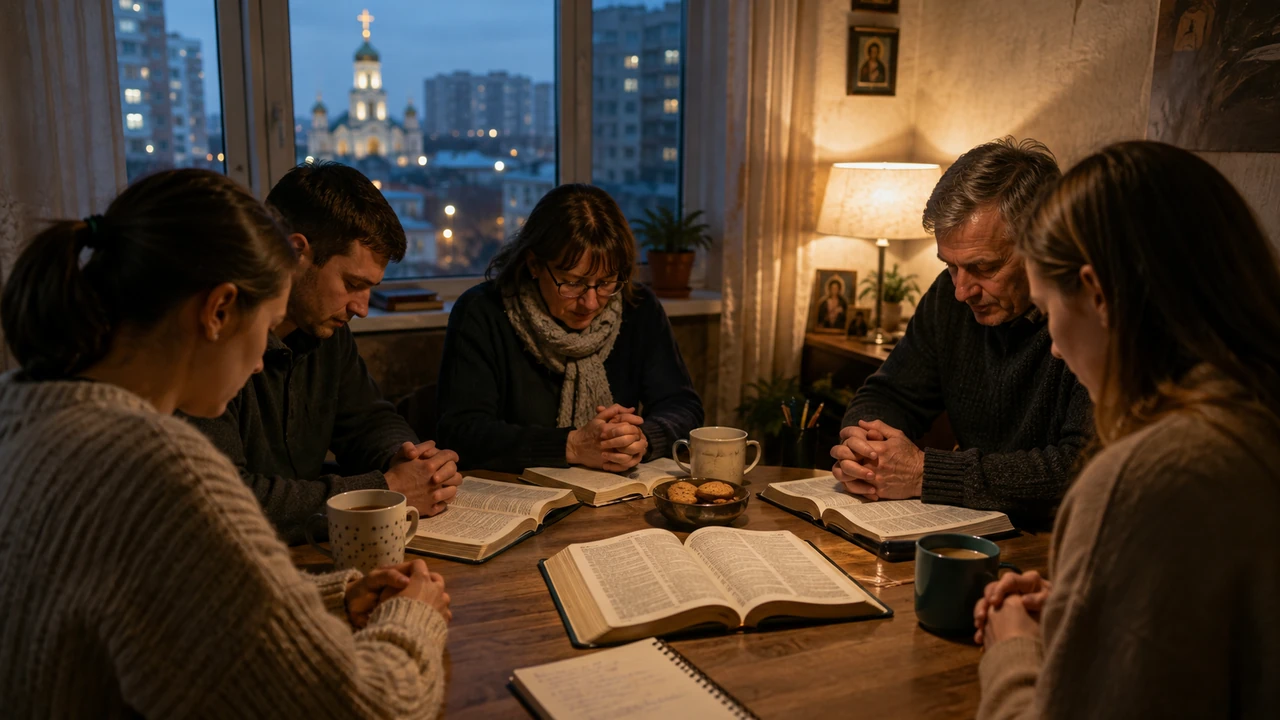
Christians should pray for Russia with grief, humility, and clear hope in Christ. It is a vast country with visible Orthodox worship, long Christian history, and millions who still identify with Christianity. Yet Russia is also marked by war, fear around public speech, tighter state control, legal and administrative restrictions on minority religious communities, and the danger that Christian language may be used to support national power rather than call people to repentance, mercy, and truth.
To pray for Russia faithfully, Christians must hold several truths together. We should grieve the suffering caused by the war against Ukraine. We should pray for Russians living under propaganda, censorship, suspicion, and wartime strain. We should ask God to strengthen believers whose consciences are troubled by the war. We should pray for churches to honor Christ above nationalism, public favor, fear, or state pressure. And we should plead for repentance, mercy, justice, restraint, and a peace that does not depend on denial or falsehood.
Pray for Russia as the war against Ukraine wounds Ukrainians and Russians, public speech is constrained, and Christians face pressure to confuse loyalty to Christ with loyalty to state or nation. Ask God to restrain evil, expose lies, protect civilians and prisoners, strengthen believers and minority churches under scrutiny, and bring repentance, mercy, and a just peace.
Last verified August 15, 2026
Why Russia Needs Prayer Now
Russia needs prayer now because war, public fear, restricted speech, church-state entanglement, and pressure to identify Christian faith with national loyalty all affect Christian conscience, church life, and public witness.
Russia needs prayer now because the war against Ukraine continues to affect the country’s public life, families, questions of conscience, and church witness while civilians continue to suffer severely. UN monitoring reported that July 2026 was the deadliest month for civilians in Ukraine since March 2022. Russian attacks continue to kill and injure civilians in Ukraine, while Ukrainian long-range strikes are reaching deeper into Russia, where civilians have also been killed and injured. Christians have reason to pray urgently for restraint, repentance, protection of civilians, and a just peace.
Russian officials continue to describe the conflict in terms of security, sovereignty, territorial settlement, Western pressure, and Ukraine’s political direction. In August, Russian officials continued to oppose an immediate ceasefire without preconditions and to present Moscow’s preferred path as negotiations aimed at a longer-term settlement. Christians should hear those claims accurately without assuming that an official explanation settles disputed facts or moral questions.
The effects of the war extend beyond the battlefield. They affect family life, public speech, pastoral decisions, and questions of conscience. Some Russians support the war, some are strongly influenced by official narratives, some are fearful, some quietly grieve it, and some have paid a price for speaking against it. Christians should pray neither with hatred toward Russia nor with blindness toward injustice. They should ask God for truth, repentance, restraint, mercy, and courage to honor Christ when national loyalty and Christian faith are treated as though they must say the same thing.
Russia also needs prayer because public space for dissent has narrowed. In April 2026, Russia’s Supreme Court designated Memorial, the Nobel Prize-winning rights movement, as “extremist.” Memorial is not a church body, but its case matters for Christian prayer because freedom to tell the truth, remember the past honestly, and act according to conscience affects the wider society in which believers live and speak.
Digital restrictions also affect daily life and Christian witness. Mobile internet shutdowns, messaging disruption, and possible controls that limit access to approved online services do more than inconvenience people. They affect what citizens can read, verify, communicate, and share. Where public speech is already costly, tighter control over communication can deepen fear and isolation.
Russia therefore calls for sober prayer: for civilians endangered by war, for repentance and restraint among those who exercise power, for truthful speech amid propaganda and competing wartime claims, for wisdom in efforts toward peace, and for churches that remain faithful to Christ when they are pressured to lend spiritual approval to state policy.
Country Snapshot
A brief orientation to Russia’s scale, religious landscape, and church context before turning to prayer.
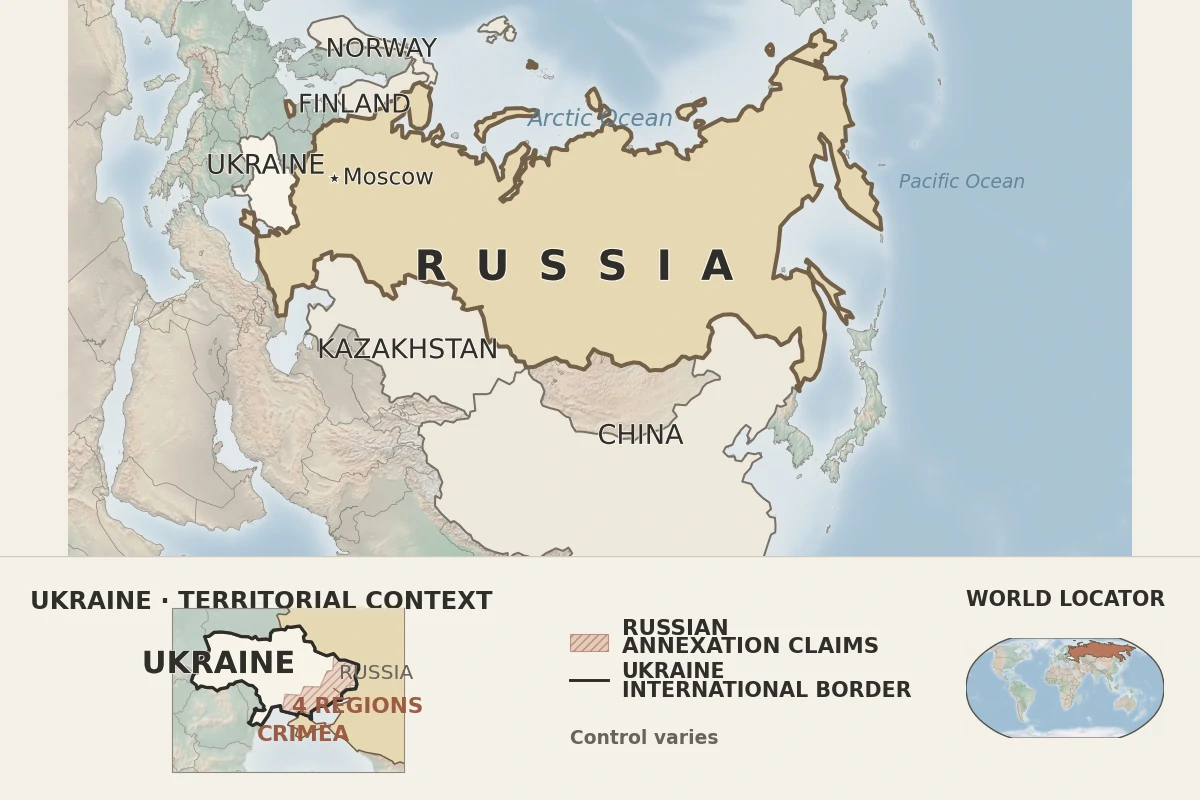
Russia stretches across Eastern Europe and northern Asia. It is the largest country in the world by land area and is home to more than 140 million people, though population estimates vary by source and by how disputed territories are counted. Moscow is the capital, and Vladimir Putin remains Russia’s president as of June 2026.
Orthodoxy is the dominant religious identity in Russia. Pew Research Center has described Russia as having the world’s largest Orthodox Christian population, with more than 100 million Orthodox Christians. Pew’s regional survey materials also identify a significant Muslim minority and a sizable unaffiliated population. Other Christian communities, including Protestants and Catholics, are much smaller.
Russia’s religious landscape cannot be understood only by counting affiliation. Public Christianity remains visible, especially through the Russian Orthodox Church. At the same time, religious identity, national identity, state power, and wartime narratives can overlap in ways that test conscience and make it harder for believers to speak, worship, and obey Christ truthfully.
Spiritual and Practical Challenges Affecting Christians and Churches
Russian believers face different conditions depending on church tradition, legal status, public visibility, local setting, and their response to the war and state expectations.
Church-state entanglement
Christians in Russia do not all face the same conditions. The Russian Orthodox Church has a privileged public place and a prominent role in Russia’s national history and public life. Many Orthodox believers worship sincerely, keep family and church traditions, and live ordinary Christian lives in their communities. That must not be ignored or caricatured.
Yet the church-state relationship creates serious spiritual danger. When public Christianity is closely joined to state power or wartime narratives, believers may feel pressure to treat loyalty to national policy as though it were loyalty to Christ. Pastors and church members whose consciences are troubled by the war may fear isolation, discipline, public suspicion, or legal consequences.
Legal and administrative burdens on minority religious communities
Minority Christian communities and other religious minorities face more direct legal and administrative restrictions. Russia’s anti-extremism and anti-missionary frameworks have been used against groups the state regards as dangerous, foreign, disloyal, or socially harmful. Jehovah’s Witnesses have faced criminalization under extremist labeling. Some evangelical and Baptist communities have faced legal and administrative pressure connected to worship, missionary activity, or unregistered gatherings. Religious leaders who oppose the war from Christian conviction may also face serious consequences.
Fear, speech, and conscience
For some believers, pressure may mean a closed building, a fine, a raid, an interrogation, a restricted meeting, an online post treated as disloyal, or a sermon that cannot be preached freely. For others, especially inside larger and more publicly accepted churches, the burden may be quieter: the temptation to stay silent, to repeat official language, or to avoid naming sin where truth would be costly.
War and contested authority
These burdens can be heavier in Crimea, which Russia annexed in 2014 and claims as its own, and in the parts of Donetsk, Luhansk, Zaporizhzhia, and Kherson regions that Russia controls and claims to have annexed from Ukraine. In those places, war, contested authority, identity pressure, damaged infrastructure, fear of detention, property loss, and religious-control concerns can affect the same families, churches, and communities at once.
Christian Life and Witness in Russia
Christian life in Russia includes public worship and family discipleship, minority churches facing legal scrutiny, and believers whose consciences are tested by war and fear around public speech.
Christian life in Russia can look very different from one place to another. In some settings, believers attend public liturgies, gather for prayer, celebrate Christian holy days, baptize children, and live with little immediate fear. In other settings, especially among smaller or less favored communities, gathering, evangelism, public teaching, or even private religious identity can carry risk.
For Orthodox Christians, pray that visible worship, church tradition, and national religious identity would lead to repentance, faith in Christ, obedience to Scripture, and mercy toward neighbors rather than remain only cultural inheritance. Pray especially for pastors and believers who want to speak truthfully without despising their people or surrendering to fear.
For evangelical Christians, Baptists, Pentecostals, and other minority Christian communities, faithfulness may require patience under legal scrutiny, wisdom in public speech, and courage to continue worship and discipleship when official suspicion rises. Some believers may gather quietly. Some may avoid online attention. Some may face family or local hostility, especially if they are viewed as belonging to a foreign or nontraditional religious group.
For Christians troubled by the war, the burden can be deeply personal. A believer may have relatives in the military, Ukrainian neighbors or family ties, a pastor under pressure to use state-approved language, or a conscience troubled by propaganda and fear. Faithfulness may involve refusing hatred, resisting lies, praying for enemies, grieving civilian suffering, and asking God for a peace rooted in truth.
For believers in Russian-controlled areas of Ukraine, daily Christian life may be shaped by destroyed infrastructure, shortages, Russian administrative control, pressure around identity, fear of detention or accusation, and uncertainty over property, movement, worship, and public speech. Pastors and families there need prayer not only for freedom to worship and live according to conscience, but for endurance, safety, truthfulness, and the preservation of worship under harsh conditions.
Recent Developments
These recent developments help explain what Christians should pray about in Russia now.
-
August 2026
Civilian deaths rise as long-range attacks reach farther
UN human-rights monitoring reported that 437 civilians were killed and 2,610 injured in Ukraine during July 2026, making it the deadliest month for civilians there since March 2022. The figures continued a worsening pattern already visible earlier in the year.
The suffering continued into August. On August 14, a Russian drone struck a home in Ukraine’s Sumy region, killing a woman and her nine-year-old son and seriously injuring other members of the family.
At the same time, Ukrainian long-range attacks have reached deeper into Russia. Russian regional authorities reported that an August 10 drone attack in Nizhnekamsk, Tatarstan, killed 13 people and injured dozens. Ukraine said it was targeting the Taneco refinery, while Russian authorities reported that industrial and civilian facilities were struck. Further Ukrainian attacks affected refining or energy infrastructure at Salavat and Orsk, and drones struck the Ust-Luga oil and gas export terminal on August 14.
Russian regional authorities confirmed deaths, injuries, fires, and operational disruption in several of these incidents. Claims about the intended targets, the number of weapons intercepted, and the wider military or economic effects of particular attacks remain disputed or difficult to verify independently.
A prolonged war can make suffering on the other side easier to dismiss. Christians should pray for civilians in Ukraine and Russia, for restraint in military decisions, for grieving families, for truthful reporting, for mercy toward enemies, and for a peace grounded in truth and justice.
-
August 2026
Russia’s ceasefire position remains substantially unchanged
Russia’s position on a ceasefire remained substantially unchanged through mid-August 2026. In early August, Foreign Minister Sergey Lavrov said Russia had proposed political and military working groups with Ukraine and was waiting for Kyiv’s response. He also criticized calls for an immediate ceasefire without preconditions, presenting Moscow’s preference as negotiations aimed at what Russia describes as sustainable agreements.
Christians should understand this as Russia’s stated position, not as an independent judgment on what a just settlement requires. With no ceasefire breakthrough in place by mid-August 2026, there remains reason to pray for honest negotiations, wise diplomacy, repentance, restraint, and a peace that does not depend on coercion, revenge, denial, or falsehood.
-
April 2026
Orthodox Easter ceasefire fails
In April 2026, a brief Orthodox Easter ceasefire quickly faltered, with Russia and Ukraine accusing each other of repeated violations. Even a pause connected to one of the church’s greatest feasts did not produce lasting quiet.
Mistrust, retaliation, and wartime hardness remain deep. It is also troubling when religious language and holy days are publicly honored while mercy, restraint, truth, and peace remain absent.
-
April 2026
Memorial designated “extremist”
On April 9, 2026, Russia’s Supreme Court designated Memorial as “extremist,” criminalizing its activities inside Russia. Memorial is not a church body, but its case matters for Christian prayer because freedom to tell the truth, preserve historical memory, and act according to conscience affects the wider society in which believers live and speak.
Russian authorities describe such actions through extremist or security categories. Critics argue that these designations suppress independent memory, civil society, and dissent.
Christians should pray for truth, justice, wise courage, and protection for people who seek to speak honestly under pressure.
-
2026
Internet restrictions and communication controls deepen
Reporting in 2026 continued to describe mobile internet shutdowns, messaging disruption, and tighter controls over online access in Russia. Such restrictions can affect ordinary citizens, churches, families, pastors, journalists, lawyers, and believers trying to communicate, check information, or act according to conscience.
Christians should pray that people will retain access to truthful information, that believers will have wisdom when public speech is risky, and that fear and isolation will not stop people from showing mercy, speaking honestly, and bearing faithful Christian witness.
How to Pray
Pray specifically about the war, fear around public speech, restrictions on Christian life, and the ways God continues to preserve life, worship, and acts of mercy.
-
Pray for a just peace and the restraint of evil. Pray that God would restrain evil, expose lies, humble rulers, and bring a just peace to the war against Ukraine. Ask Him to give wisdom and moral courage to those making military and diplomatic decisions, and to restrain choices that place civilians in needless danger.
-
Pray for Ukrainians and Russians suffering because of the war. Pray for civilians under attack, grieving families, prisoners, soldiers, displaced people, the injured, and communities living with fear and loss. Ask God to preserve life, return captives, comfort the bereaved, restrain revenge, and keep people from using suffering on either side as an excuse for hatred or indifference toward the other.
-
Pray for Russian Christians whose consciences are troubled by war, propaganda, censorship, and fear. Pray for believers living with the effects of war, propaganda, censorship, and fear. Ask the Lord to give them wisdom to know when to speak and when to act quietly, courage to refuse hatred and lies, and grace to remain faithful to Christ when silence feels safer.
-
Pray for churches in Russia to honor Christ above national loyalty. Ask God to purify worship, strengthen faithful preaching and discipleship, lead people to honest repentance, and keep Christian language from being used to bless what is false or unjust.
-
Pray for Orthodox believers and minority Christian communities. Pray for Orthodox believers, evangelical churches, Baptists, Pentecostals, and other Christian communities in their different settings. Ask God to strengthen sincere worship, family discipleship, pastoral care, mercy toward neighbors, and clear witness to Christ without contempt, compromise, or fear.
-
Pray for minority congregations and other religious minorities under scrutiny. Pray for those whose worship, missionary activity, public speech, or unregistered gatherings may be treated by authorities as extremism, disloyalty, or unlawful religious activity. Ask God to protect vulnerable people, preserve access to Scripture, sustain pastors and families under scrutiny, and guard believers from bitterness or reckless speech.
-
Pray for believers in Crimea and Russian-controlled areas of Ukraine. Pray for believers in Crimea, which Russia annexed in 2014 and claims as its own, and in the parts of Donetsk, Luhansk, Zaporizhzhia, and Kherson regions that Russia controls and claims to have annexed from Ukraine. Ask God to protect pastors, children, families, churches, elderly believers, and displaced people living amid war, damaged infrastructure, insecure property, pressure over identity, and contested authority.
Give Thanks
Give thanks for worship that continues, believers who refuse hatred and lies, families and churches serving others, and acts that preserve life during war.
-
Give thanks that Christian worship remains visible in many parts of Russia. Many believers are still able to gather, pray, baptize, teach, serve, and mark Christian holy days.
-
Give thanks for Russian believers who refuse hatred and resist lies. Some believers grieve suffering honestly and seek to follow Christ truthfully even when public speech is costly and silence may feel safer.
-
Give thanks for churches and families that continue following Christ in daily life. Give thanks for Scripture reading, teaching children, caring for the vulnerable, praying for peace, and serving neighbors in daily life.
-
Give thanks for every mercy that preserves life amid war. Give thanks for prisoner exchanges, families kept together or reunited, and acts of compassion that restrain cruelty.
Last Verified / Update Note
This note helps readers understand when the guide was reviewed and which developments may change how Christians should pray for Russia.
Review Status
Reviewed for current prayer use
The August 15 review covered the rising civilian death toll in Ukraine, Russian attacks that killed civilians, Ukrainian long-range attacks inside Russia, attacks affecting Russian oil and refining infrastructure, and Russia’s position on a ceasefire and negotiations. It also compared Russian official and regional accounts with other reporting and kept confirmed events separate from disputed claims. The review also covered religious freedom, church life, internet controls, demographics, and territorial status.
Pray for the protection of civilians and for restraint and repentance as long-range attacks reach farther. Pray for truthful public speech and wise efforts toward a just peace. Pray for Russian believers whose consciences are strained by war and propaganda, for vulnerable religious communities, and for churches to remain faithful to Christ rather than confusing Christian loyalty with political or national loyalty.
Watch for a credible ceasefire or major peace agreement, significant territorial change, major mobilization, clear escalation involving NATO territory, a major nuclear-security development, a substantial change in Russia’s negotiating position or conduct of the war, new religious-freedom or anti-extremism actions, major changes in internet restrictions, leadership change, or significant developments affecting Crimea and Russian-controlled parts of Donetsk, Luhansk, Zaporizhzhia, and Kherson.
Wartime information can change quickly, and competing accounts often differ. Confirmed attacks and casualties are therefore kept separate from claims about intended targets, interception totals, attribution, and military or economic effects. Russian positions are taken directly from official material where accessible and otherwise from clearly identified Russian reporting, Russian regional authorities, or reputable reporting quoting Russian officials.
Help keep this guide accurate and current
If you noticed a possible correction, broken link, or significant country update, please contact the Nations Prayer Directory so we can review it carefully.
Key Sources Consulted
Sources used in this Russia prayer guide include Russian official sources and Russian reporting, UN civilian-protection reporting, current news coverage, religious-freedom assessments, and demographic background.
Russian official sources and Russian reporting
- Ministry of Justice of the Russian Federation. Official list of organizations recognized as extremist. The current official list records Memorial and its component organizations following the April 2026 Supreme Court decision.
- Supreme Court of the Russian Federation. April 9, 2026 Memorial decision. Direct official material recording the court’s decision and the Russian state’s stated legal rationale.
- Roskomnadzor. “Statute of Roskomnadzor.” Official institutional material explaining the agency’s role in communications, information technology, mass media, telecommunications, personal-data compliance, and related information regulation.
- TASS. August 2026 reporting on Sergey Lavrov and Russia’s negotiation position. Provides Russian reporting on Moscow’s proposed political and military working groups, its stated approach to negotiations, and its objection to an immediate ceasefire without preconditions.
August 2026 civilian harm, war, and diplomacy
- UN Human Rights Monitoring Mission in Ukraine. “Protection of Civilians in Armed Conflict — June 2026.” Direct institutional reporting documenting the worsening civilian-casualty trend and the growing role of long-range weapons in civilian harm.
- Associated Press. August 14, 2026 reporting on civilian casualties, Sumy, and Ust-Luga. Reports the July civilian-casualty figures attributed to UN monitoring, the deadly Sumy drone strike, and the attack on Ust-Luga.
- Associated Press. August 10, 2026 reporting on the Nizhnekamsk attack. Reports civilian deaths and injuries inside Russia and the differing Russian and Ukrainian descriptions of the intended target.
- Associated Press. August 13, 2026 reporting on Salavat and Orsk. Reports attacks affecting refining and energy infrastructure, including Russian regional-authority confirmation of fires, civilian injuries, shutdown, and operational disruption.
Earlier 2026 war, diplomacy, and civil-society reporting
- Associated Press. “Ukraine targets St. Petersburg again after Putin rejects Zelenskyy’s offer for direct talks.” June 2026 reporting on Ukrainian drone strikes inside Russia, Russia’s reported response, domestic security concerns, and the widening effects of the war inside Russia.
- The Guardian. “Ukraine war briefing: Putin says ‘no point’ meeting Zelenskyy, insists Russia will win the war.” June 6, 2026 reporting on Putin’s public war position and Russia’s response to Zelenskyy’s direct-meeting proposal.
- The Guardian. “Ukraine war briefing: France, Germany and UK make push in Moscow for peace talks.” June 12, 2026 reporting on European diplomatic efforts in Moscow and Russia’s response to calls for renewed talks.
- Associated Press. “Ukraine hits fuel supplies to Crimea, sparking a fuel crisis on the Russian-held peninsula.” June 2026 reporting on fuel-supply pressure affecting Crimea, civilian strain, and wartime logistics.
- The Guardian. “Ukraine war briefing: Easter truce falters as Russia and Ukraine exchange prisoners.” April 2026 reporting on the failed Orthodox Easter ceasefire, mutual accusations of violations, and the prisoner exchange.
- Associated Press. “Russian court criminalizes the activities of the Nobel Prize-winning rights group Memorial.” April 9, 2026 reporting on the Memorial decision, its official legal characterization, Memorial’s response, and outside criticism.
- Le Monde. “Putin’s ‘Davos’ in Saint Petersburg ends as it began, under a barrage of Ukrainian drones.” June 7, 2026 reporting on Ukrainian drone attacks around St. Petersburg, civilian and psychological effects, and wartime disruption.
Internet restrictions and communication control
- The Guardian. “Unexplained Moscow internet blackouts spark fears of web censorship plan.” March 12, 2026 reporting on mobile internet shutdowns, communication disruption, possible controls on approved online services, official security explanations, and effects on ordinary life.
- The Guardian. “Russia slowly trying to splinter its internet from rest of world, analysts say.” March 31, 2026 reporting on internet isolation, mobile blackouts, Telegram concerns, and broader efforts to control online information.
Religious freedom and church context
- U.S. Commission on International Religious Freedom. “Religious Freedom Conditions in Russia.” Current Russia country material addressing religious-freedom restrictions, pressure on minority communities and Jehovah’s Witnesses, religiously motivated opposition to the war, and Russia’s enforcement of its legal framework in Ukrainian territory it controls.
- U.S. Commission on International Religious Freedom. “Russia Country Update.” June 30, 2025 material providing additional context on anti-extremism enforcement, minority-religion pressure, and religious-control concerns.
- U.S. Commission on International Religious Freedom. “Prosecuting Blasphemy in Russia.” April 14, 2025 background on Russia’s blasphemy-enforcement environment and public religious speech.
Population and religious background
- World Bank Data. “Population, total — Russian Federation.” Provides broad population data for Russia.
- Pew Research Center. “Religious Belief and National Belonging in Central and Eastern Europe.” Background on Orthodoxy, Russian religious identity, Russia’s Muslim minority, unaffiliated population, and the relationship between religion and national belonging.
- Pew Research Center. “Orthodox Christianity in the 21st Century.” Background on Russia’s place in global Orthodoxy and the size of its Orthodox Christian population.
Source Context
How to read the sources behind this guide in a setting shaped by war, disputed claims, and religious-freedom concerns.
Source Context
- Wartime reporting. This guide covers an active war in which governments, military authorities, regional officials, international monitors, and news organizations often describe the same events differently and do not always have the same access to evidence. Confirmed events are therefore kept separate from claims about why a target was chosen, how many weapons were intercepted, who was responsible for an uncertain incident, or how much military or economic damage an attack caused.
- UN civilian-harm evidence. The UN Human Rights Monitoring Mission in Ukraine is the main institutional source for the civilian-casualty trend described here. Its June report documents a sharp rise in civilian casualties and the growing role of long-range weapons. As of August 15, 2026, the UN website still listed June as its latest monthly civilian-protection report. The July figures of 437 civilians killed and 2,610 injured are therefore presented through Associated Press reporting that explicitly attributes them to the UN mission.
- Russian official sources and Russian reporting. Direct Russian sources are available for some matters but not every current military or diplomatic statement. The Ministry of Justice and Supreme Court provide direct Russian evidence for the Memorial legal action. TASS reports Moscow’s current negotiating position, while Russian regional authorities help establish casualties, fires, shutdowns, and other consequences of attacks inside Russia.
- Official claims and verification. An official statement establishes what a government or authority says; it does not by itself prove a disputed military or political claim. The same caution applies to Ukrainian official statements and outside reporting. Where the intended target, interception total, attribution, or military effect remains disputed, the claims are attributed to their source and uncertain points are stated cautiously.
- Territorial wording. Territorial status remains disputed. Crimea is described here as territory Russia annexed in 2014 and claims as its own. Parts of Donetsk, Luhansk, Zaporizhzhia, and Kherson are described according to Russian control and claimed annexation without treating those claims as settling their internationally disputed legal status.
- Religious-freedom reporting. USCIRF provides evidence on religious-freedom conditions; it is not used here to settle military or political disputes.
- Religious and demographic background. Older Pew Research Center material and broad population data remain useful for background rather than fast-changing political, military, or legal claims.
A Closing Prayer for Russia
This final prayer brings the guide’s main concerns before God.


